

.jpg?width=289&height=168&name=Data%20Use%20cases%20(1).jpg)
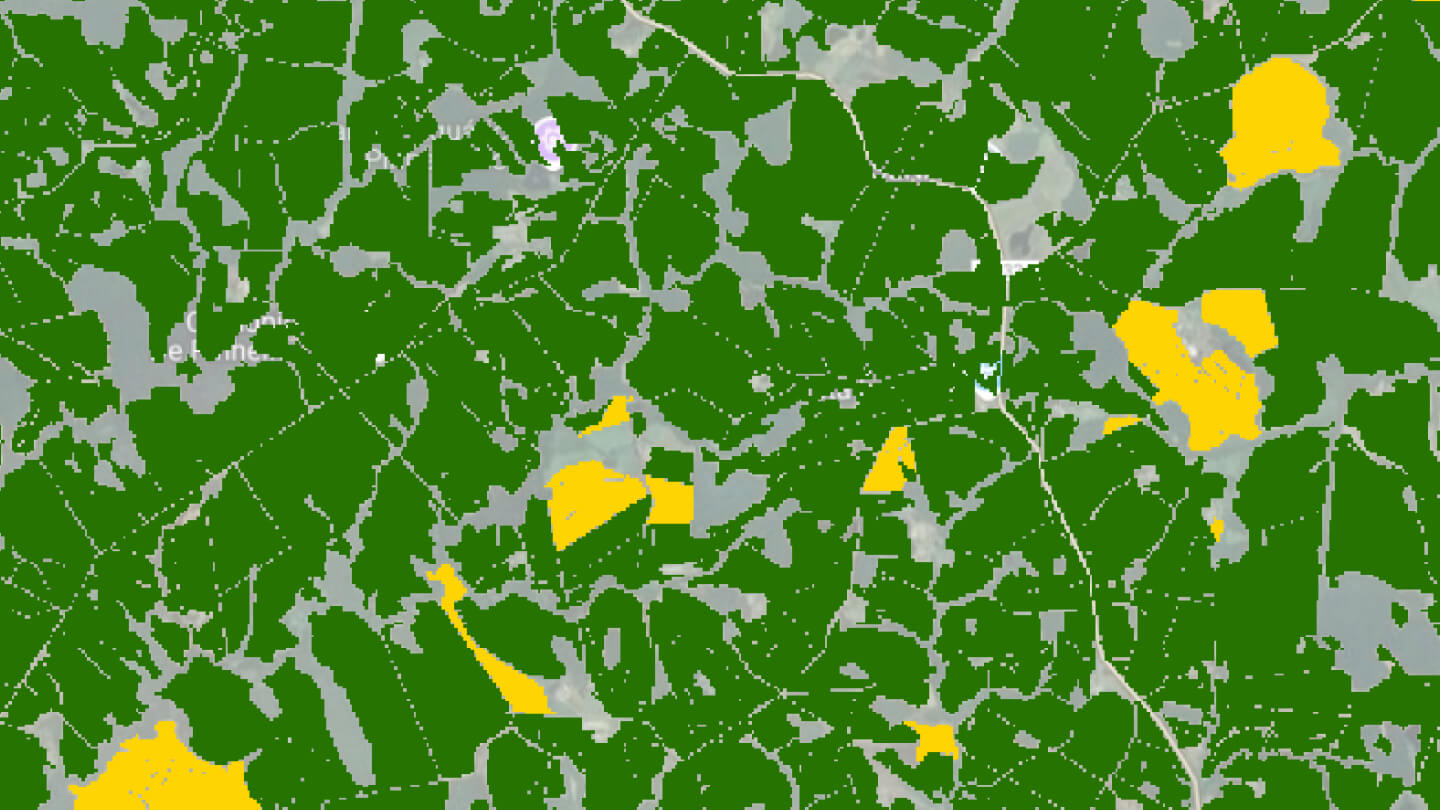
Crop Identification Brazil
In-Season Crop Intelligence for the World's Agricultural Powerhouse
Brazil’s overlapping Safra and Safrinha seasons create a volatile landscape where planting decisions shift global markets in weeks. Relying on lagging official statistics or limited samples leaves traders, insurers, and food corporates operating on incomplete intelligence, often reacting to data that is already obsolete.
Turn Planting Uncertainty Into Market Advantage
Near-Real-Time AI VisibilityCrop Identification for Brazil eliminates the guesswork with AI-powered classification for soybeans, corn, cotton, sugarcane, wheat, and rice. By delivering satellite-derived insights as plantings unfold across the agricultural frontier, we provide the visibility needed to track acreage shifts and refine trade positions while crops are still in the ground.
Stop waiting for CONAB estimates. Align your decision-making with Brazil’s dual-cropping cycles to validate supply expectations and lead the market, rather than following it.
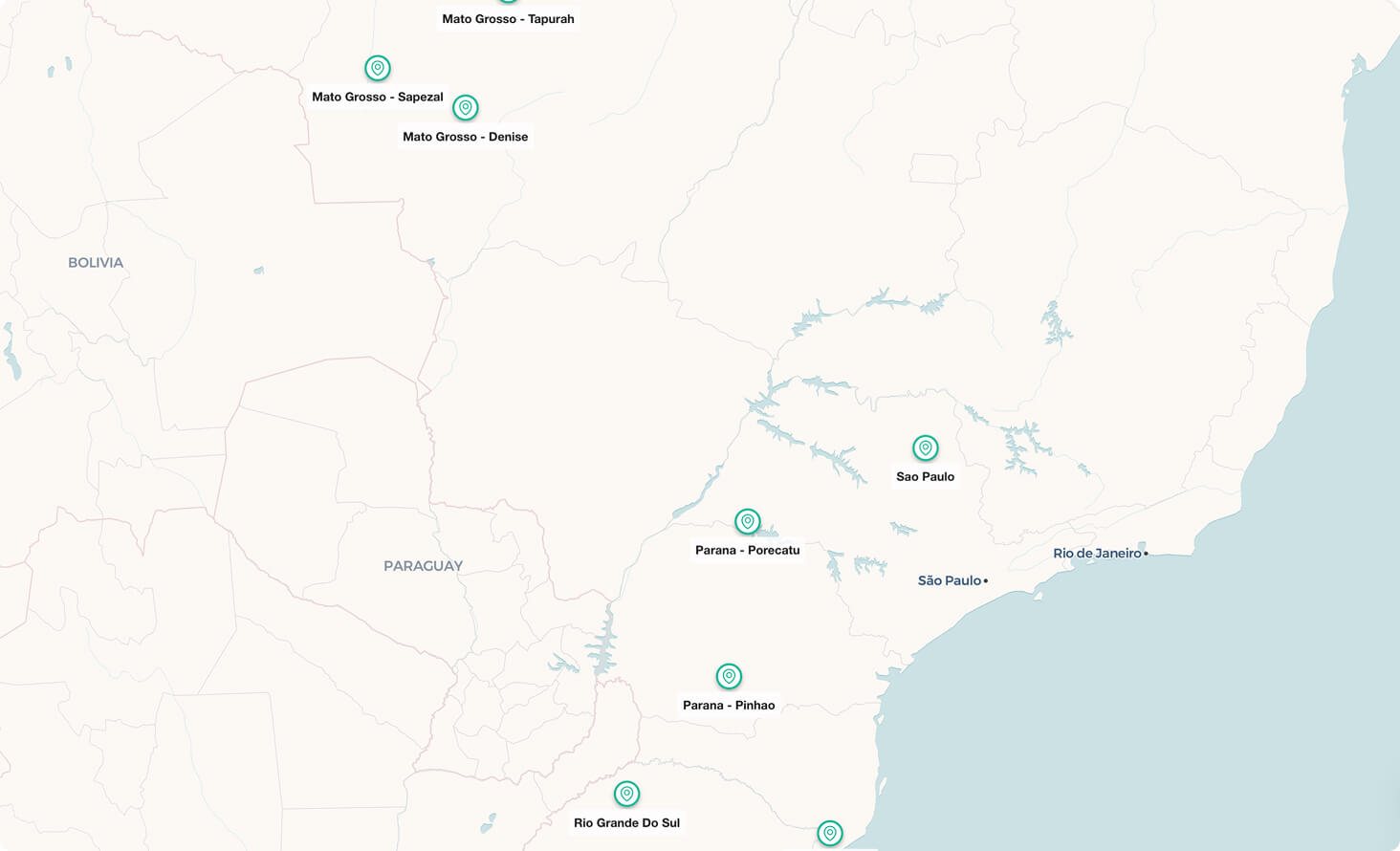
Comprehensive Coverage: Mato Grosso, Paraná, Goiás, Rio Grande do Sul, Mato Grosso do Sul, Bahia, Minas Gerais, and all major producing states
Soybean Markets:
Brazil exports over 80 million tonnes of soybeans annually, with planting decisions in Mato Grosso influencing Chicago Board of Trade pricing within weeks. A delayed planting season in Brazil can swing global soybean availability, and futures prices, by double-digit percentages.
Safrinha Corn:
Brazil's second corn crop now exceeds first-season production in many states. But Safrinha's weather vulnerability creates massive uncertainty. The difference between a record Safrinha crop and a drought-reduced harvest can exceed 20 million tonnes, equivalent to months of global corn trade.
Double-Cropping Dynamics:
Brazilian farmers increasingly optimize returns by adjusting soybean-to-corn ratios based on market signals. These real-time decisions reshape supply expectations—but aren't reflected in official statistics until months later.
Deforestation Compliance:
EU and U.S. regulations increasingly require proof that agricultural commodities aren't sourced from recently deforested land. Crop classification provides the spatial evidence needed to demonstrate compliant supply chains.
Capabilities
The Crop Identification Advantage:
Mastering Brazil's Dual Cropping Cycles
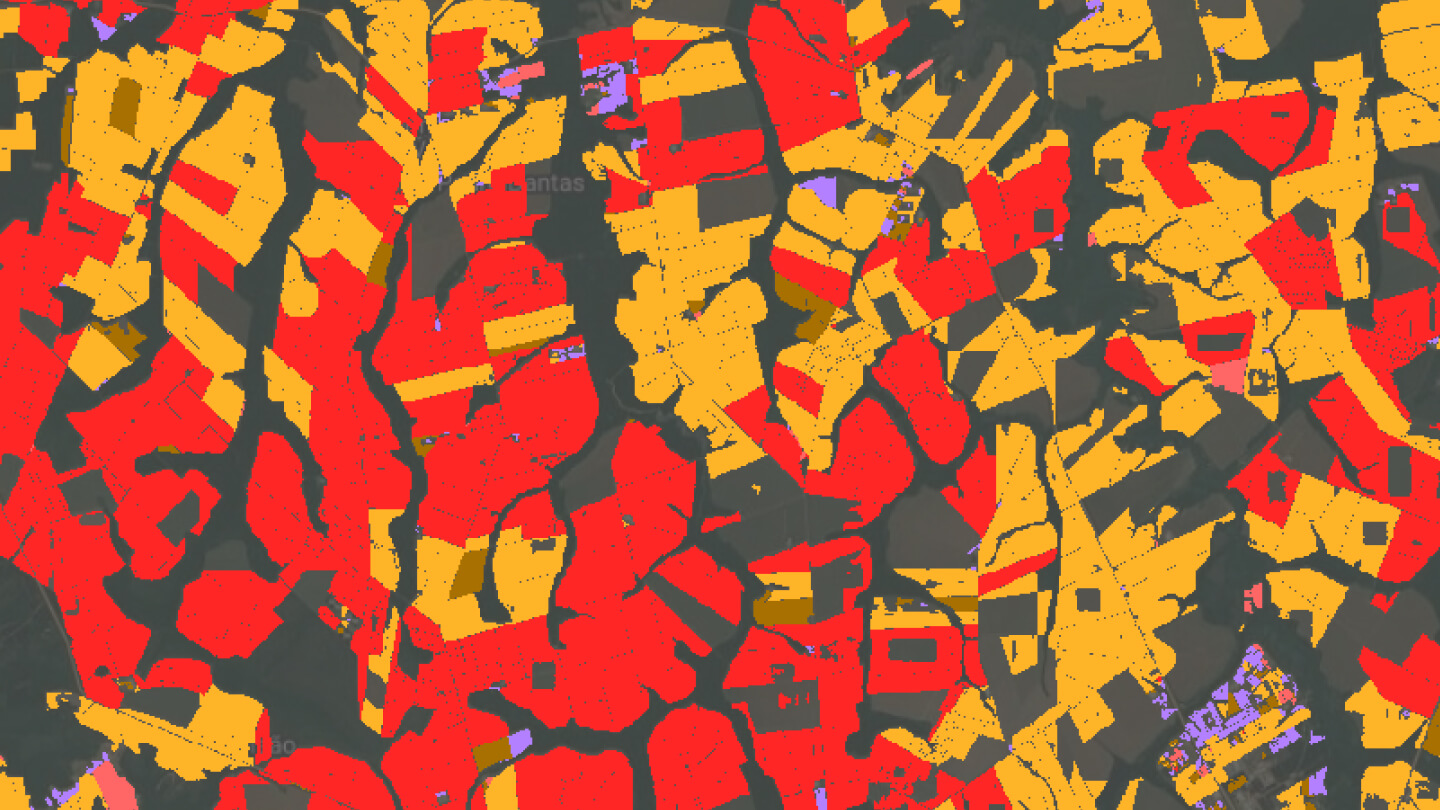
Advanced machine learning models achieve exceptional accuracy for Brazil's major row crops under operational conditions:
- Soybean: F1 scores > 0.95
- Safrinha Corn (2nd crop): F1 scores of 0.90–0.95
- Safra Corn (1st crop): F1 scores of 0.85–0.90
- Rice: F1 scores of 0.85–0.90
- Wheat: F1 scores of 0.85–0.90
- Sugarcane: F1 scores of 0.80–0.85
- Cotton: F1 scores of 0.60–0.70
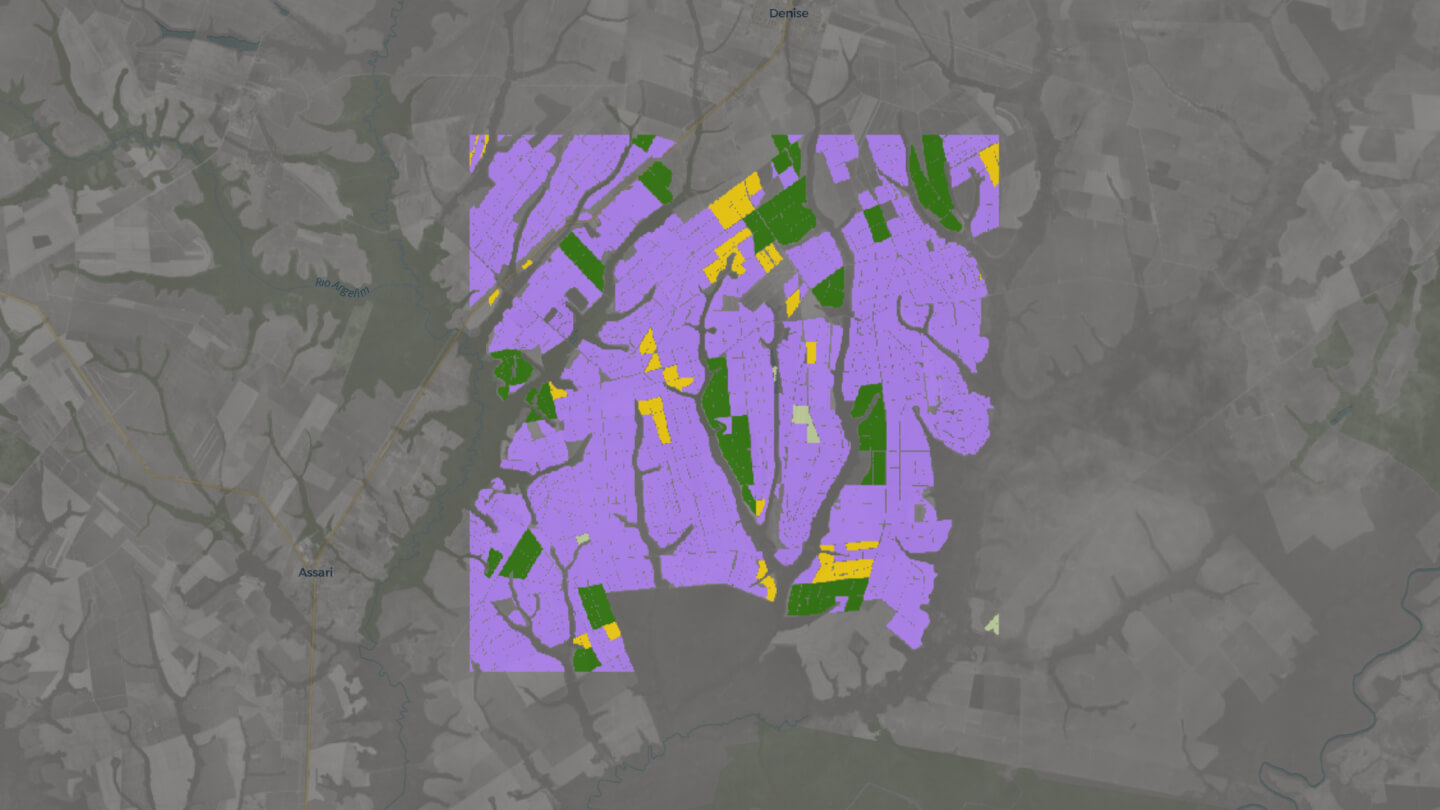
Crop Identification maps Brazil's entire agricultural landscape—from established production in Paraná to frontier expansion in MATOPIBA. Coverage spans all major producing states, enabling analysis at national, state, municipal, or individual field levels.
.png?width=1440&height=810&name=Progressive%20Refinement%20Throughout%20the%20Season%20(1).png)
Classification accuracy improves as the season progresses and satellite observations accumulate. Early-season layers provide directional intelligence; mid-season updates deliver refined estimates. Each delivery reflects the most recent satellite imagery and model outputs.
Real-World Impact
Use Case:
Commodity Trading: Navigate Global Soybean Markets with Local Intelligence
Challenge:
A global commodity trading house maintains significant exposure to Brazilian soybean and corn exports—but Brazil's agricultural complexity creates constant uncertainty. Safra soybean planting in Mato Grosso influences Chicago Board of Trade pricing within weeks, yet the firm relies on CONAB estimates that lag actual conditions by months. Safrinha corn adds another layer of risk: the difference between a record second crop and a drought-reduced harvest can exceed 20 million tonnes.
Last season, a delayed soybean planting window compressed Safrinha corn yields—but CONAB's revisions arrived too late. Competitors with faster intelligence had already adjusted positions. In the world's largest soybean exporter, arriving late to planting intelligence means leaving alpha on the table.
Solution:
The trading desk integrates Crop Identification's four annual deliveries, aligned to both Safra and Safrinha cycles, into their Brazilian supply models. March classification tracks soybean planting progress; June deliveries capture refined Safra estimates and early Safrinha corn intentions; August updates deliver final second-crop classification. Satellite-derived acreage at state and municipal levels enables the desk to quantify actual planted hectares while CONAB projections lag reality.
Outcome:
When Crop Identification's early June classification reveals Safrinha corn acreage running ahead of expectations in Mato Grosso—following a successful early soybean harvest—the desk adjusts their export pace assumptions:
- Identifies Safrinha expansion across key municipalities two months before CONAB revisions
- Adjusts corn export projections while competitors rely on outdated assumptions
- Validates soybean-to-corn transition timing to refine origination strategies
- Supports basis positioning in Paranaguá and Santos corridors with regional intelligence
The early acreage intelligence transforms Brazil's agricultural complexity from risk factor to competitive advantage.
Use Case:
Crop Insurance: Verify Declarations, Manage Portfolio Risk
Challenge:
A European food company sources Brazilian soy, however the EU Deforestation Regulation (EUDR) now requires proof that commodities aren't linked to post-2020 deforestation. Without field-level verification, the company cannot demonstrate compliant sourcing. The consequence isn't a sustainability report footnote, it's loss of EU market access.
Traditional traceability systems track commodities to municipality or cooperative level, not the field-level geolocation EUDR demands. Suppliers provide declarations, but without independent verification, the company carries regulatory risk on every shipment. The gap between current capabilities and regulatory requirements threatens access to their core European market.
Solution:
Crop Identification provides the spatial crop classification essential for EUDR-compliant supply chains. The Field-Level API verifies crop presence on specific parcels linking contracted volumes to satellite-verified soybean plantings at polygon level. Historical classification from 2019 onward documents multi-year cropping patterns, distinguishing established agricultural land from recent conversion. Combined with deforestation monitoring, Crop ID enables due diligence workflows that satisfy EUDR's geolocation requirements.
Crop Identification provides the spatial crop classification essential for EUDR-compliant supply chains. The Field-Level API verifies crop presence on specific parcels linking contracted volumes to satellite-verified soybean plantings at polygon level. Historical classification from 2019 onward documents multi-year cropping patterns, distinguishing established agricultural land from recent conversion. Combined with deforestation monitoring, Crop ID enables due diligence workflows that satisfy EUDR's geolocation requirements.
Outcome:
The food company transforms EUDR from existential threat to verified compliance:
As competitors scramble to build compliance systems, the company secures verified supply chains with uninterrupted EU market access.
The food company transforms EUDR from existential threat to verified compliance:
- Documents crop presence on specific supplier parcels for every contracted shipment
- Verifies declared fields show consistent agricultural use prior to 2020 not recent forest conversion
- Flags supplier declarations that don't match satellite classification before commodities ship
- Builds audit-ready traceability records linking EU-bound volumes to deforestation-free parcels
As competitors scramble to build compliance systems, the company secures verified supply chains with uninterrupted EU market access.
Next Steps:
Experience In-Season Brazilian Crop Intelligence
Transform your Brazilian market intelligence with crop classification that tracks both Safra and Safrinha cycles. Discover how Crop Identification delivers competitive advantage in the world's agricultural powerhouse:
- Explore sample data to evaluate Brazilian classification quality
- Schedule a demo to see Crop Identification integrated with your trading or compliance workflows
- Review dual-season tracking for your Safra and Safrinha requirements
- Discuss compliance applications for EUDR and supply chain traceability
FAQs
Turn complexity into precise, predictive crop insights for every location.
What crops does Crop Identification classify in Brazil?
Crop Identification classifies Brazil's major row crops across both Safra and Safrinha seasons: Soybean, Corn (first and second crop), Sugarcane, Cotton, Wheat, and Rice. This covers the crops that drive Brazilian agricultural exports and domestic supply.
How accurate is Crop Identification for Brazilian crop classification?
Our AI models achieve exceptional accuracy for key crops: F1 scores exceeding 0.95 for soybean, 0.90–0.95 for Safrinha corn, and 0.85–0.90 for rice and wheat under operational conditions. Cotton classification is more challenging at 0.60–0.70 F1 scores.
How does Crop Identification handle Brazil's dual cropping system?
Crop Identification tracks Safra and Safrinha seasons separately with dedicated delivery schedules. Safra deliveries (March, June) cover soybean, first corn, and summer crops. Safrinha deliveries (June, August) cover second corn, winter wheat, and late-season cotton. This dual-cycle tracking is essential for understanding Brazil's complex agricultural calendar.
When are classification layers delivered?
Crop Identification delivers classification twice per cropping cycle, four deliveries annually covering both Safra and Safrinha. Early-season deliveries provide directional intelligence; mid-season updates deliver refined classification as additional satellite observations become available.
What states are covered?
Crop Identification covers all major Brazilian agricultural states including Mato Grosso, Paraná, Goiás, Rio Grande do Sul, Mato Grosso do Sul, Bahia, and Minas Gerais. Coverage spans both established production regions and agricultural frontier areas.
Is historical data available?
Yes. Crop Identification provides access to historical crop classification layers from 2019 onward. This archive supports crop rotation analysis, year-over-year comparisons, deforestation compliance documentation, and model validation.
Can Crop Identification support EUDR compliance?
Yes. Crop Identification provides the crop classification component essential for deforestation-free supply chain documentation. By linking specific field polygons to verified crop plantings, Crop Identification supports the traceability requirements of EU Deforestation Regulation and similar frameworks.
How is Crop Identification delivered?
Two API-based delivery methods: Crop Mask API (STAC) provides spatially indexed GeoTIFF layers for large-area analysis; Field-Level API returns crop predictions for specific field geometries. Both integrate seamlessly into enterprise data pipelines.
Ready to master Brazil's complex agricultural cycles?
Contact EarthDaily to access in-season crop classification that transforms how you track, trade, and verify Brazilian agricultural production.