

.jpg?width=289&height=168&name=Data%20Use%20cases%20(1).jpg)
Flood Extent Mapping:
Satellite-Driven Flood Intelligence for Insurance and Claims Operations
Flood events evolve hour by hour. Boundaries shift, water recedes from some areas while inundating others, and the difference between a total loss and a minor claim can be a few meters of elevation. But most flood risk workflows rely on modeled flood zones and post-event field inspections that arrive too late to drive timely decisions.
See the Flood as It Happens, Not Weeks After
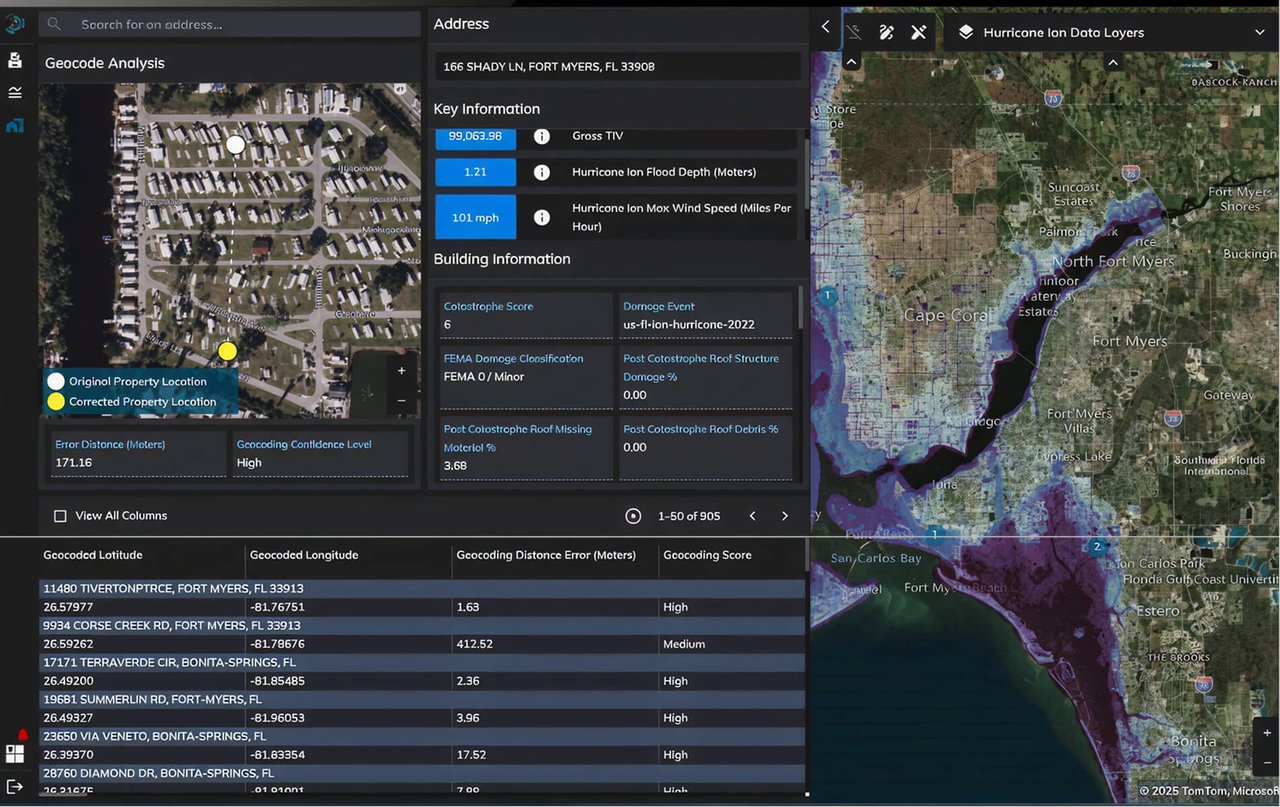
Ascend's flood intelligence uses daily satellite capture from the EarthDaily Constellation to map flood extent in near real time. Underwriters, claims teams, and portfolio managers see where water actually is, not where models predict it should be, enabling faster response, more accurate damage assessment, and defensible claims decisions backed by satellite evidence.
Capabilities
Flood Intelligence Built on
Daily Earth Observation
Real-World Impact
Use Case:
E&S Carrier Capturing Retreating Market Share
Challenge:
A property insurer receives thousands of claims following a major river flood event. Field adjusters cannot access affected areas for days or weeks. Without objective evidence of which properties were actually inundated, the claims team must process submissions based on policyholder declarations and modeled flood zones, leaving the carrier exposed to overpayment on properties outside the true flood boundary and delayed payment on legitimate claims.
Solution:
Ascend's flood extent mapping provides daily satellite-derived inundation data throughout the event. The claims team overlays flood boundaries against the portfolio's geocoded property locations to identify which insured properties fall within confirmed flood extent, which are outside, and which are in marginal zones requiring field follow-up. The temporal record shows when flooding reached specific areas and when water receded.
Outcome:
The carrier triages claims within days of the event rather than weeks, prioritizing field adjusters for high-value properties within confirmed flood zones. Properties clearly outside satellite-confirmed flood boundaries are flagged for further review, reducing overpayment risk. Legitimate claims in confirmed inundation areas are fast-tracked, improving policyholder experience during a high-stress event.
Use Case:
Underwriting Flood Risk with Satellite Evidence
Challenge:
An E&S carrier writing property coverage in flood-prone coastal markets relies on FEMA flood zone designations and third-party flood scores for underwriting. But FEMA maps are updated infrequently and do not reflect recent development, drainage changes, or shifting flood patterns. The carrier suspects it is both overpricing low-risk properties within outdated flood zones and underpricing properties in areas where actual flood exposure has increased.
Ascend supplements traditional flood zone data with satellite-derived evidence of actual historical flood extent. By comparing past flood events against property locations, the underwriting team identifies properties where modeled flood risk diverges from observed flood behavior. Properties within FEMA zones that have never experienced satellite-confirmed inundation are distinguished from properties outside FEMA zones that have flooded repeatedly.
The carrier refines flood pricing using observed flood evidence alongside modeled risk, improving risk selection in both directions. Properties with lower actual flood exposure than FEMA zones suggest become competitive opportunities. Properties with higher observed exposure than models predict are priced appropriately or declined.
FAQs
What is Ascend's flood risk intelligence?
What resolution does Ascend's flood mapping provide?
How does satellite-based flood detection compare to FEMA flood zones?
Can Ascend track how long a property was flooded?
How does flood data integrate with Ascend's other peril coverage?
Bring Satellite-Driven Flood Intelligence to Your Portfolio
Discover how Ascend's flood capabilities can accelerate claims response, improve exposure assessment, and strengthen underwriting in flood-prone markets.
- Assess your portfolio against satellite-derived flood extent from recent events
- Compare satellite evidence against modeled flood zones for your book of business
- Evaluate claims workflow acceleration with near real-time inundation data
- See multi-peril integration combining flood, wildfire, and wind analytics in one platform