

.jpg?width=289&height=168&name=Data%20Use%20cases%20(1).jpg)
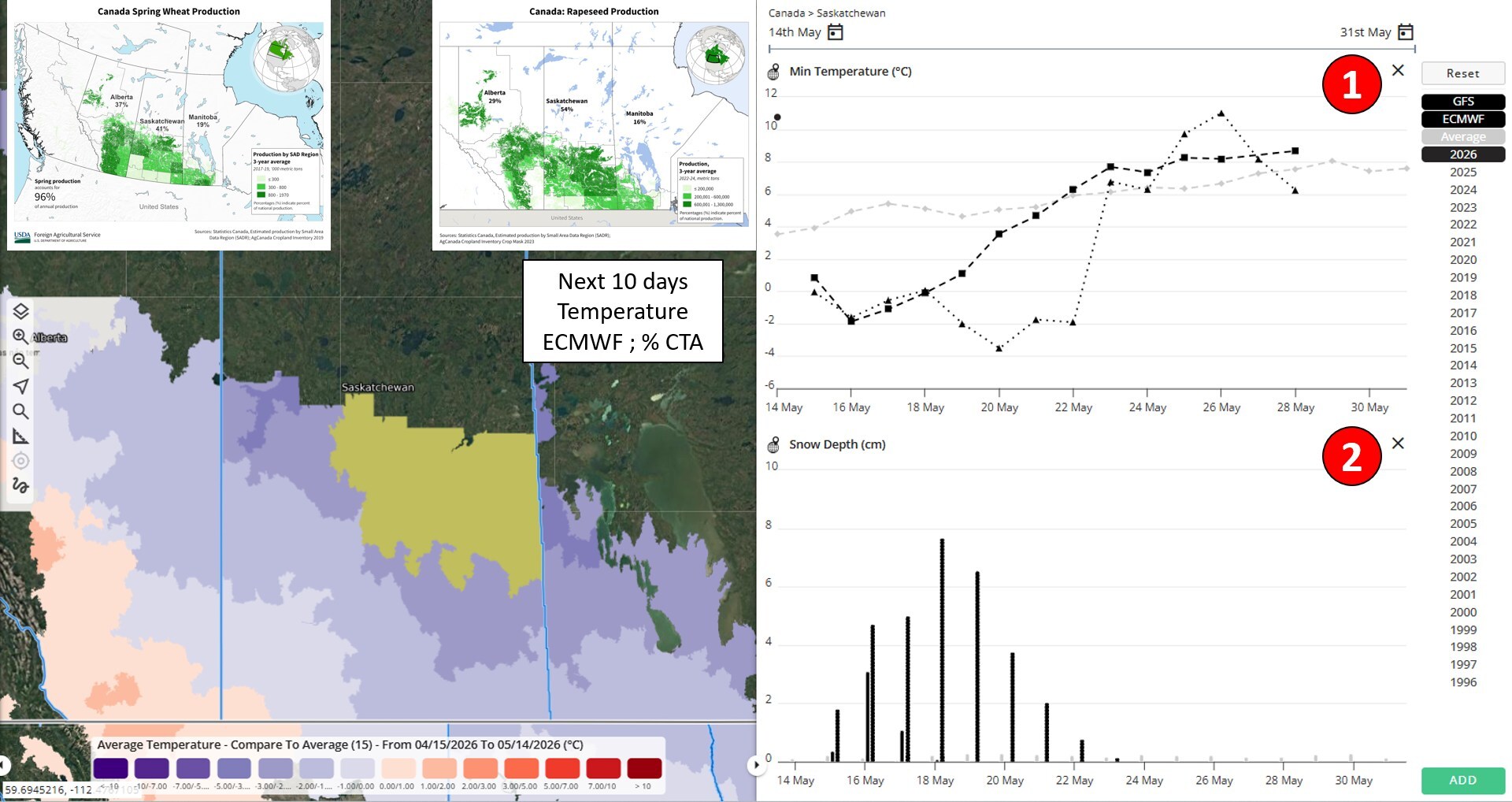
For the next few days, ECMWF and GFS models forecast another cold wave ① across parts of Saskatchewan, with snow ② expected. The event may temporarily disrupt fieldwork and slow the planting pace of spring crops.

Yes
For the next few days, ECMWF and GFS models forecast another cold wave ① across parts of Saskatchewan, with snow ② expected. The event may temporarily disrupt fieldwork and slow the planting pace of spring crops.
NOT YET
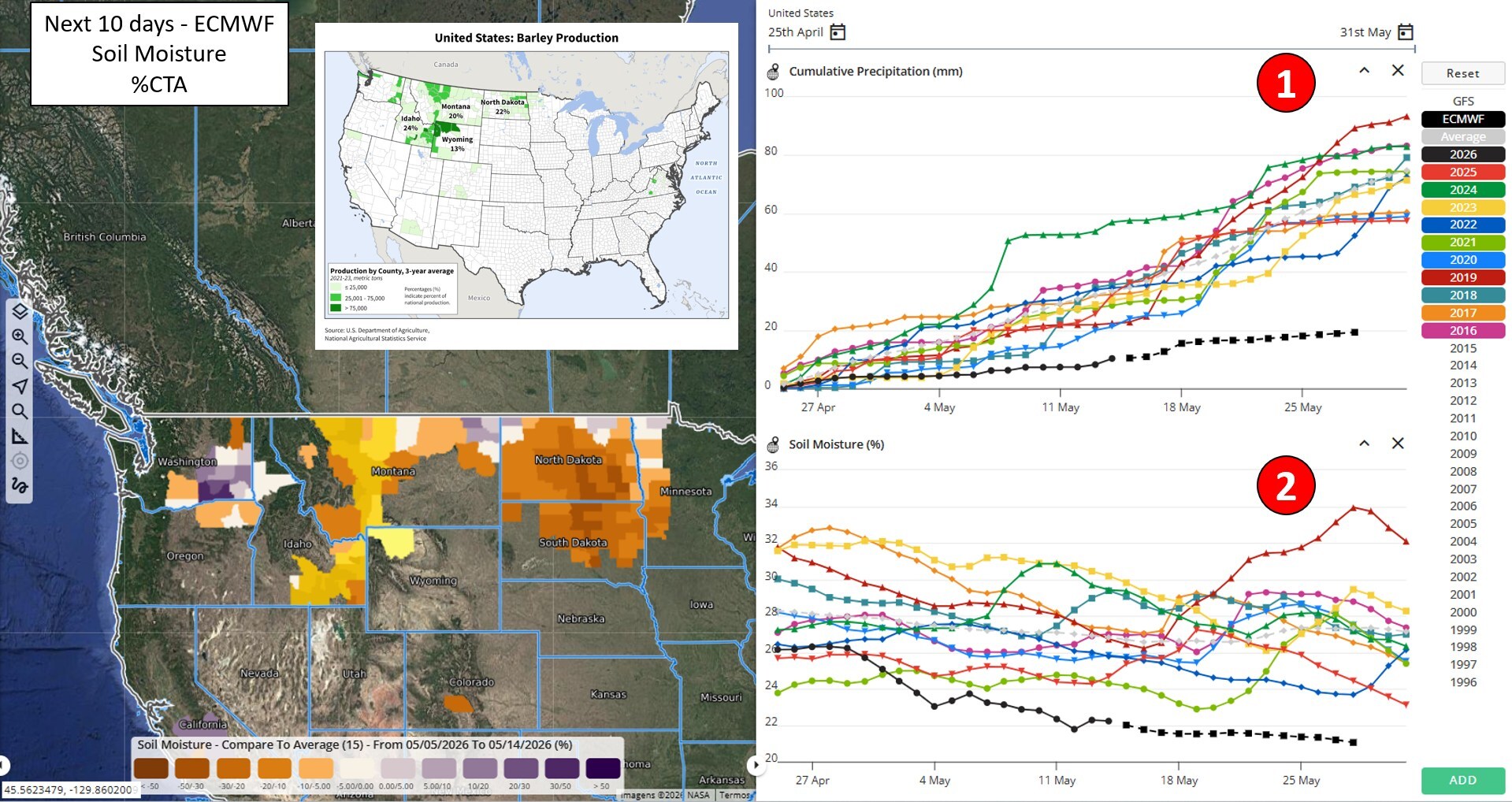
Cumulative precipitation ① in parts of the U.S. barley region is running at its lowest level of the last 10 years, especially across Idaho, Montana and Wyoming, keeping soil moisture ② well below average. For now, the drier pattern is favorable for planting progress, but a return of rainfall will be needed in the coming weeks to support early crop establishment and prevent moisture stress during development.
YES
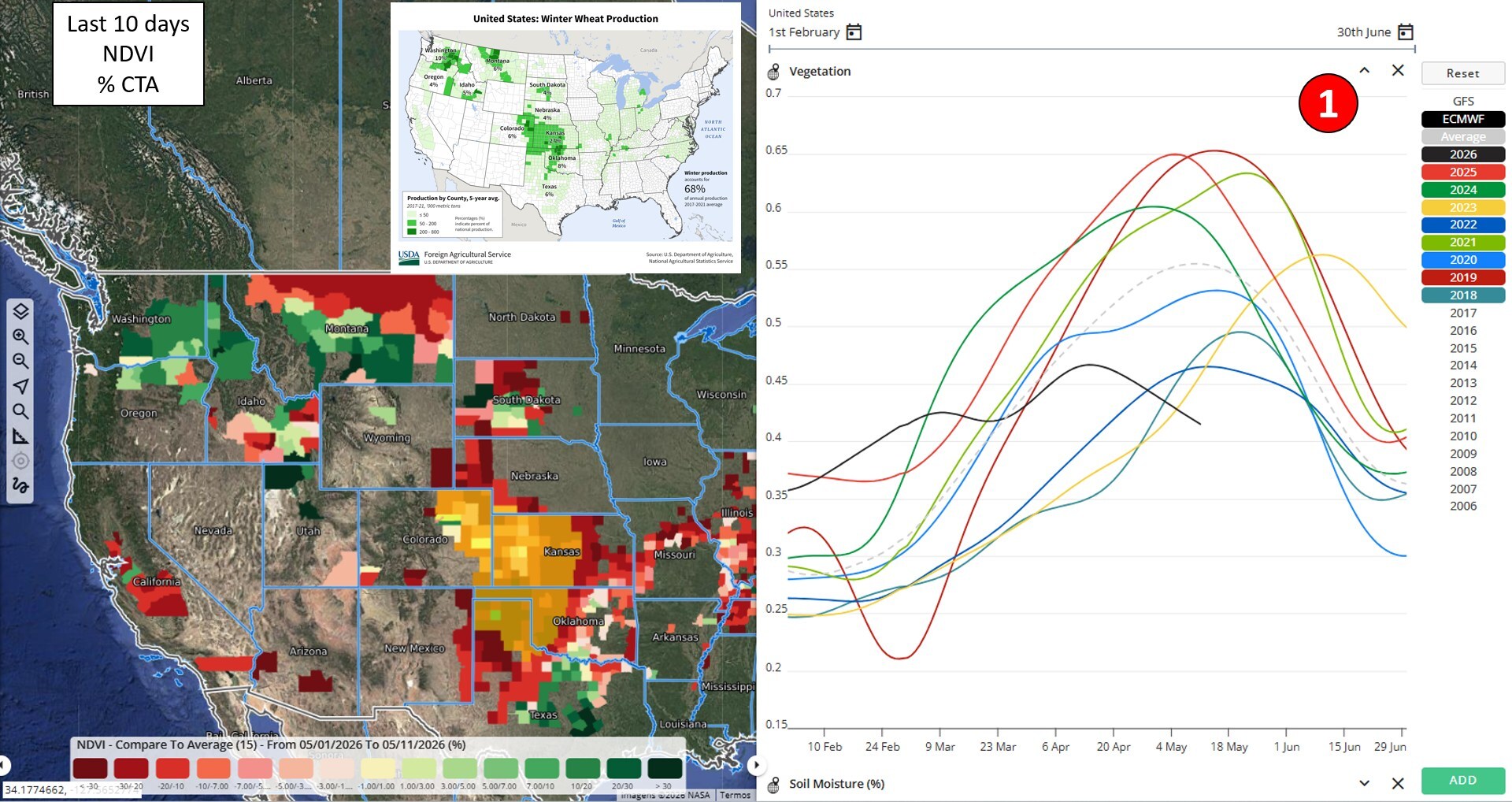
NDVI ① continue to indicate weakening conditions across parts of the core U.S. winter wheat region, reinforcing concerns about yield potential. Even if rainfall returns in the coming weeks, it would likely help stabilize crop conditions and limit further deterioration rather than fully reverse the current scenario.
NO
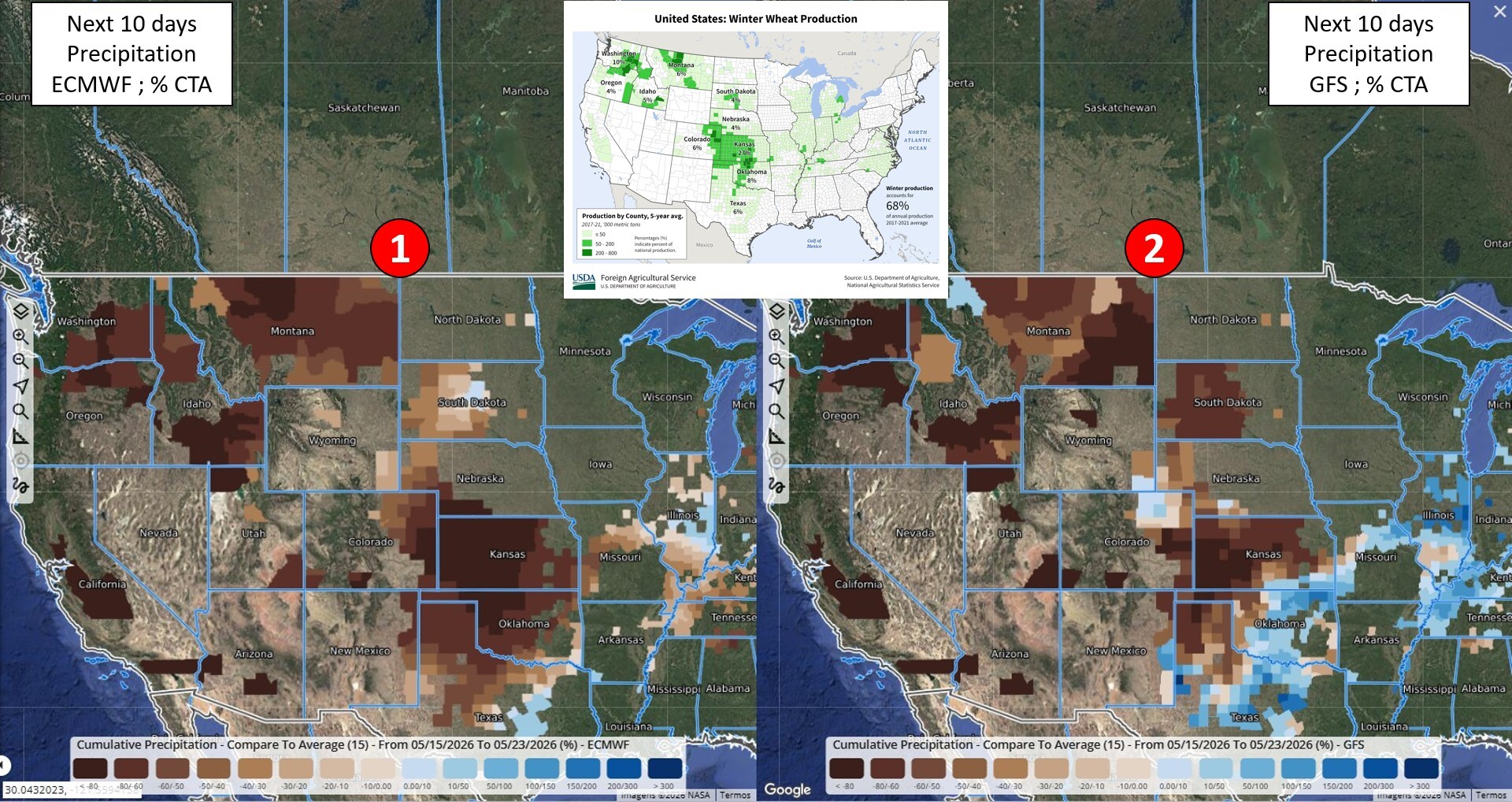
ECMWF ① and GFS ② continue to indicate below-average rainfall across most of the U.S. winter wheat region in the coming days. An exception may develop in parts of Texas and Oklahoma, where GFS predicts the return of rains while the ECMWF remains drier. Overall, however, the forecast still points to persistent drought conditions across a large share of the winter wheat zone.
NO
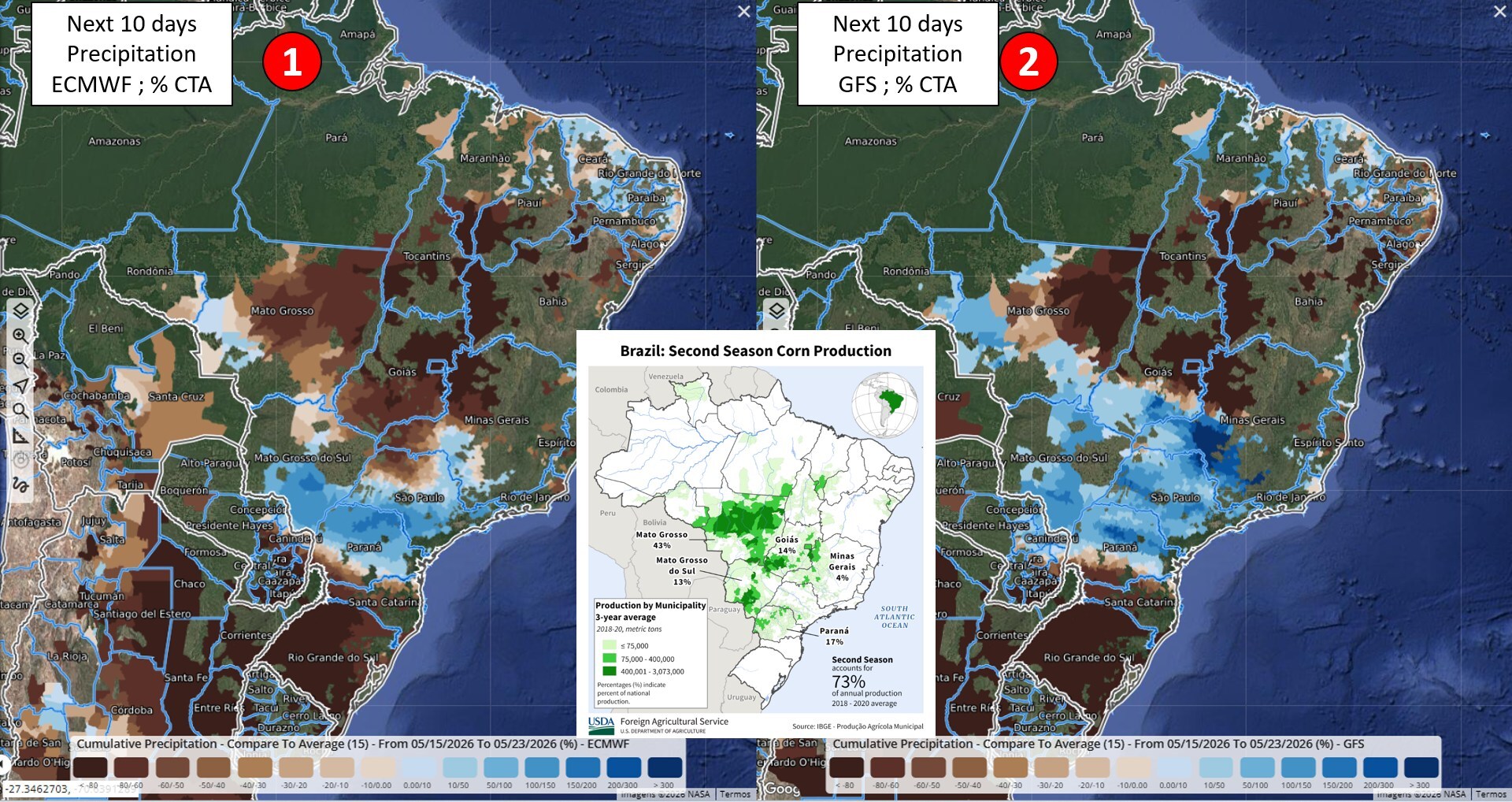
Although both models agree on a wetter pattern for Mato Grosso do Sul and Paraná, they diverge considerably across Minas Gerais, Goiás and Mato Grosso. While the ECMWF ① continues to indicate below-average rainfall, the GFS ② points to more widespread precipitation in these areas. Given that parts of this region are already experiencing moisture deficits, the GFS scenario would be more favorable for safrinha corn development.
YES
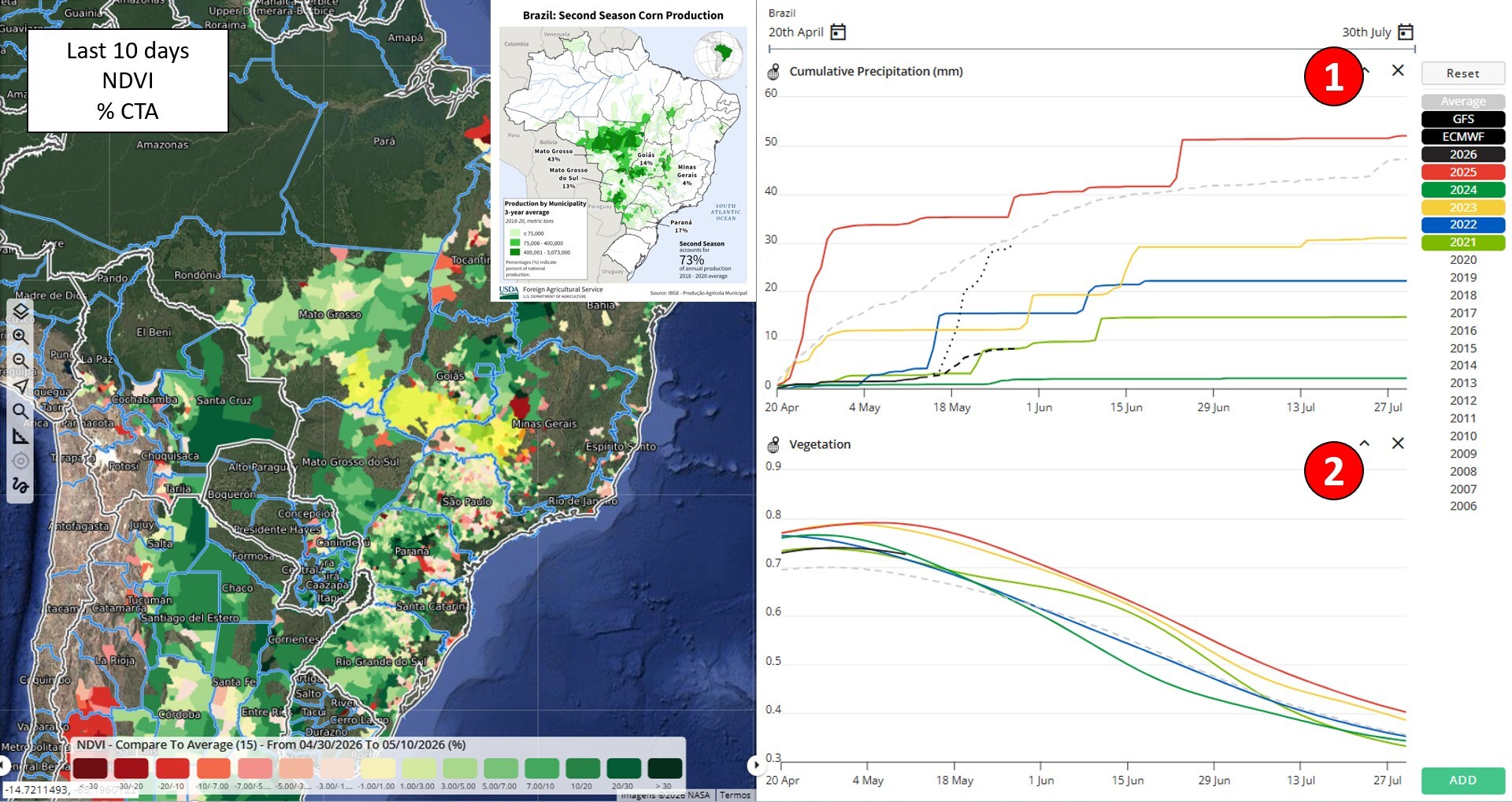
From southeastern Mato Grosso to southern Goiás and parts of Minas Gerais, the GFS ① forecasts a return of rainfall in the coming days, which could help stabilize and partially recover crop conditions if confirmed. A similar pattern was observed in 2021 ②, when late-season rains improved conditions, although yields still ended below potential in that year. The later planting pace this season also supports the analysis that part of the crop may still benefit from a return of moisture. On the other hand, if ECMWF scenario of below-average rainfall proves more accurate, water stress is likely to persist across these regions.To monitor.
Yes
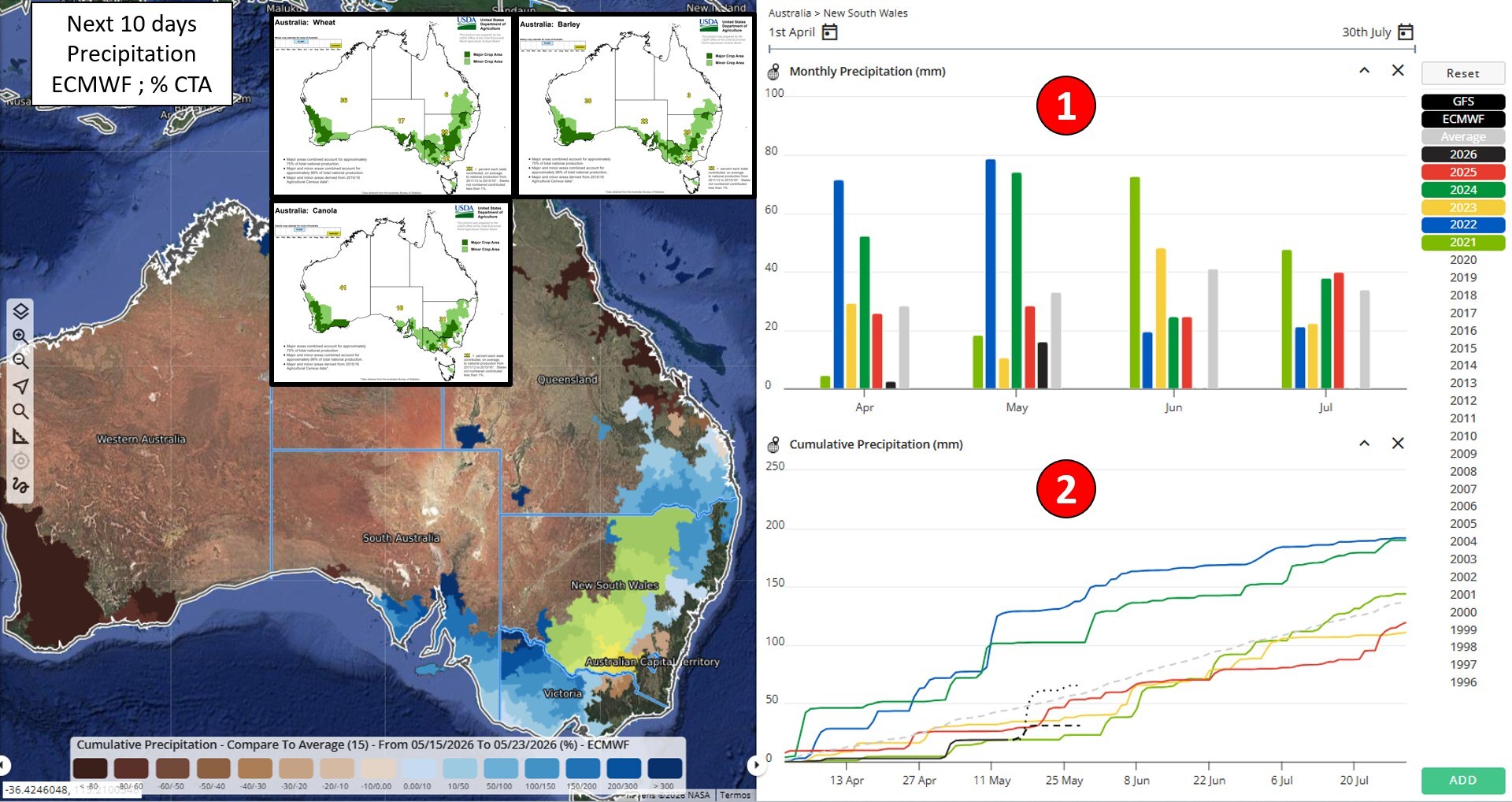
After a very dry April ①, rainfall ② is returning to eastern Australia, helping improve soil moisture levels and supporting the early development of wheat crops as planting progresses.
NO
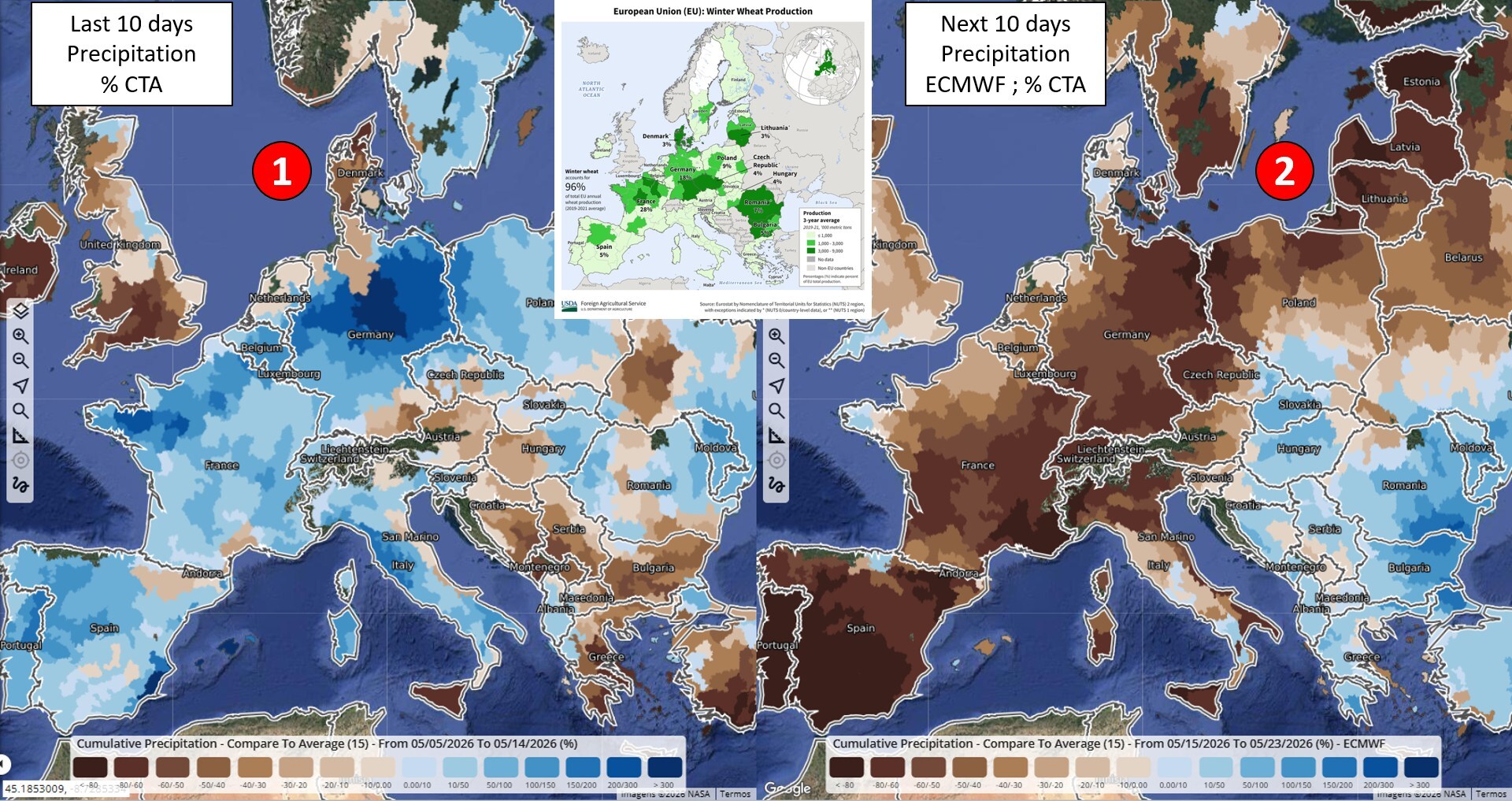
Following the recent rainfall ①, the ECMWF ② forecasts a return to drier conditions across much of Europe in the short term, while southeastern areas — Romania and surrounding areas — are expected to remain wetter than average.
YES
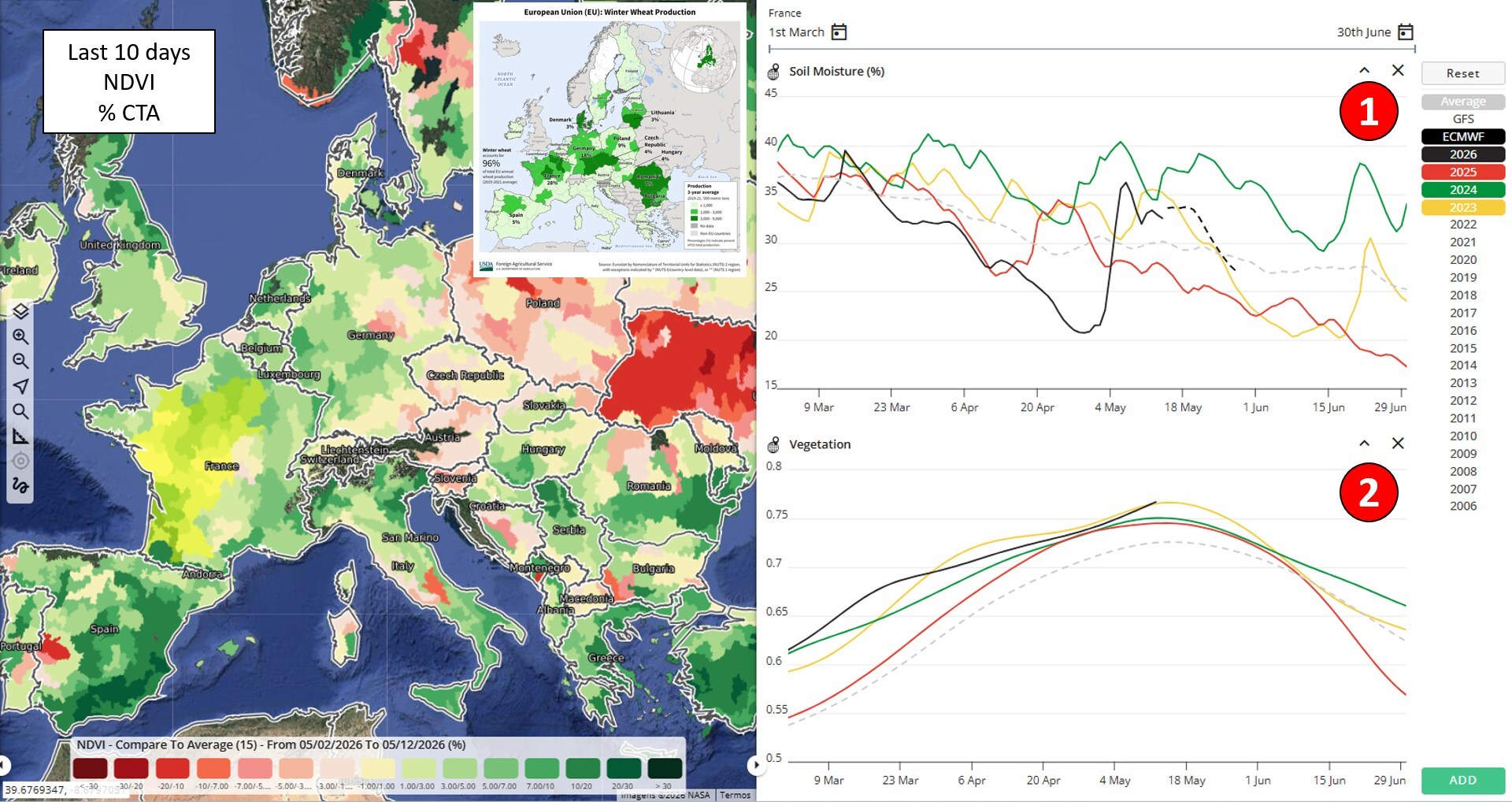
At least in Western Europe, particularly in France, the recent return of rainfall and improvement in soil moisture ① appear to be supporting crop vigor ②, with wheat showing favorable growth dynamics in recent days following the recovery in moisture conditions.
YES
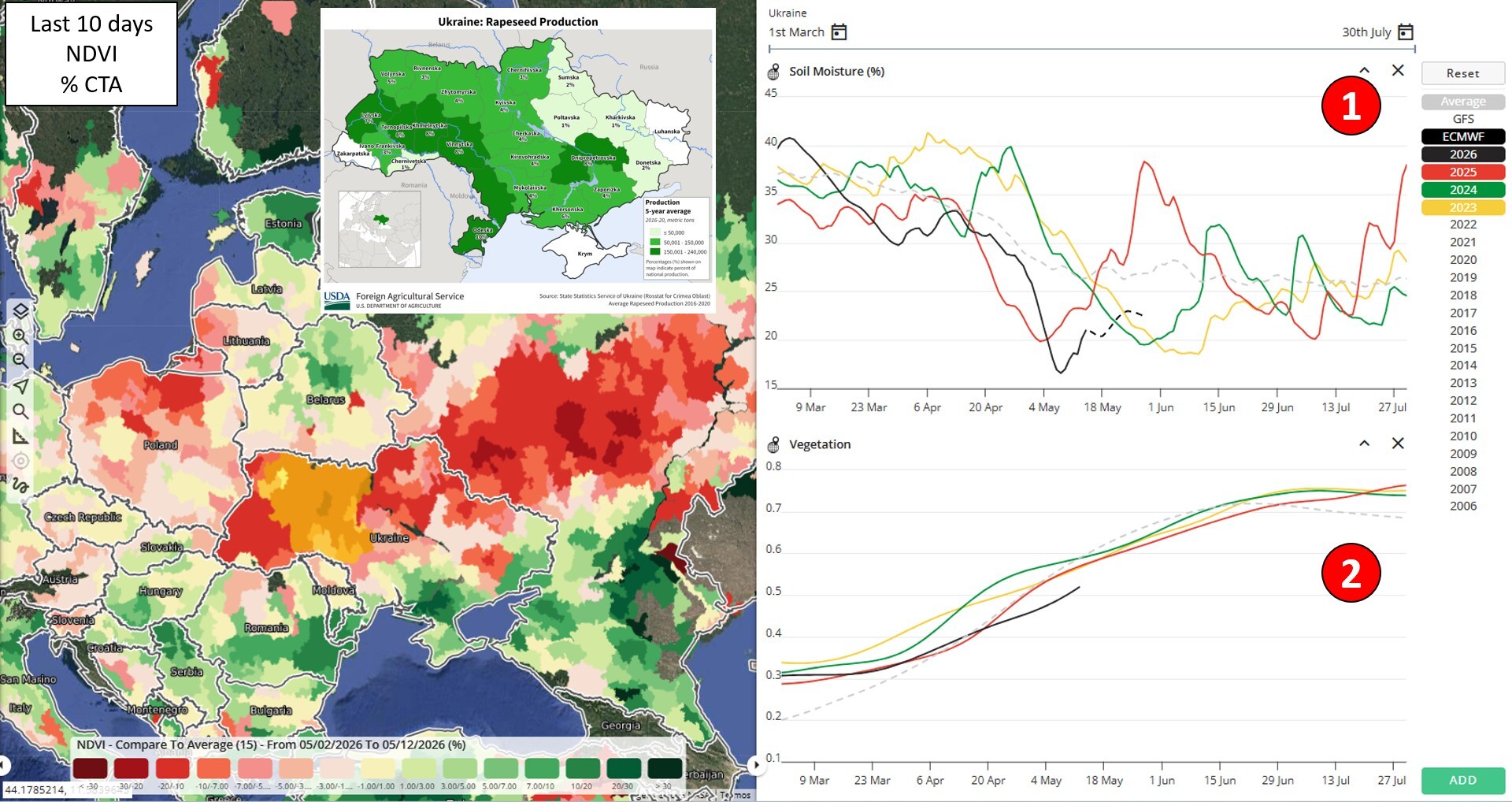
Despite the recent improvement in soil moisture ①, moisture levels remain below average across western Ukraine, while crop vigor ② continues to show disappointing performance.
Subscribe to World in 10