
World in 10 Overview

01

USA - Did drier weather allow corn harvest to catch up in the western Corn Belt?

PARTIALLY

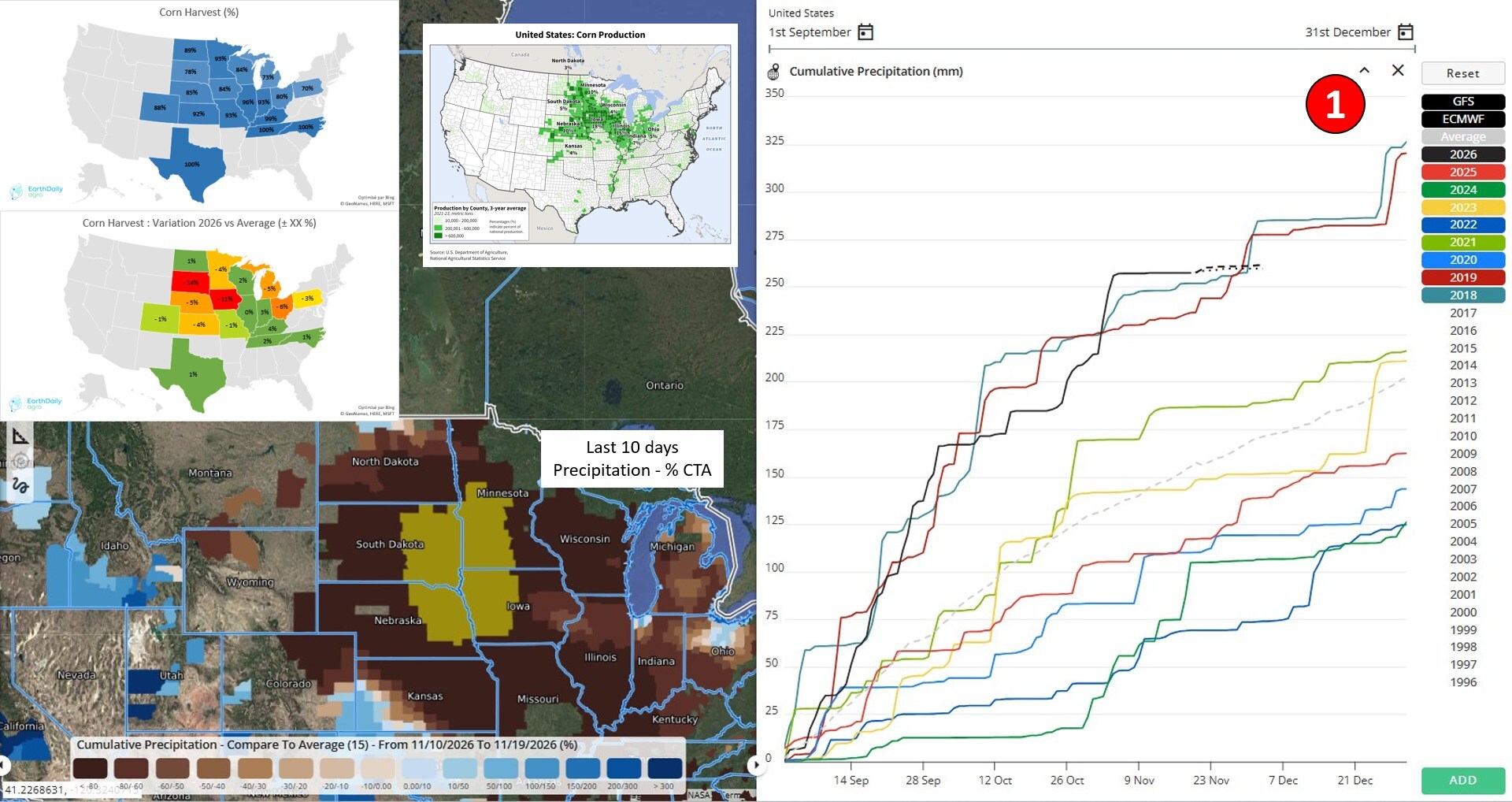
According to the USDA, the harvest gap has narrowed over the past week in South Dakota (-14 points, from -17), Iowa (-11 points, from -17) and Nebraska (-5 points, from -10). Rainfall over the past 10 days has been well below average across virtually the entire Corn Belt, and cumulative precipitation in the western Corn Belt has barely increased since early November ①. Both the GFS and the ECMWF forecast limited additional rainfall through late November, which should allow further progress, although South Dakota and Iowa remain well behind the usual pace. 

Agri18-1
02

Brazil - Has soil moisture finally recovered in Mato Grosso?

YES

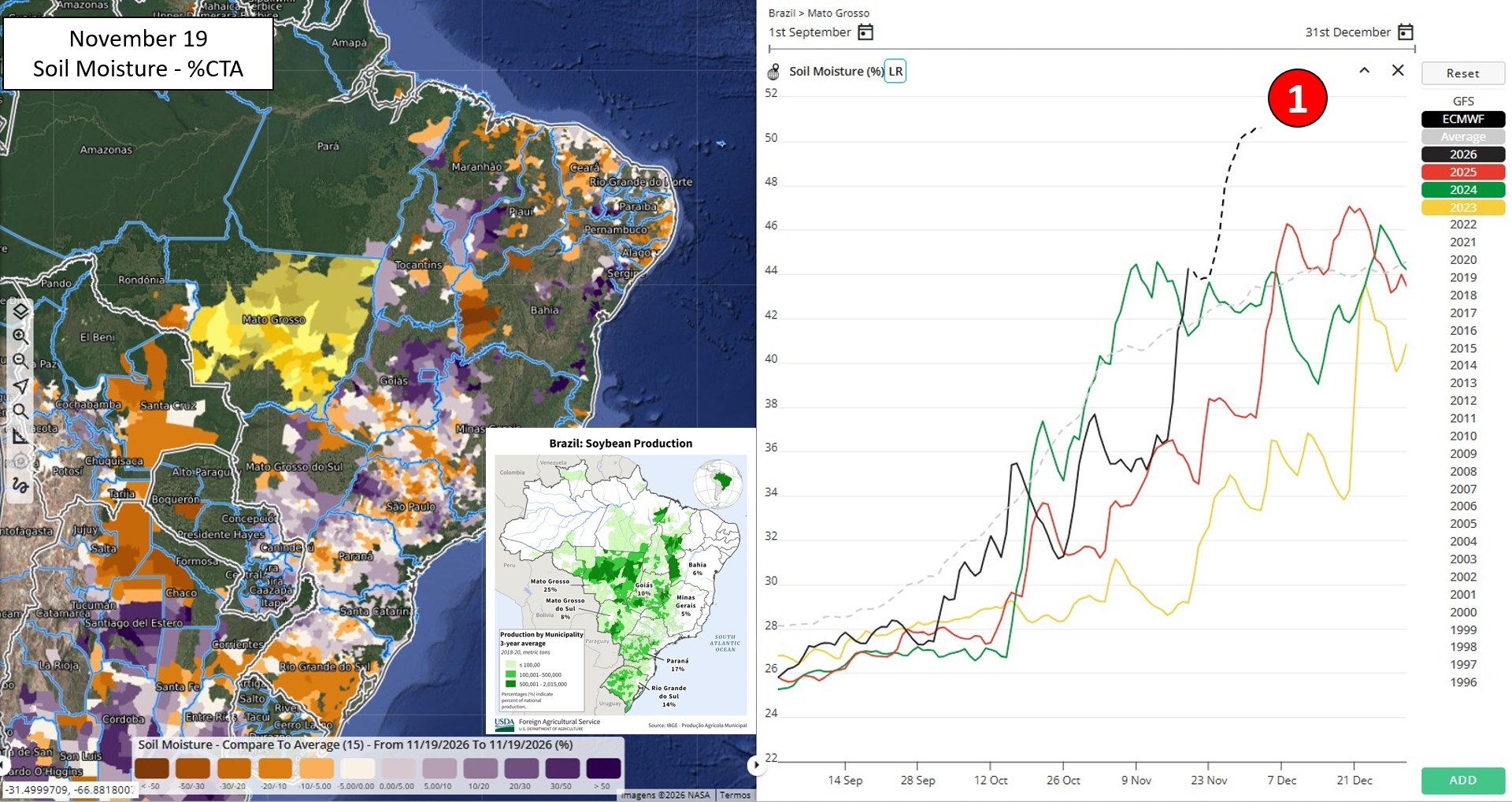
As forecast last week, soil moisture in Mato Grosso rose sharply over the past days and is now above average and slightly above recent years ①, after remaining below average since mid-October. The ECMWF forecasts a further increase into early December, which should favor soybean establishment and early development across Brazil’s main producing state. Elsewhere, conditions remain heterogeneous, with below-average soil moisture persisting in western Bahia.

Agri21
03

Brazil - Do vegetation indices point to a good start for soybeans in Mato Grosso?

YES

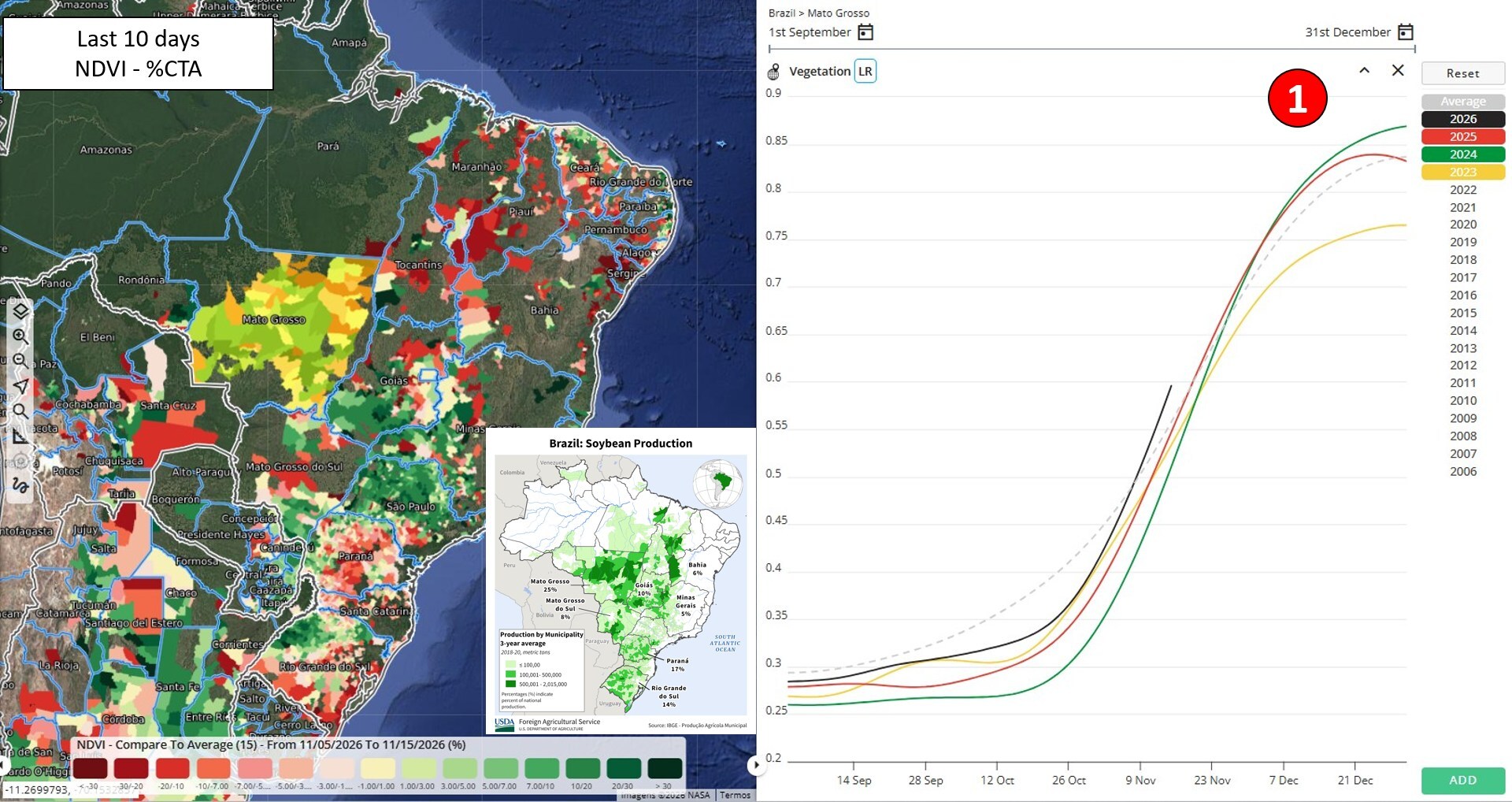
Vegetation indices in Mato Grosso are above average and above the past three seasons ①, reflecting early planting and fast crop emergence. Despite of high temperatures in parts of the state, NDVI shows no sign of crop stress so far, although it still provides limited information on yield potential at this early stage. In contrast, below-average vegetation indices persist across much of Maranhão and Piauí, where dry conditions earlier in the season delayed planting.

Agri24-1
04

Brazil - Did drier weather allow fieldwork to resume in the South?

Partially

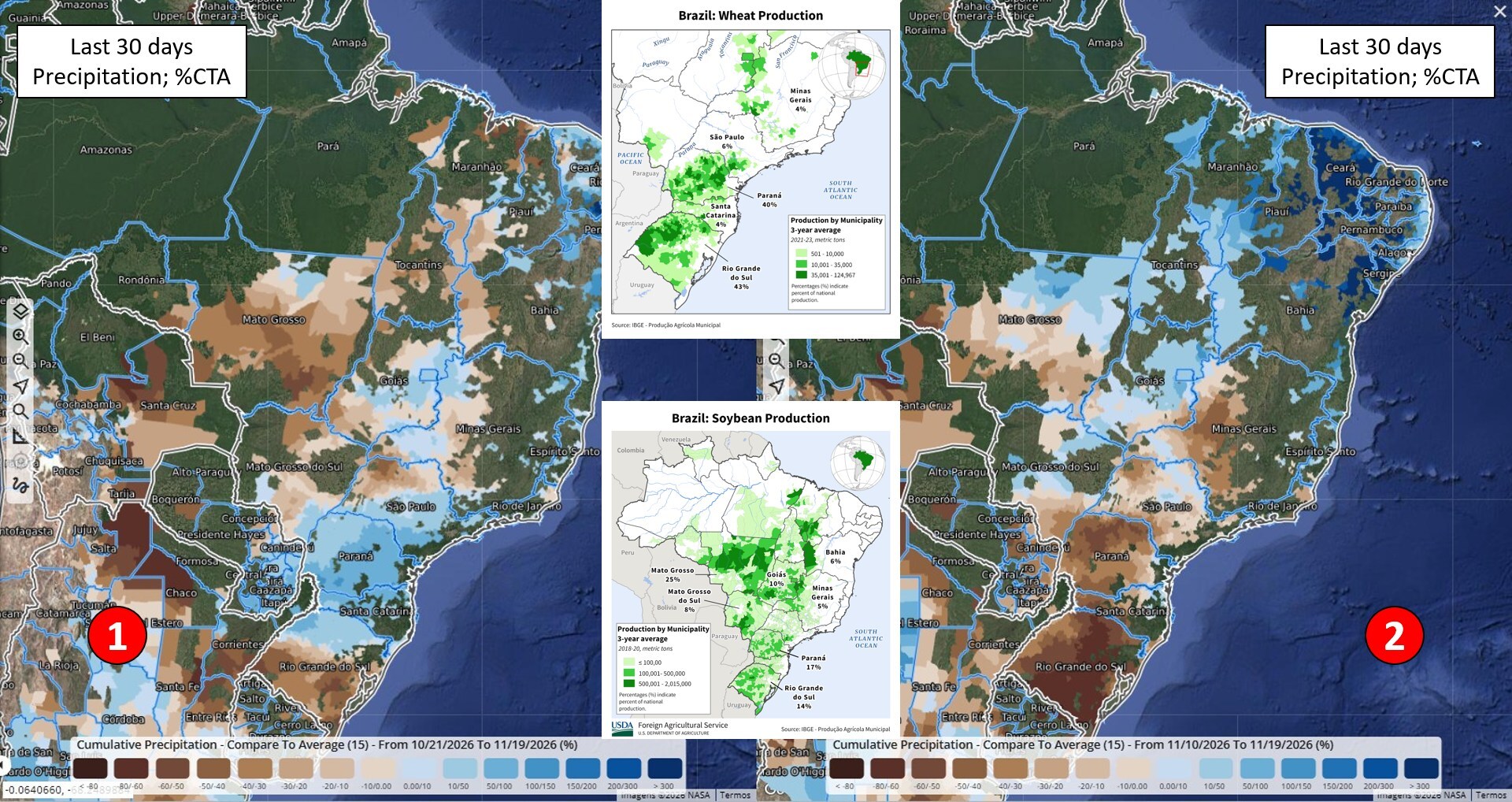
Frequent rainfall over the past 30 days ①, particularly in Paraná and Santa Catarina, limited wheat harvest and soybean planting across southern Brazil, which accounts for nearly 90% of national wheat production. Over the past 10 days, however, rainfall has been well below average across Paraná, Santa Catarina and Rio Grande do Sul ②, opening a window for field operations to resume, as forecast last week by the ECMWF. Meanwhile, rainfall returned across the Center-North, including eastern Mato Grosso, Tocantins and western Bahia.

Agri27-1
05

Argentina - Do vegetation indices support a strong wheat harvest?

Yes

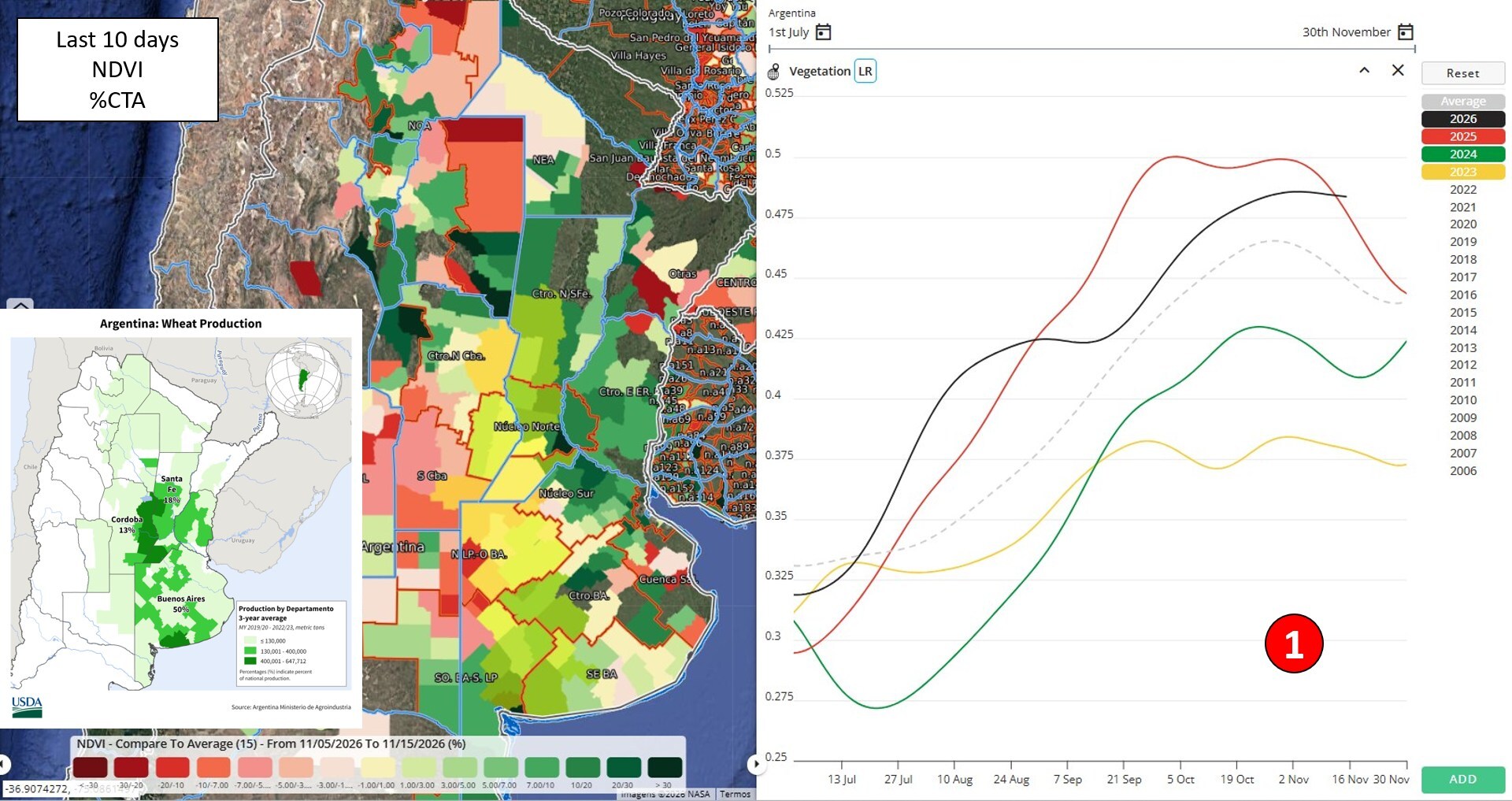
Vegetation indices across the main wheat-growing region remain above average and well above 2023 and 2024, although below the record 2025 season ①. Unlike last year, NDVI has not yet started to decline, pointing to a later crop cycle in the core region, where harvest is still ahead. Over the past 10 days, vegetation indices were above average across much of Buenos Aires, which accounts for half of national production, supporting favorable prospects for the coming harvest.
Agri29-1
06

Argentina - Is a dry spell a threat to summer crop planting?

Not yet

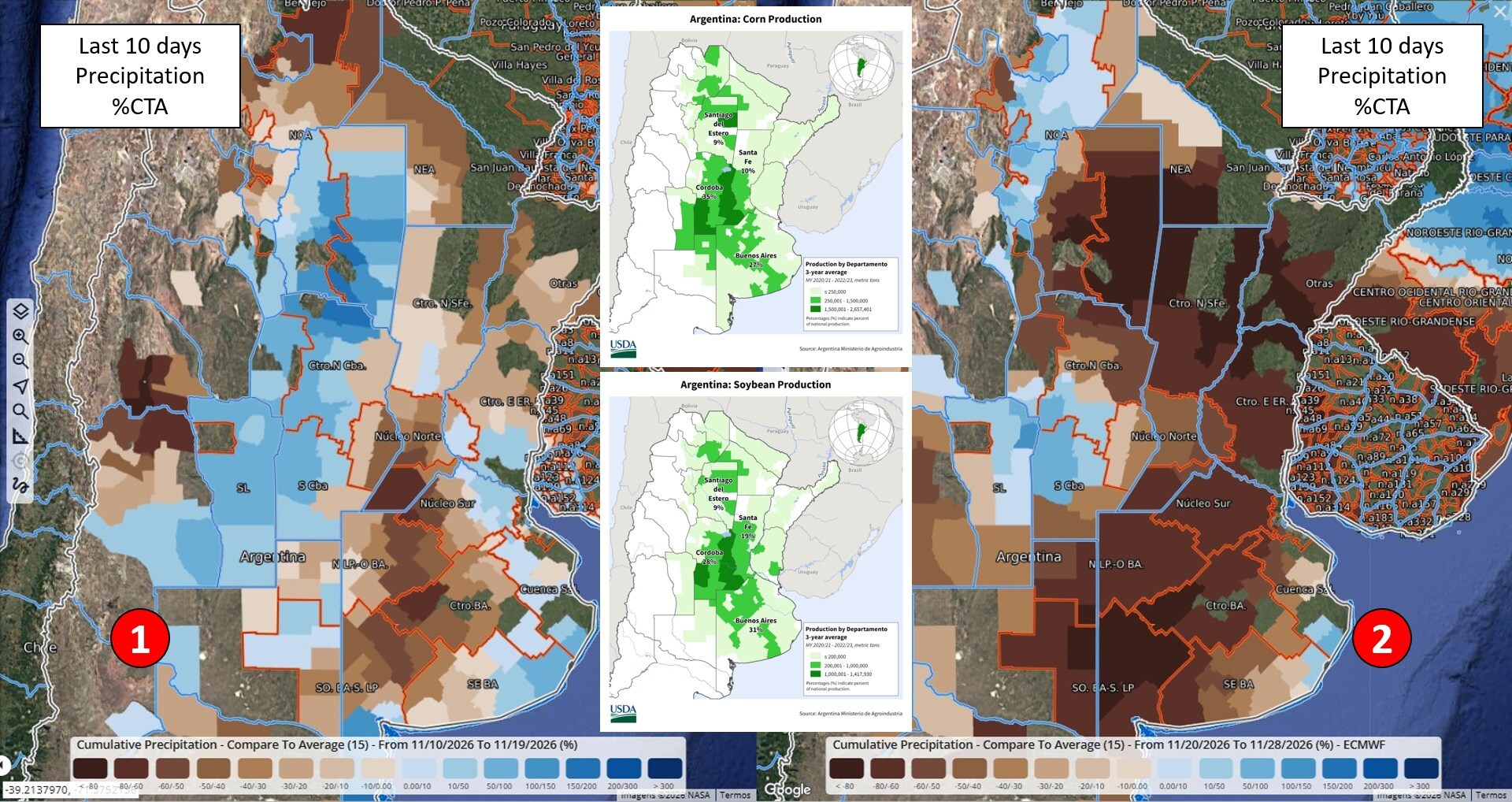
According to the Bolsa de Cereales, soybean and corn planting are ahead of the average pace. Rainfall over the past 10 days was above average across Córdoba and western Santa Fe, but below average across much of Buenos Aires and Entre Ríos ①. The ECMWF forecasts well-below-average rainfall across virtually the entire agricultural area over the coming days ②. This should allow planting to keep advancing, but could reduce soil moisture, particularly in Buenos Aires, where conditions are already drier. To monitor!

Agri31-1
07

Australia - Will drier weather allow harvest to advance in the southeast?

Yes

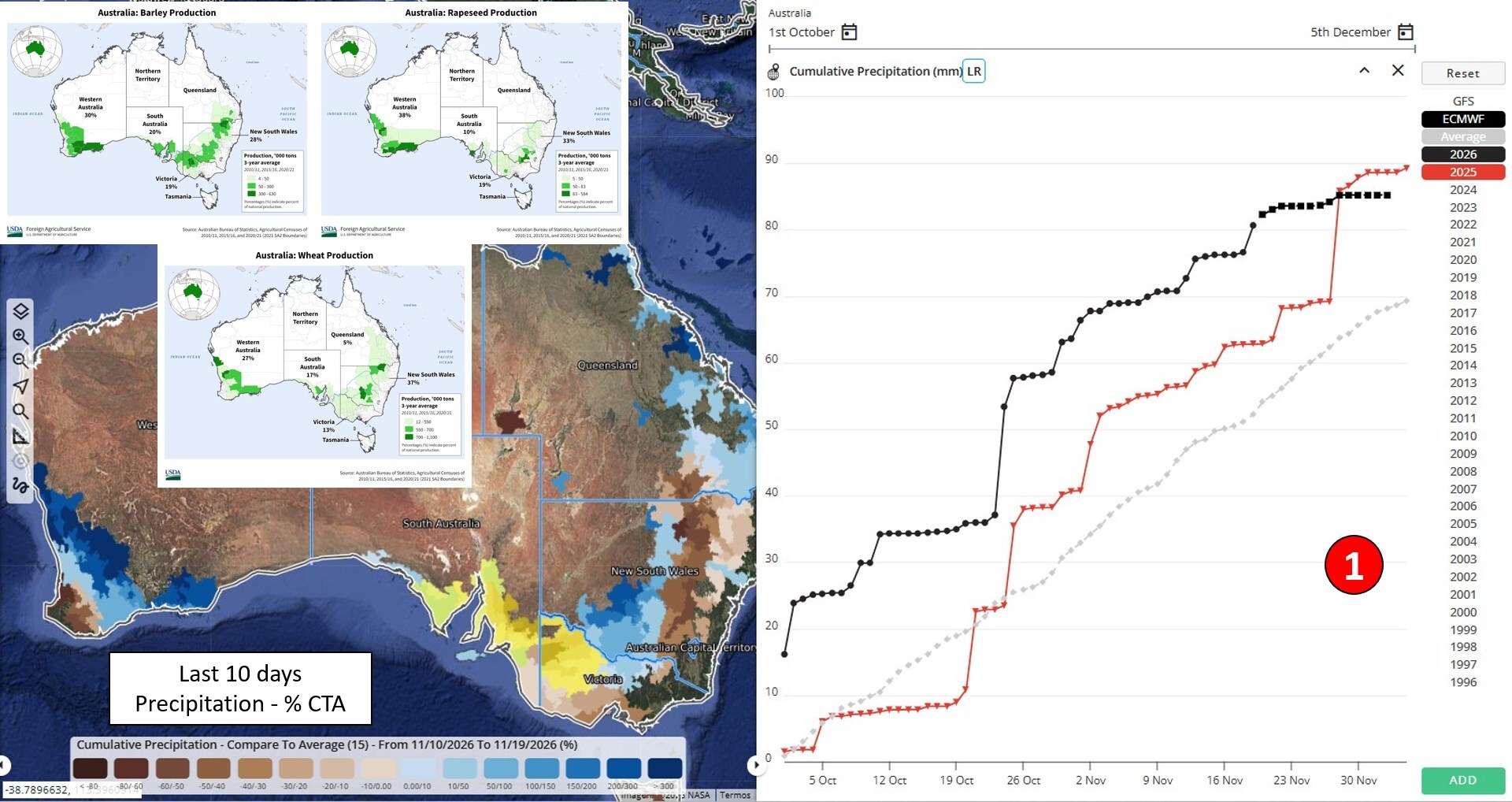
In South Australia and western Victoria, cumulative rainfall since October 1 is well above average and above last year ①, with further showers in mid-November slowing harvest in some areas. However, the ECMWF forecasts little additional rainfall through early December, which should allow harvest to advance. Over the past 10 days, drier conditions also returned across northern New South Wales ②, easing the quality concerns highlighted last week, while above-average rainfall in southern Western Australia could cause brief delays.
Agri33-1
08

Europe - Did soil moisture improve in France as forecast?

Yes

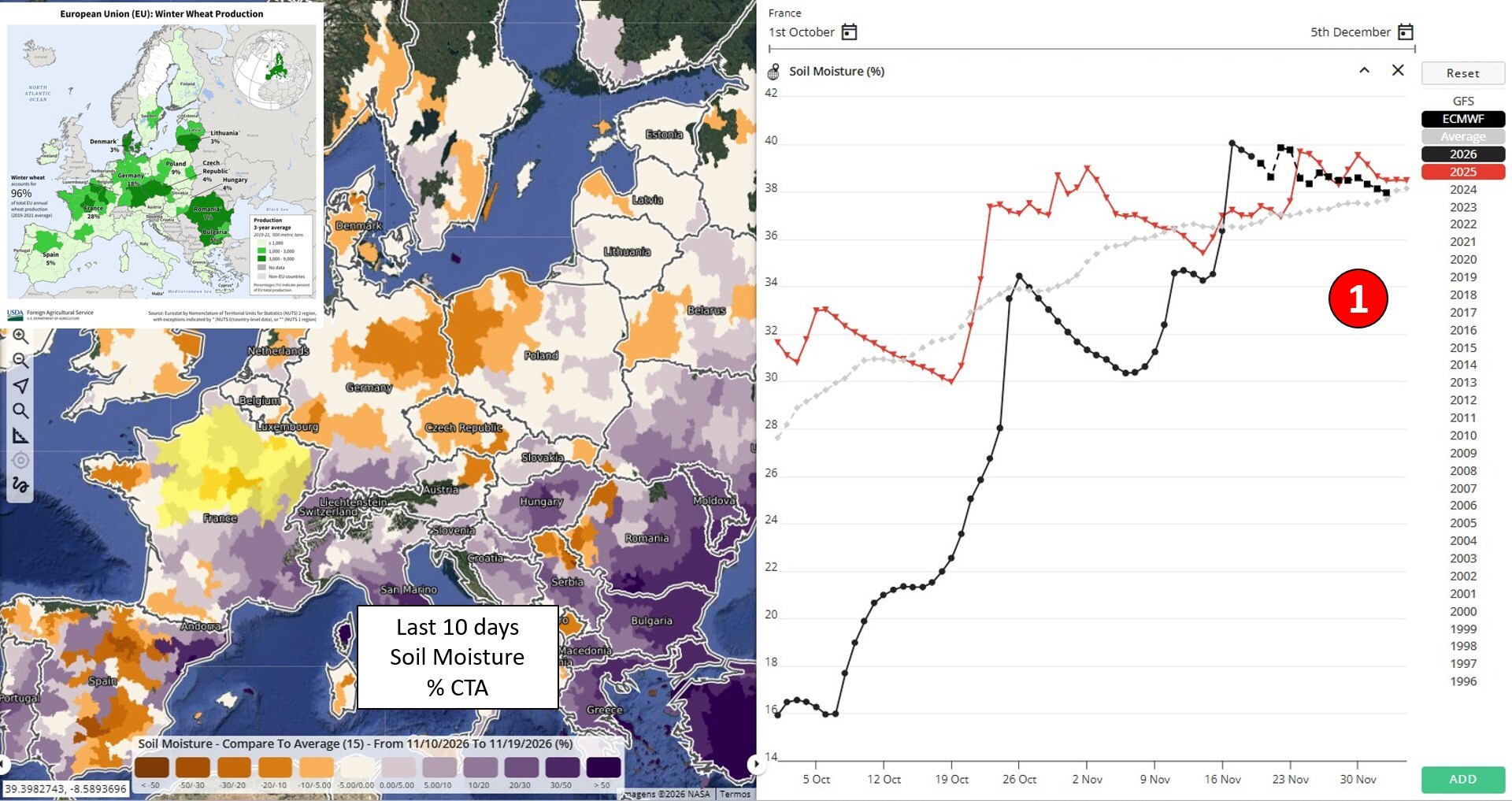
As forecast last week, soil moisture in northern France rose sharply in mid-November and is now above average, after reaching exceptionally low levels in early October ①. The ECMWF expects levels to remain close to average through early December, supporting winter wheat establishment, although the improvement comes late for rapeseed, whose emergence was hampered earlier in the season. However, below-average soil moisture persists across much of Germany, Poland and the Czech Republic ②.

Agri35
09

Russia + Ukraine - Are winter crops entering dormancy in good condition?

PARTIALLY

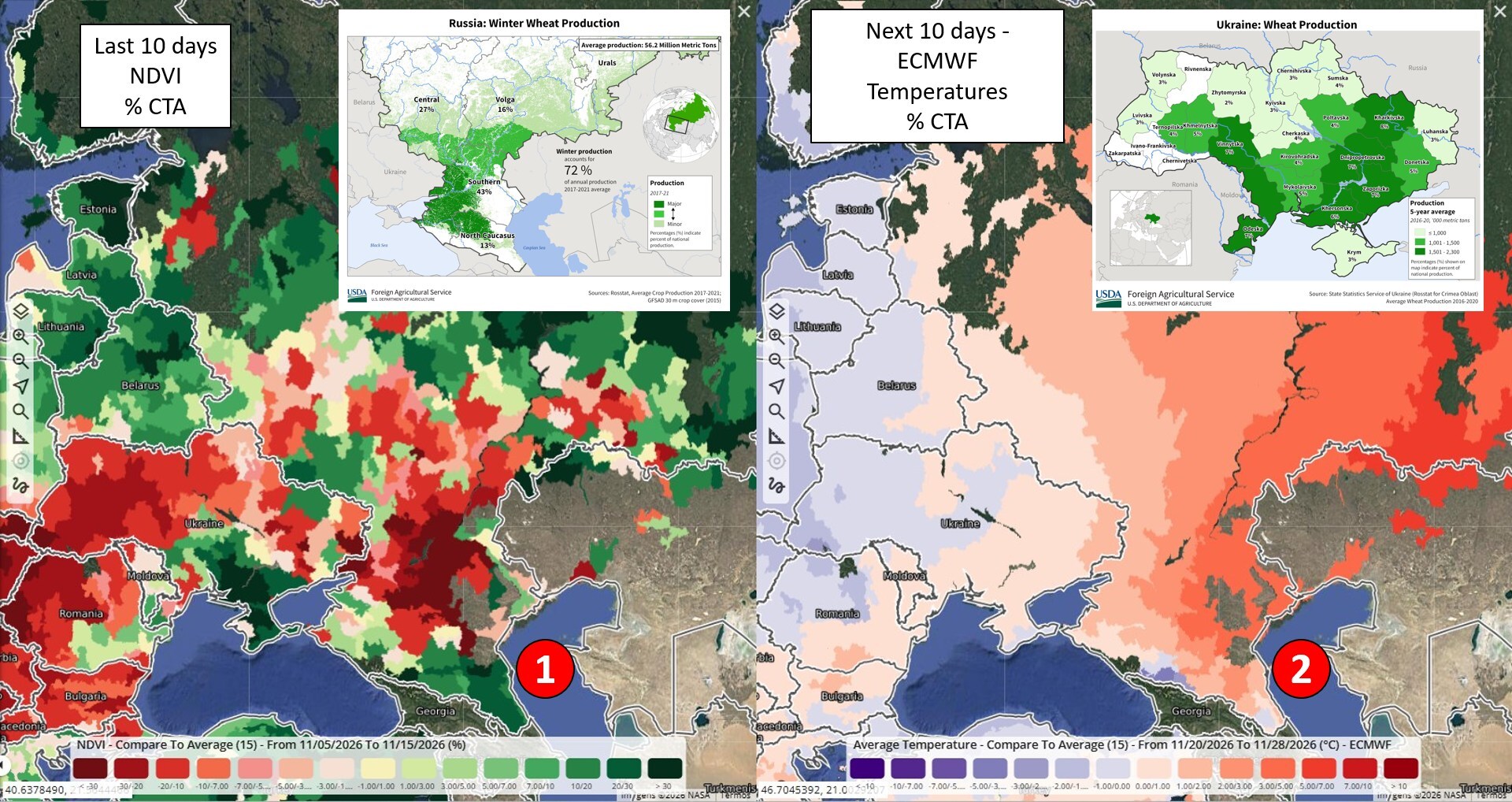
Vegetation indices over the past 10 days were above average across southern Russia, the country’s main winter wheat region, but remained below average across much of Ukraine and Russia’s Central district ①. The ECMWF forecasts above-average temperatures across Russia over the coming days ②, which should delay dormancy and give late-emerged crops more time to develop. In Ukraine, temperatures are expected to remain closer to average, limiting the opportunity for crops to catch up before winter.

Agri37
10

India - Is wheat sowing catching up despite dry conditions?

PARTIALLY

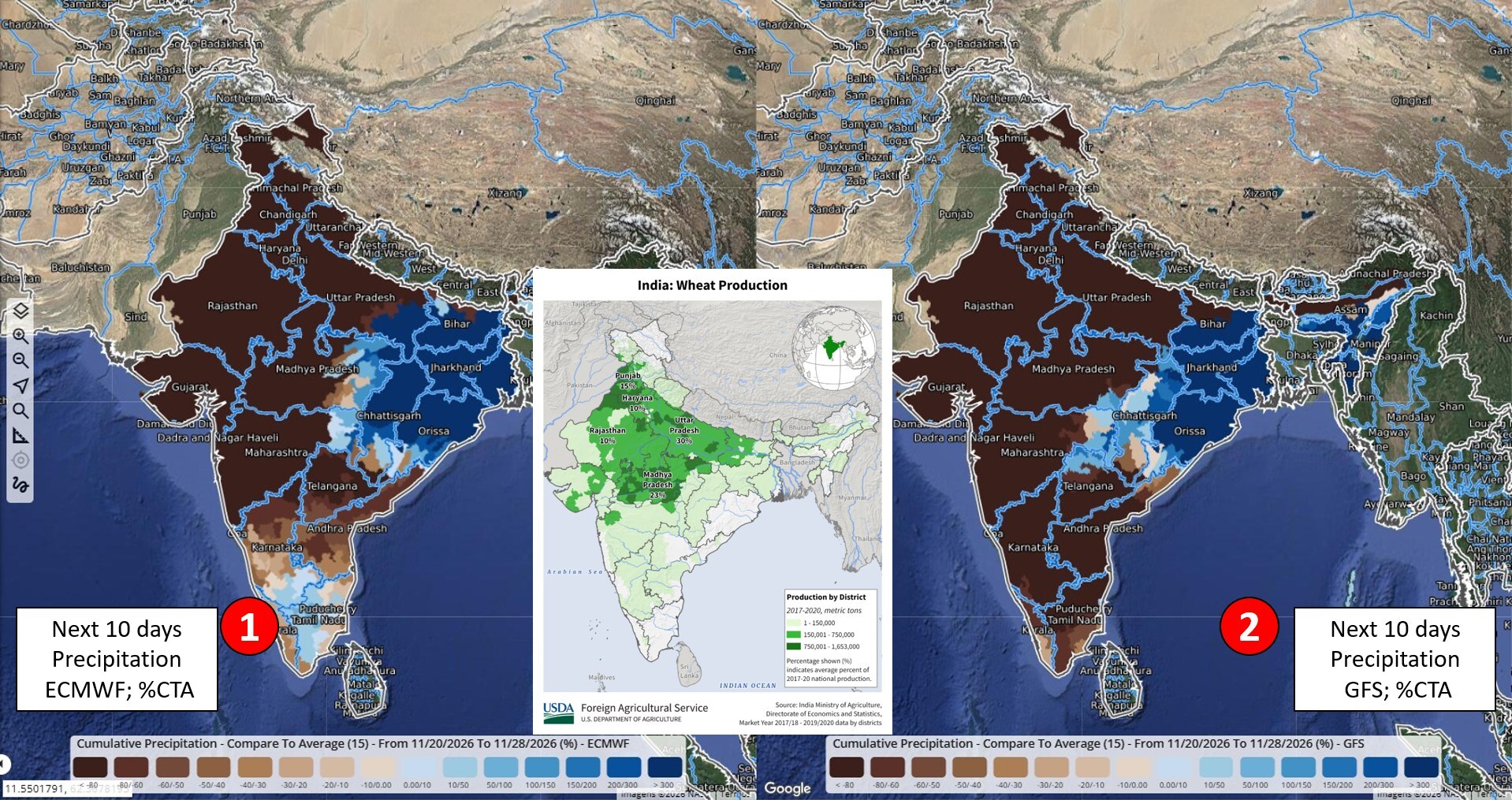
According to the Ministry of Agriculture, the gap in wheat sowing compared with last year has narrowed, although the area planted remains about 15% behind. Both the ECMWF ① and the GFS ② forecast well-below-average rainfall across the main wheat-growing states, including Punjab, Haryana, Rajasthan, Madhya Pradesh and most of Uttar Pradesh, keeping sowing dependent on irrigation. Only eastern India, including Bihar, Jharkhand and Odisha, is expected to receive above-average rainfall.

Agri39

Subscribe to World in 10