
World in 10 Overview

01

USA - Is winter wheat entering dormancy in good shape?

YES

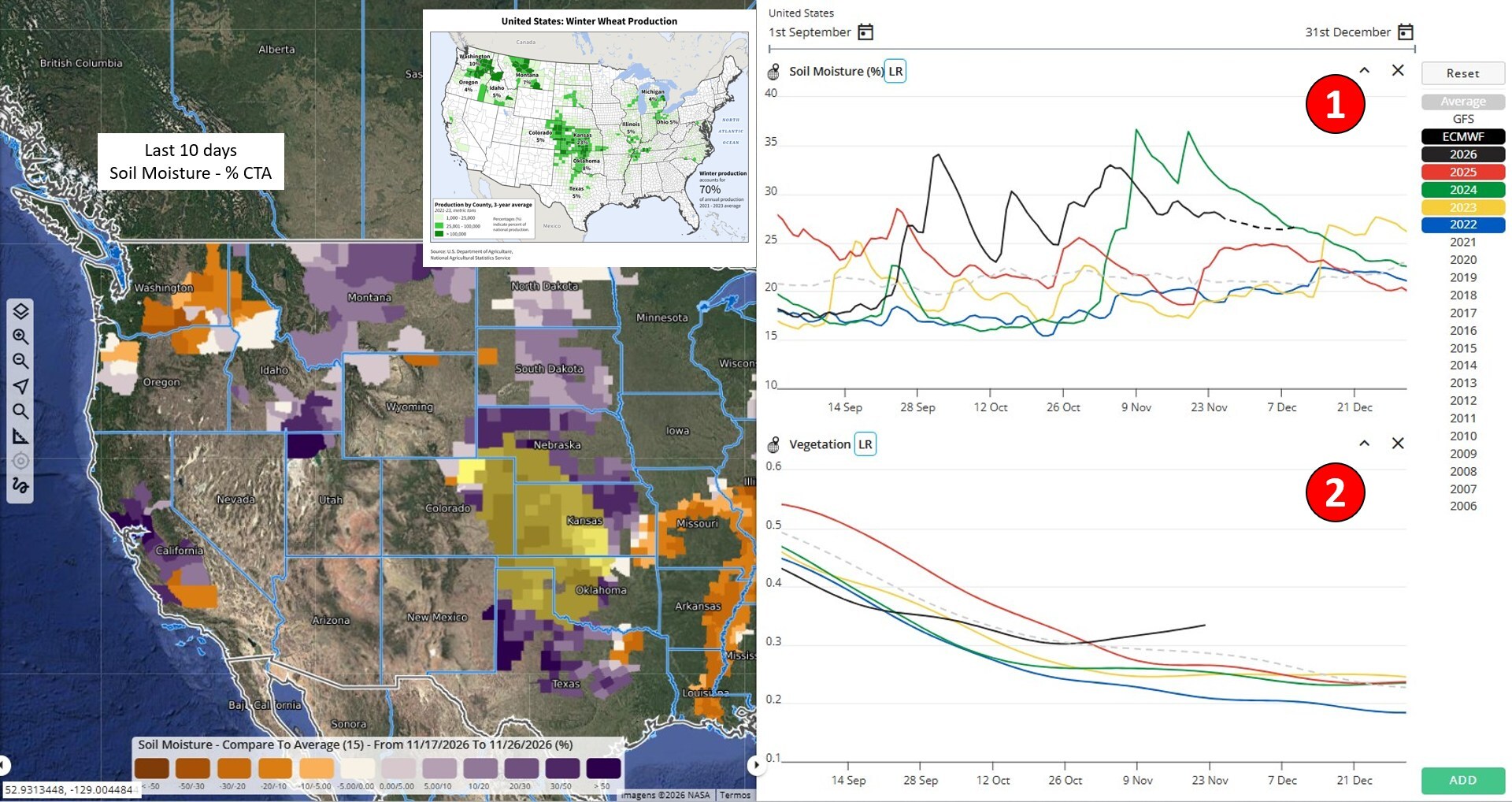
In the Central and Southern Plains, soil moisture remains well above average and above most recent years ①, and the ECMWF expects levels to stay elevated into early December. Vegetation indices are also above average and the highest of the past five seasons ②, pointing to strong crop establishment ahead of dormancy. Over the past 10 days, drier conditions were limited to Washington and Oregon.

Agri76-2
02

Brazil - Is dryness re-emerging in Mato Grosso?

BRIEFLY

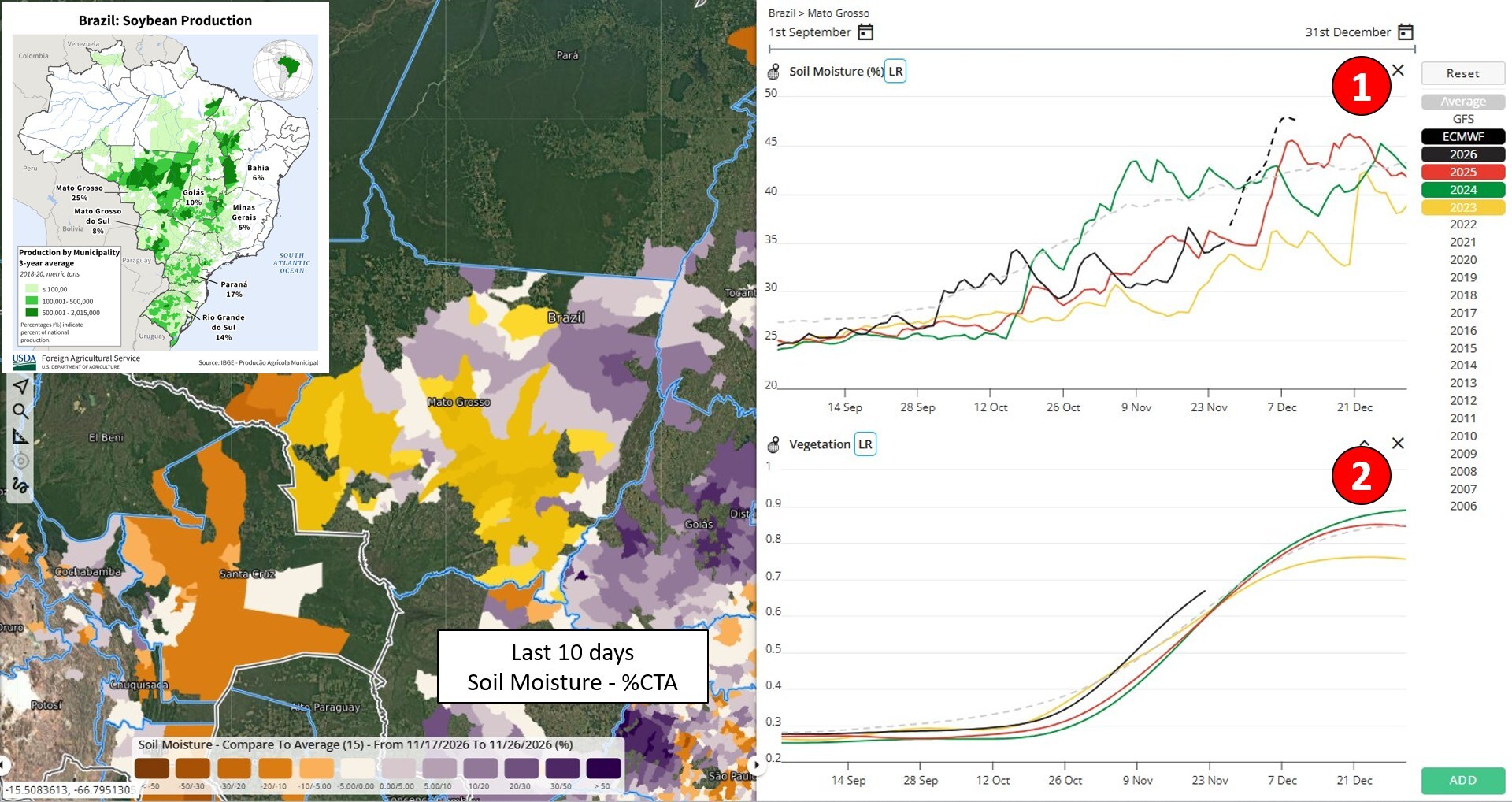
Soil moisture in central and southern Mato Grosso has declined over the past week and is below average, close to 2025 levels ①. However, the ECMWF forecasts a sharp recovery in early December, to levels above recent years. Vegetation indices remain above average and above the past three seasons ②, showing no impact on soybean development so far.

Agri79-4
03

Brazil - Is excess rainfall slowing soybean development in Paraná?

YES

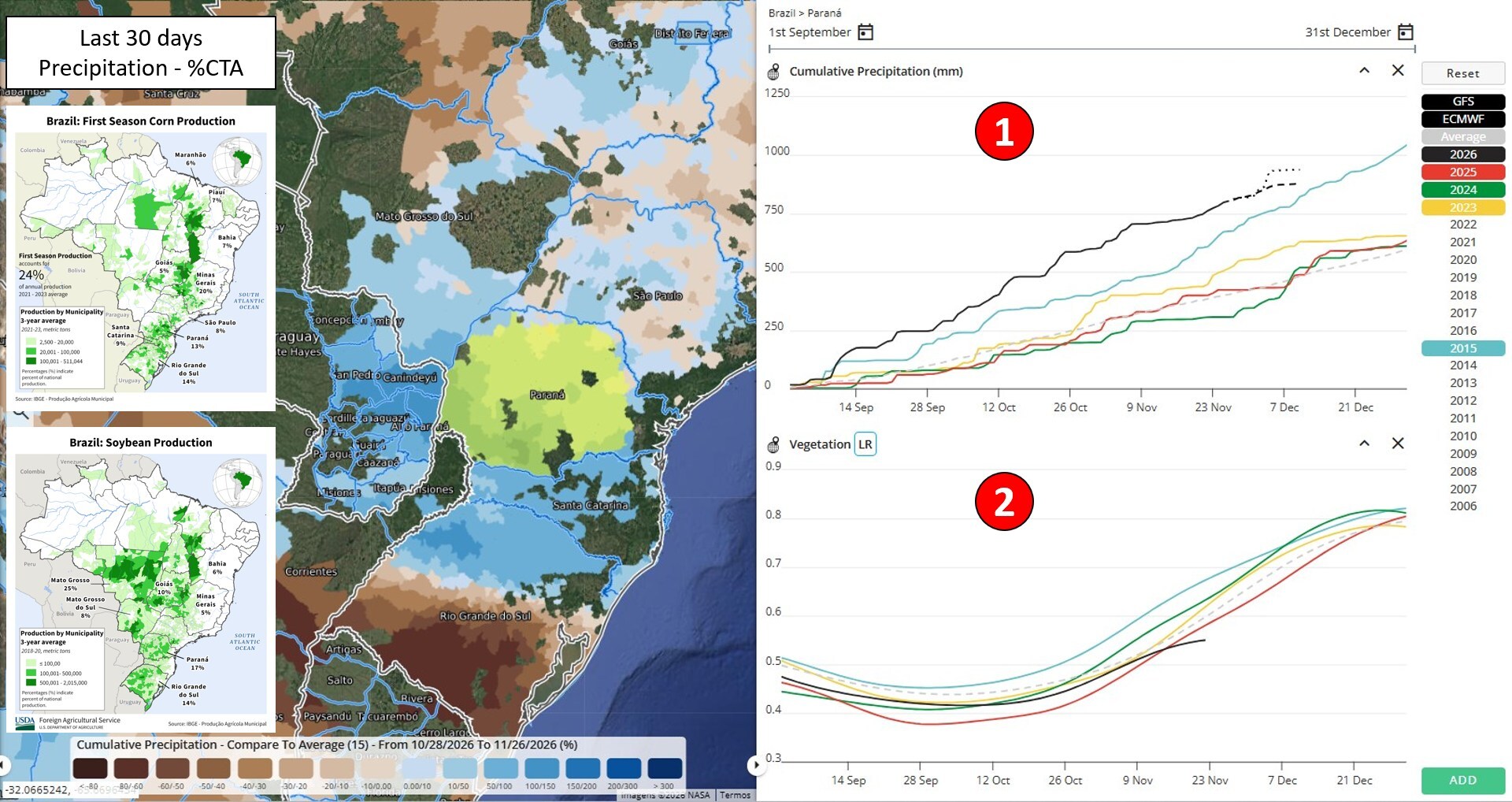
After a brief drier window, heavy rainfall returned to Parana, where cumulative precipitation since September is now the highest in recent years, even above 2015, a strong El Niño year ①. Both the GFS and the ECMWF forecast further heavy rainfall into early December. Vegetation indices are below average and below 2015, 2023 and 2024 ②, suggesting slower soybean development, possibly linked to waterlogged soils and reduced sunlight. In contrast, rainfall over the past 30 days was well below average in southern Rio Grande do Sul.

Agri82-4
04

Brazil - Are northern soybean areas still waiting for regular rainfall?

YES

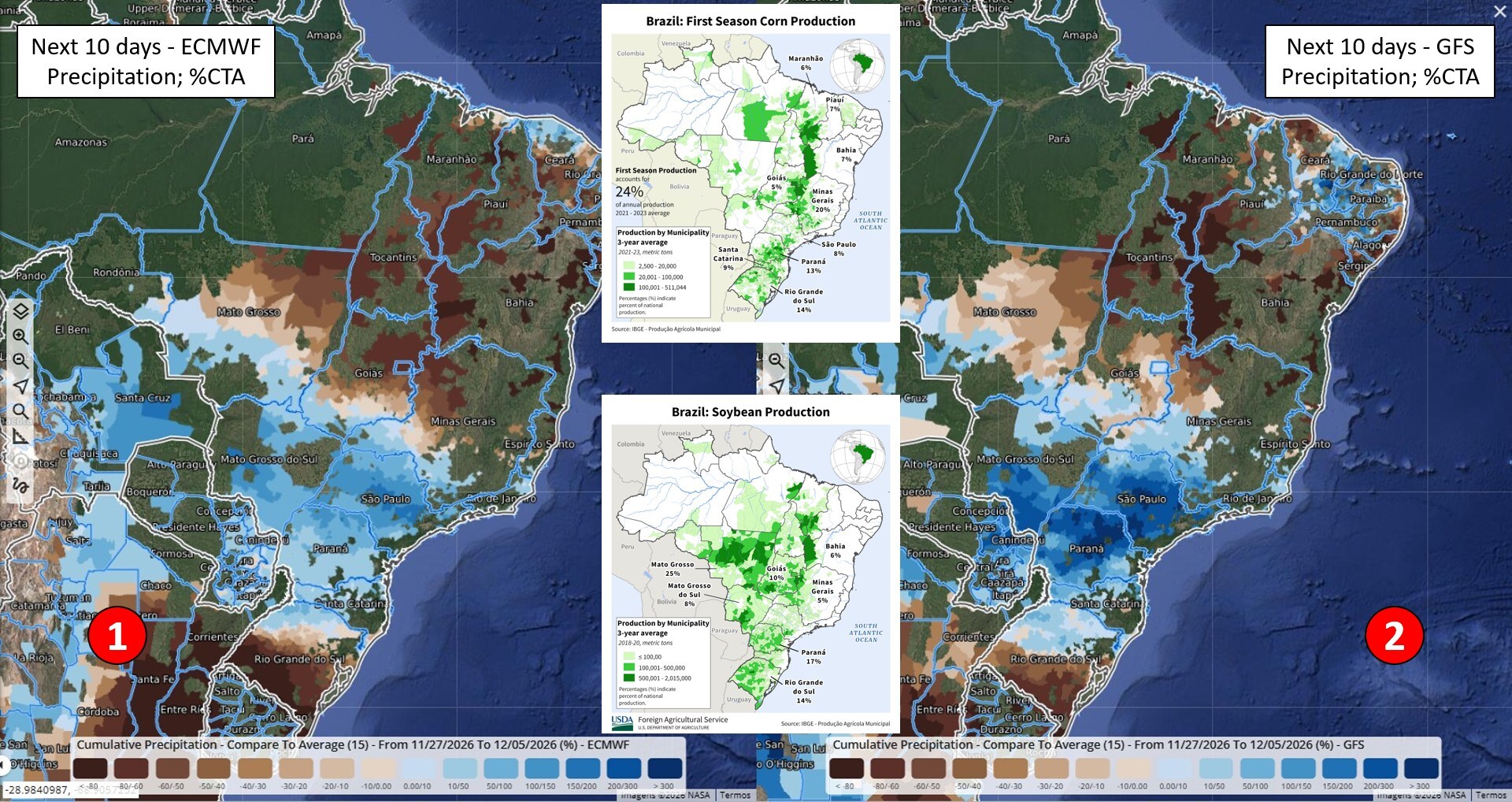
Both the ECMWF ① and the GFS ② forecast below-average rainfall over the next 10 days across most of Tocantins, Maranhão, Piauí and Bahia (North/Northeast of the country), where soybean planting remains behind the rest of the country. The models also agree on drier conditions in southern Rio Grande do Sul and heavy rainfall in Parana, São Paulo and Mato Grosso do Sul. In Mato Grosso, however, they diverge: the ECMWF forecasts more rains than the GFS points.

Agri84-2
05

Argentina - Will dry weather favor the wheat and barley harvest?

Yes

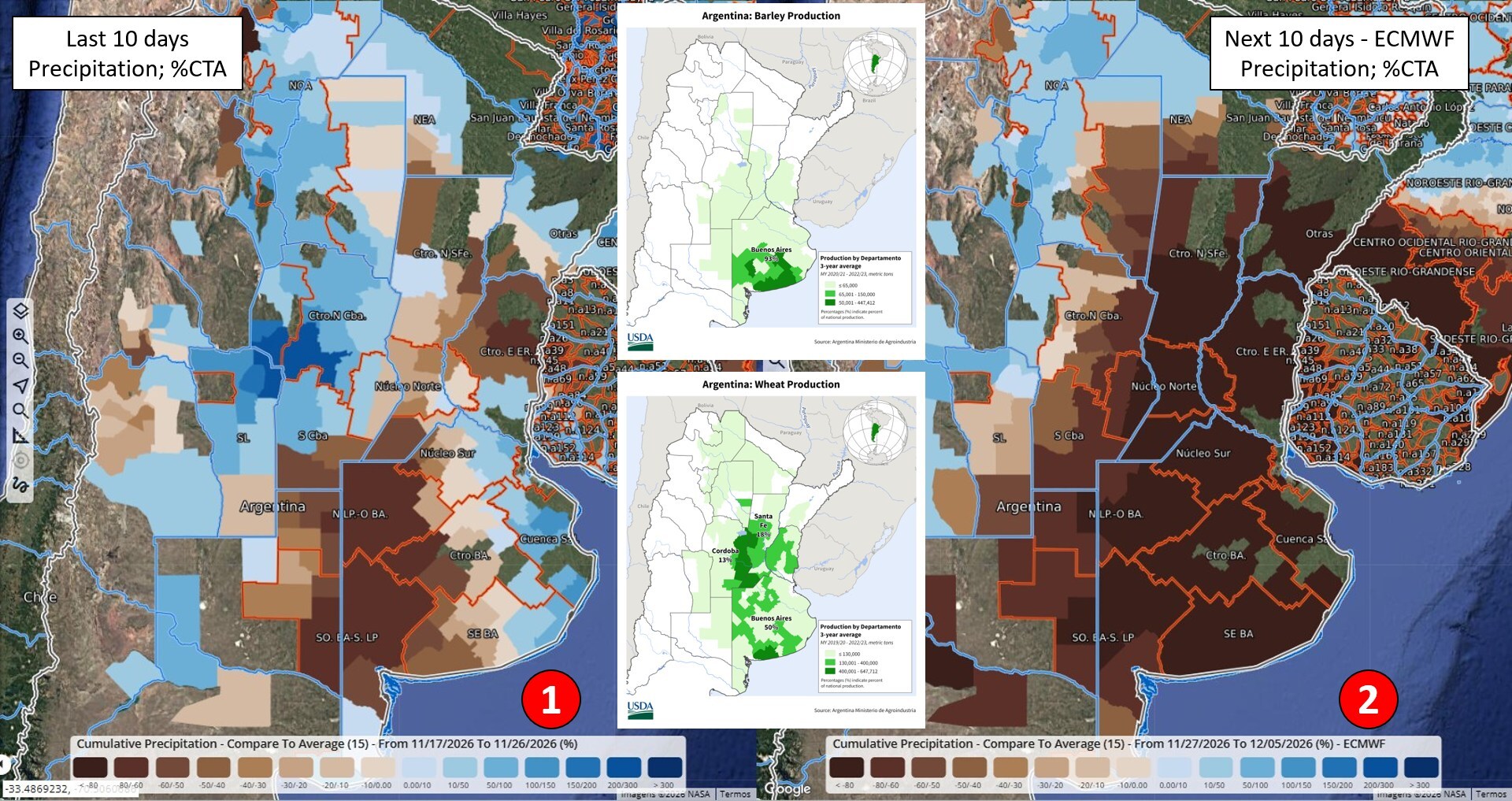
Cumulative precipitation over the past 10 days was below average across much of Buenos Aires, while showers were concentrated in Córdoba ①. The ECMWF forecasts below-average rainfall across a large area over the coming days ②, providing a favorable window for wheat harvest to advance into the core region. Dry conditions should also allow the barley harvest to start in Buenos Aires, which accounts for over 90% of national barley production, and help preserve grain quality.
Agri88-2
06

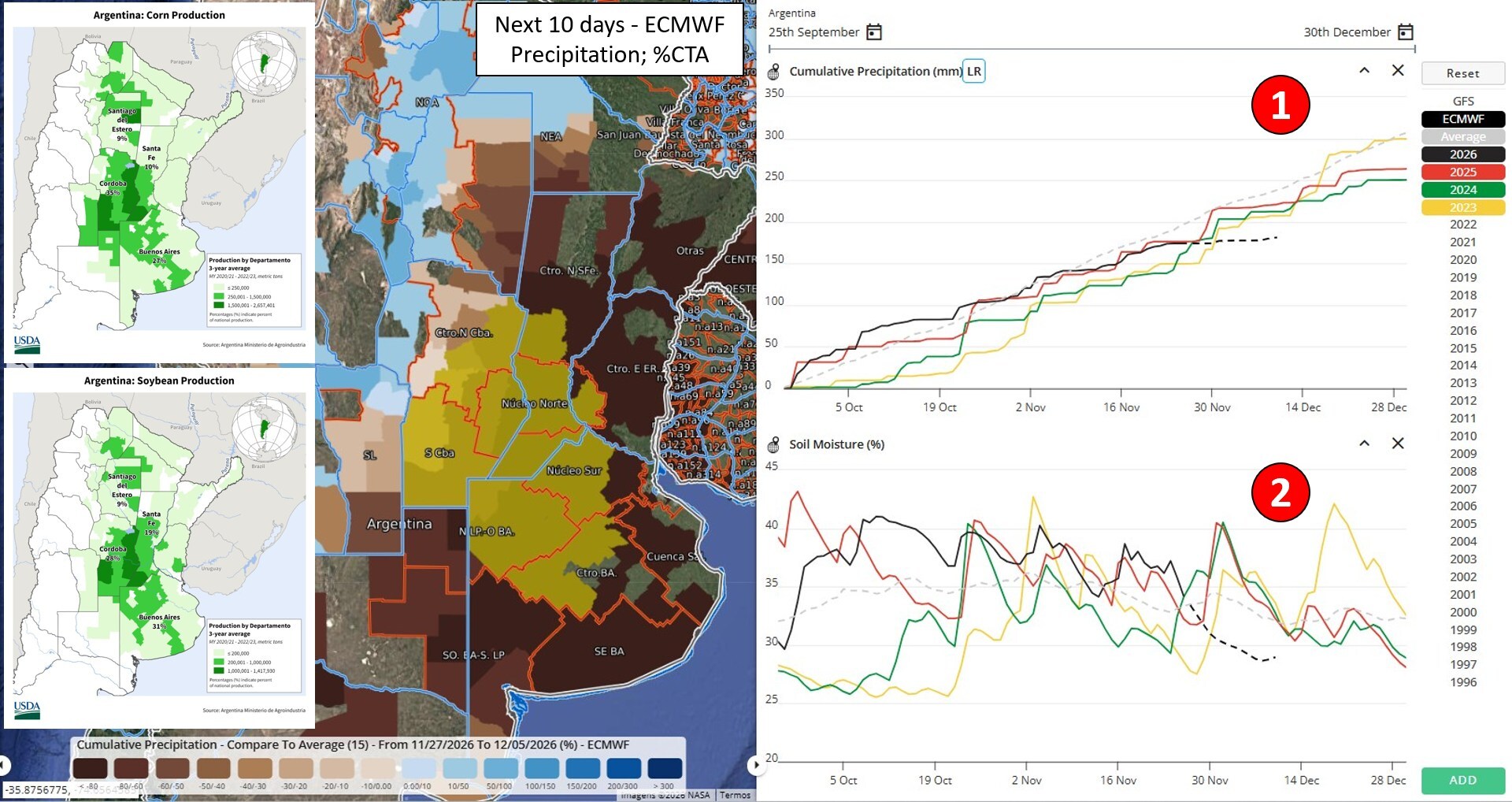
Argentina - Is the dry spell becoming a threat to soybeans and corn?

Not yet

In the core soybean and corn region, cumulative precipitation since late September has fallen below average, and the ECMWF forecasts little additional rainfall through early December ①, with below-average precipitation across virtually the entire cor/soy zone. As a result, soil moisture, currently close to average, is expected to drop to the lowest level of the past three seasons by early December ②. While favorable for the wheat and barley harvest, these conditions could limit emergence and early development of recently planted soybeans and corn. To monitor!

Agri90-2
07

Australia - Will dry weather allow harvest to advance?

Yes

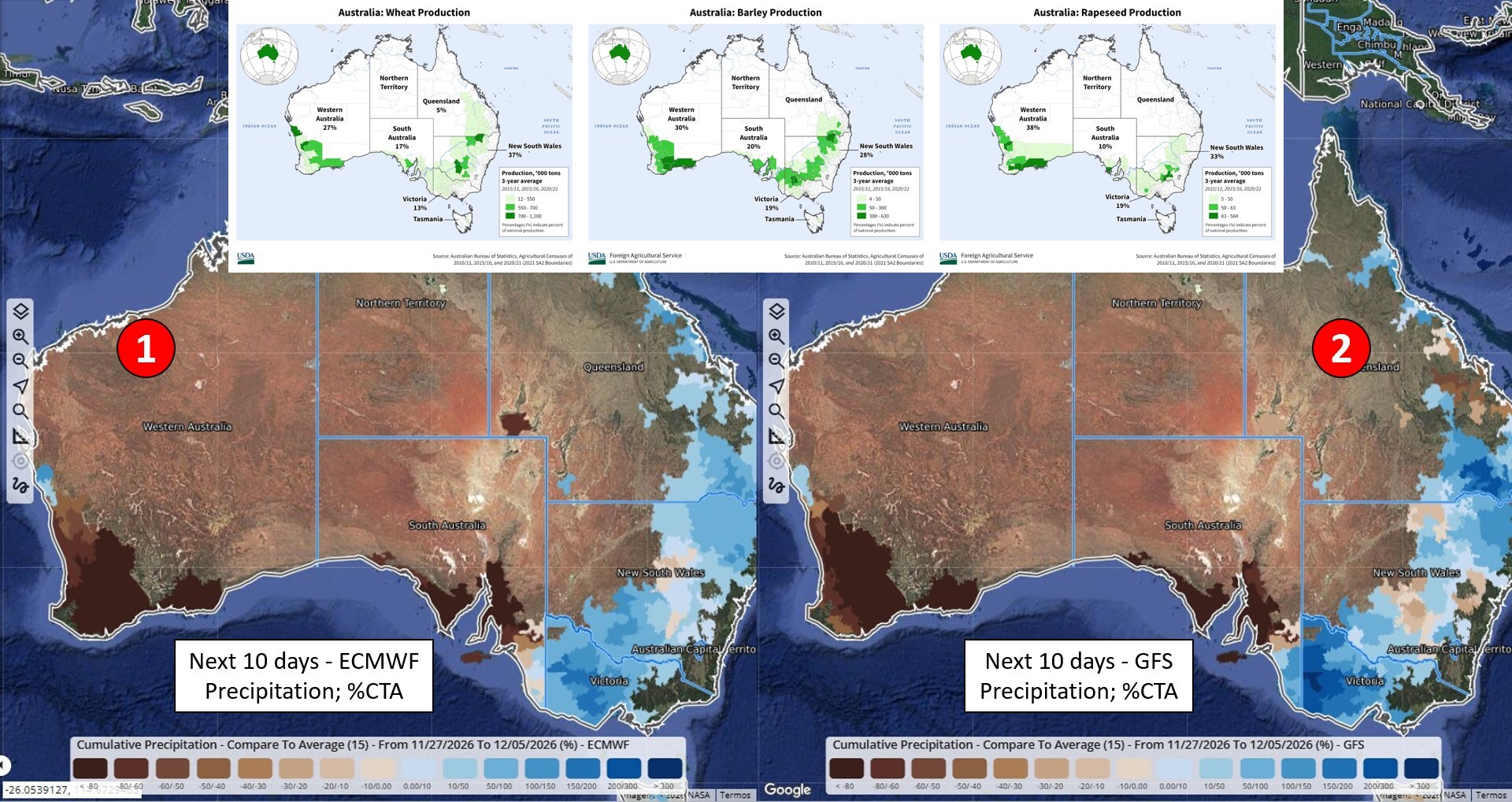
Both the ECMWF ① and the GFS ② forecast below-average rainfall across Western Australia and South Australia over the coming days, which should support harvest progress in two states that together account for around half of national barley and canola production. In contrast, both models expect above-average rainfall across Victoria and much of New South Wales, with heavier totals in the GFS, which could again slow harvest and raise quality concerns in the east.
Agri92-4
08

Europe - Are winter crops in central Europe entering winter with dry soils?

Yes

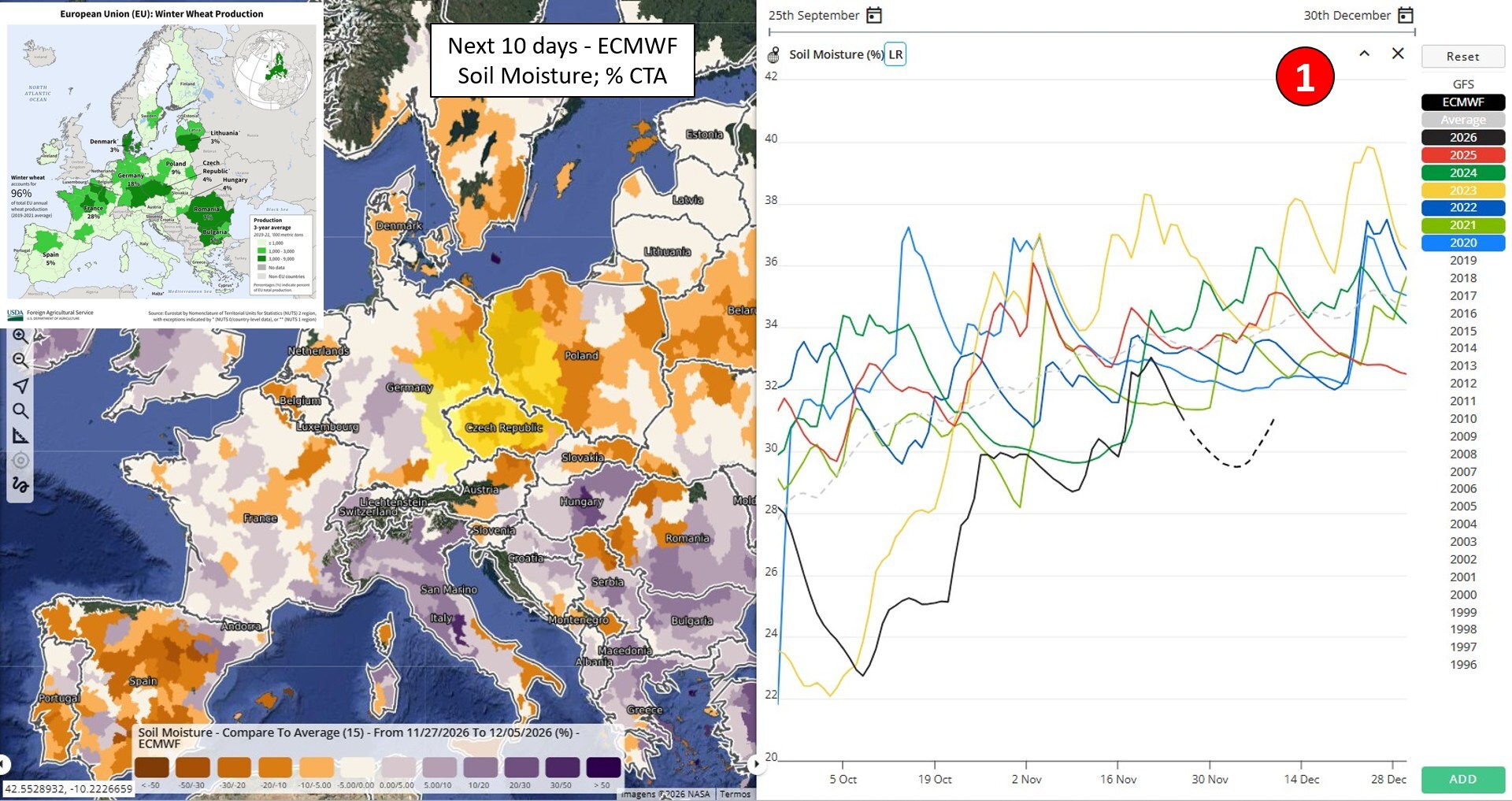
In eastern Germany, western Poland and the Czech Republic, soil moisture recovered from exceptionally low levels in October but remains below average and below the past six seasons, and the ECMWF forecasts a further decline into early December ①. Below-average soil moisture is also expected across most of Poland, Denmark and much of Spain, while France and Italy should remain wetter than average ②.

Agri94-3
09

Russia + Ukraine - Is a cold snap a risk for winter crops?

TO MONITOR

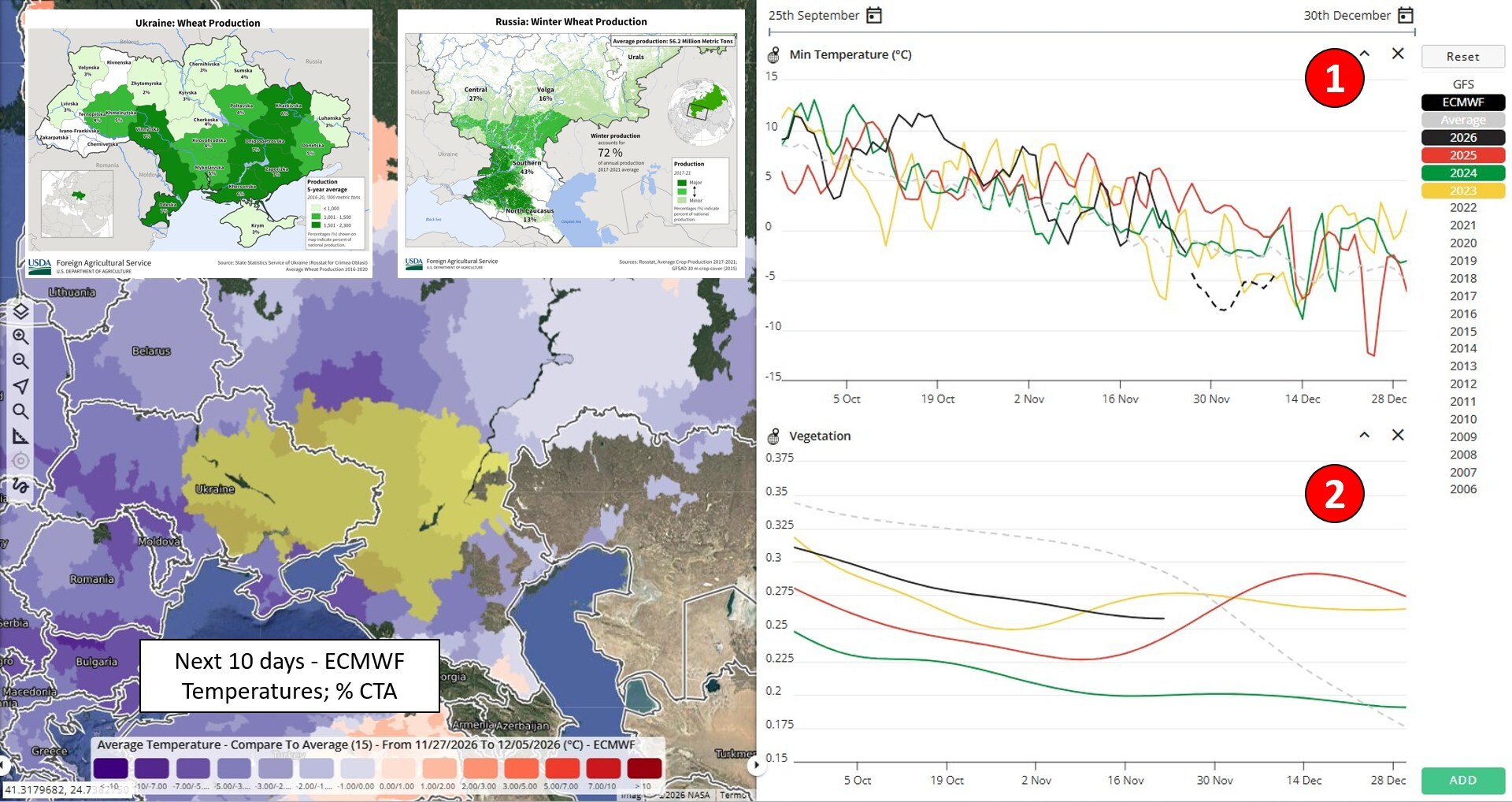
After a mild spell in mid-November, minimum temperatures across Ukraine and southern Russia are expected to drop well below average over the coming days, reaching around -8°C in early December according to the ECMWF ①, as colder-than-average conditions spread across much of Eastern Europe. The cold arrives while vegetation indices remain below average, although above 2024 and 2025 ②, reflecting the late development of part of the crop. Temperatures at these levels are not usually damaging for well-hardened winter wheat, but late-sown fields without snow cover could be more vulnerable.

Agri96-2
10

India - Is dryness persisting across the wheat belt?

YES

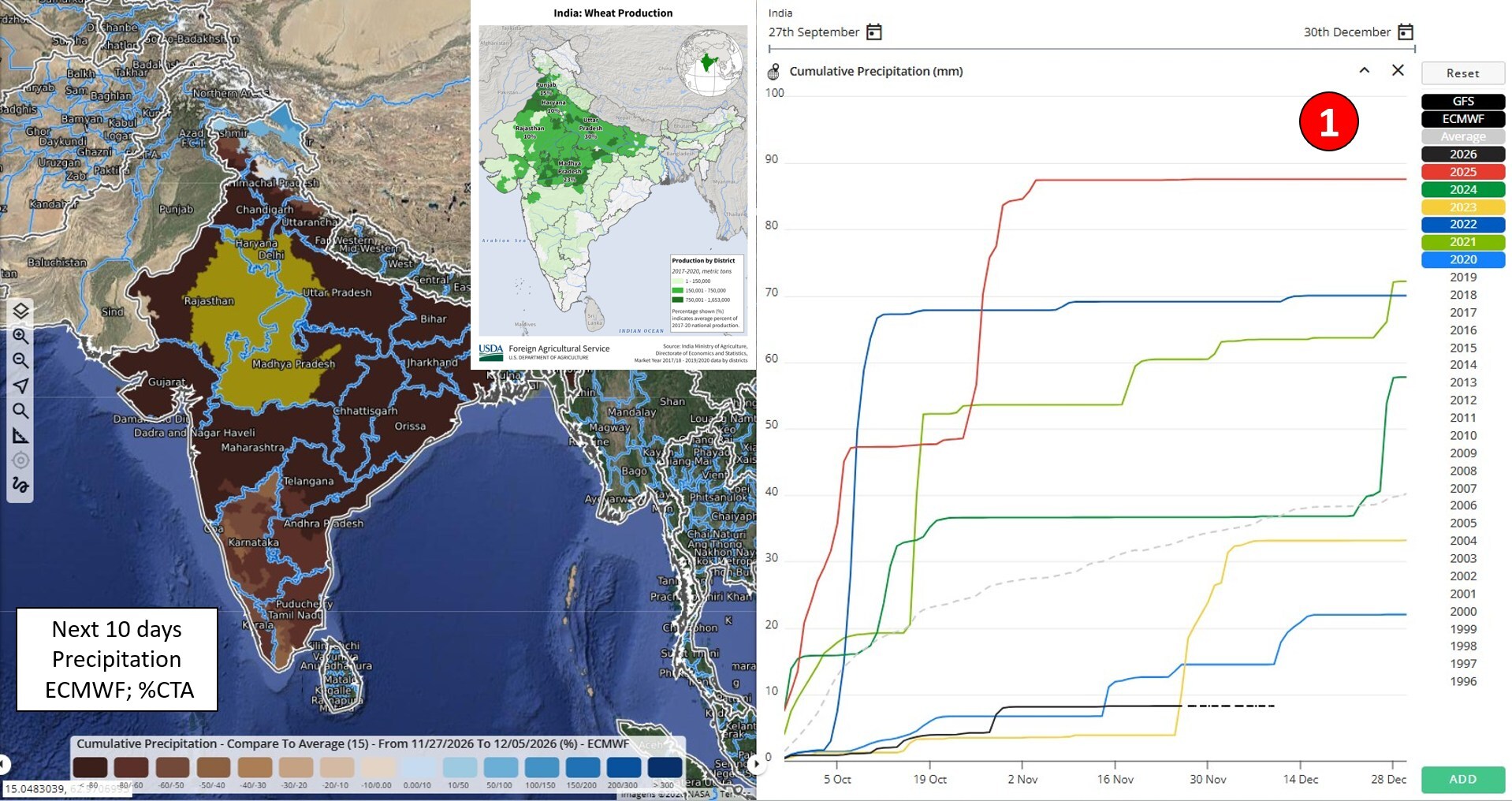
In India's main wheat belt, cumulative precipitation since late September is only about a quarter of the average and, along with 2023, the lowest of the past seven seasons ①. Both the GFS and the ECMWF forecast virtually no rainfall through early December, with well-below-average precipitation across almost all of India ②. After a below-average monsoon, these conditions keep sowing dependent on irrigation and residual soil moisture, which could limit the area planted to wheat this season.

Agri98-2

Subscribe to World in 10