
Tip and Cue for Civil Government

Daily satellite monitoring that directs field teams, aerial surveys, and resources to where changehas actually been observed. Stop patrolling blind. Respond to what's happening.

Civil-government-fisheries

Direct Your Resources Where Change Is Actually Happening

Inspection resources go where they're needed most, response times shorten, and the daily imagery record provides timestamped evidence of when changes began and how they progressed.

Government agencies responsible for large territories face a resource problem. Field teams, aerial surveys, and assessment programmes are expensive, limited in capacity, and typically deployed on fixed schedules or broad patrol routes. Most of that effort covers areas where nothing has changed. The locations where significant activity, environmental shifts, or emerging hazards are developing may not be visited for weeks or months.

EarthDaily reverses this model. Daily satellite monitoring across entire national territories identifies where change is occurring. Agencies then direct their resources, whether field teams, aerial surveys, or high-resolution satellite tasking, to locations where activity has already been observed.

The result: resources go where they're needed most, response times shorten, and the daily imagery record shows when changes began and how they progressed.

How Tip and Cue Works

The workflow has three stages, each building on the last:

Civil-government-location-tip
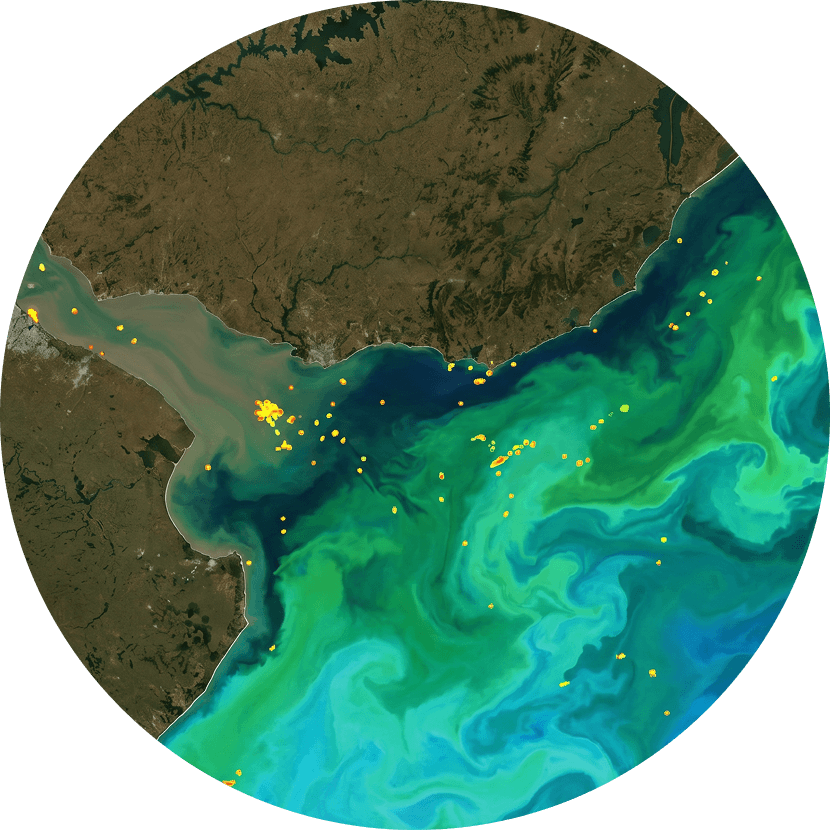
Early stage development - Simulated 5m Data

1. Detect.

EarthDaily's constellation captures 5m imagery across monitored territories every day. AI models compare each acquisition against established baselines, identifying deforestation, construction activity, environmental shifts, fire progression, and other significant changes. Consistent viewing geometry and calibration ensure detections reflect real-world change, not sensor variation.

Civil-government-location-tip2
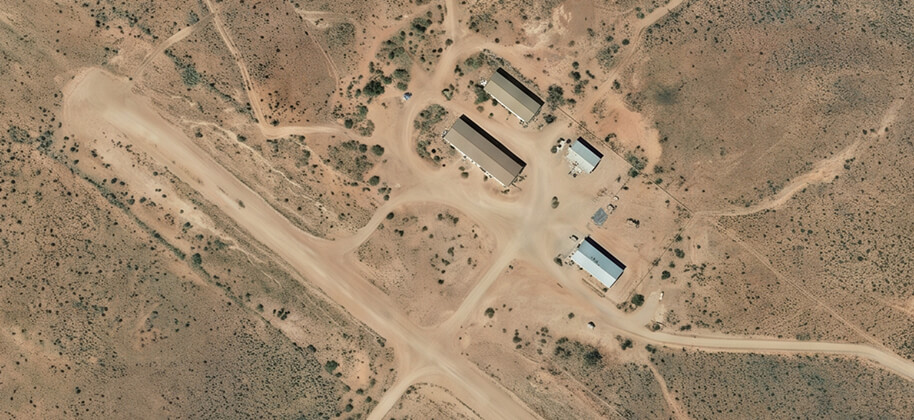
Significant changes observed - Simulated 5m Data

2. Tip.

When a detection meets defined thresholds, the system flags it for action. Automated assessment evaluates scale, proximity to sensitive areas, and historical context to prioritise which observations warrant immediate attention and which can be scheduled for routine follow- up.

Civil-government-location-cue
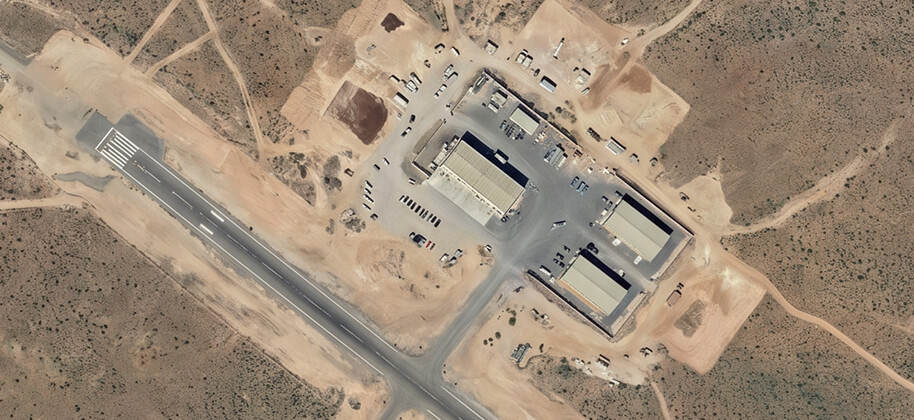
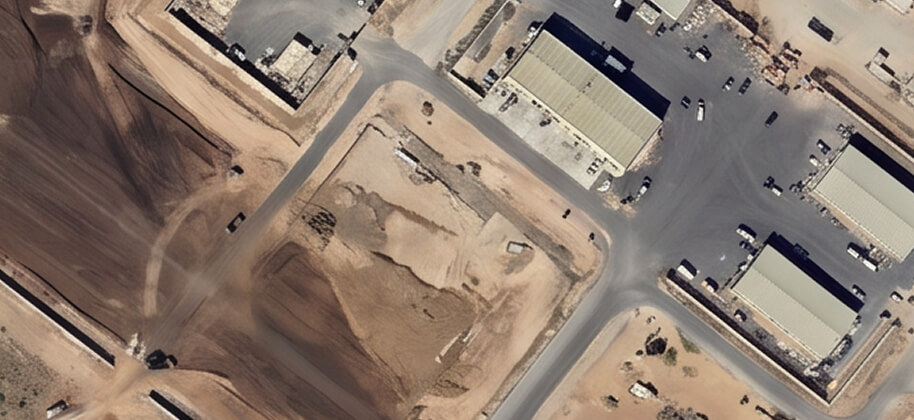
Cue 30 cm high Resolution tasking.

3. Cue.

The agency directs the appropriate response to the confirmed location: a field team, an aerial survey, a drone deployment, or a high-resolution satellite tasking at 1m or better for detailed assessment. Because the cue is driven by observed change rather than a scheduled rotation, every deployment is targeted and purposeful.

Government Applications

icon-scout-critical-infrastructure-awareness-1

Deforestation and Logging.

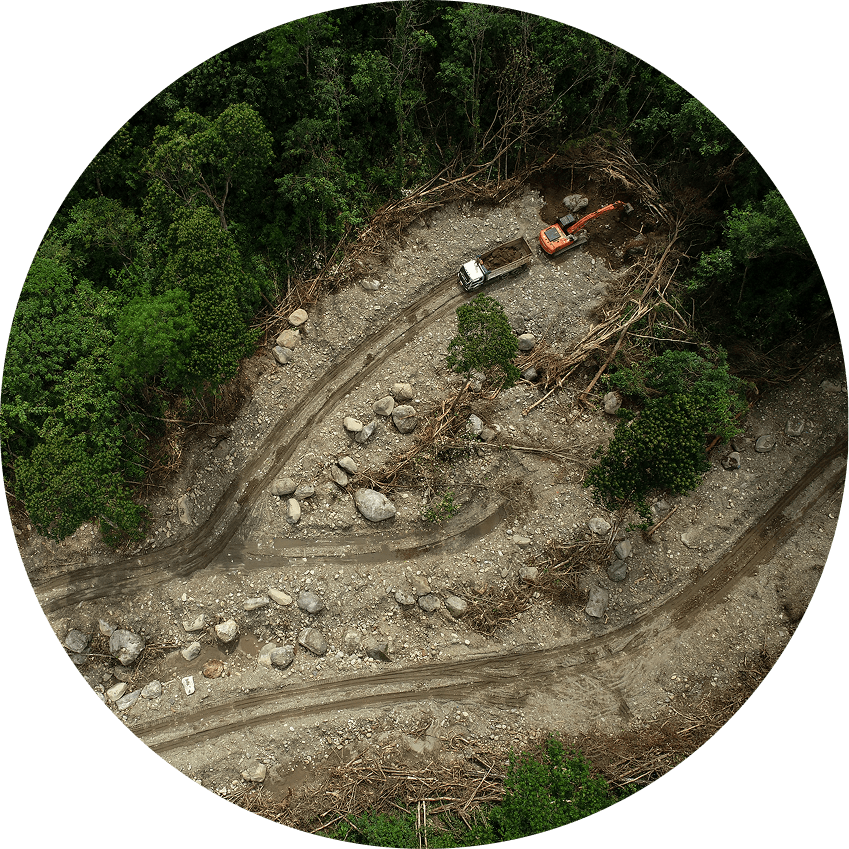
Daily 5m monitoring detects forest clearing across managed territories. When clearing is confirmed, agencies cue field teams or high-resolution imagery for site-level assessment. In remote regions, this may be the only practical way to observe activity such as new access roads or selective logging operations hidden under canopy.
icon-constellation-accuracy

Wildfire Response

Thermal infrared bands detect active fire and track burnt area progression daily. Fire agencies use this persistent view to direct ground crews and aerial suppression resources to active fronts, assess containment progress, and identify new ignition points across large fire complexes.
earthdaily-agri-more-effective-pricing

Mining and Land Disturbance.

Detect mining activity, quarry expansion, and large-scale ground disturbance. Daily monitoring captures the progression of activity over time, and cueing field teams to confirmed sites replaces broad-area patrols through remote terrain.
icon-earthone-heads-of-geospatial

Drought and Agricultural Stress.

Vegetation stress detected through spectral analysis triggers ground-level agricultural assessment in affected regions. Agencies responsible for food security, water management, or disaster preparedness use confirmed stress patterns to prioritise where to deploy assessment teams and allocate support.
EarthDaily-Feature-Inovate-Allocate

Coastal and Maritime.

Oil spills, sediment plumes, and coastal change detected through daily monitoring cue environmental response teams to confirmed locations rather than relying on reported sightings.

In Practice:
Remote Forest Monitoring

A forestry agency monitors a large protected area where clearing activity moves quickly and can bedifficult to detect from scheduled aerial patrols. Daily 5m imagery detects new clearing within 24 hours of commencement. The system tips the observation based on proximity to a protected waterway and the scale of clearing.

The agency cues a field team to the confirmed coordinates. On arrival, the team documents a new access road and early-stage land conversion. The daily satellite record shows exactly when clearing began, providing a continuous observational timeline of how the activity progressed.

Without the daily tip, this activity would not have been observed until the next quarterly aerial survey, by which point the clearing would have been completed.

Civil-government-deforestation
5m Simulated Data

The Right Data for Your Mission

EarthDaily delivers three distinct data products, each optimized for specific operational requirements.
All three are built on the same consistent constellation, share the same geometric precision, and benefit from the same AI-first engineering.

Learn More

AiRD:
AI-Ready Data for Automated Analytics

Precise orbit control maintains the same overpass time and viewing geometry daily. When your baseline doesn't shift between acquisitions, AI models distinguish real change from sensor artifacts with confidence. The result: demonstrated precision and recall exceeding 85% over operationally challenging environments.

EarthDaily-AIRD
Learn More

Maritime:
Optimized for Ocean-Scale Detection

Streamlined 4-band configuration with 8-bit depth, engineered for rapid processing across vast maritime areas. Purpose-built for vessel detection, coastal monitoring, and behavioral analysis at operational scale. Choose Maritime when processing efficiency across millions of square kilometers matters most.

EarthDaily-Maritime
Learn More

Science:
Full Control for Custom Processing

10-band top-of-atmosphere data with L1 calibration, including the Coastal band for atmospheric characterization. Built for teams with their own processing pipelines who require maximum spectral information and complete processing control. Choose Science when your team implements proprietary algorithms and needs full-spectrum, unprocessed data.

EarthDaily-Scientce

Not sure which product fits your requirements?