
.jpg?width=289&height=168&name=Data%20Use%20cases%20(1).jpg)
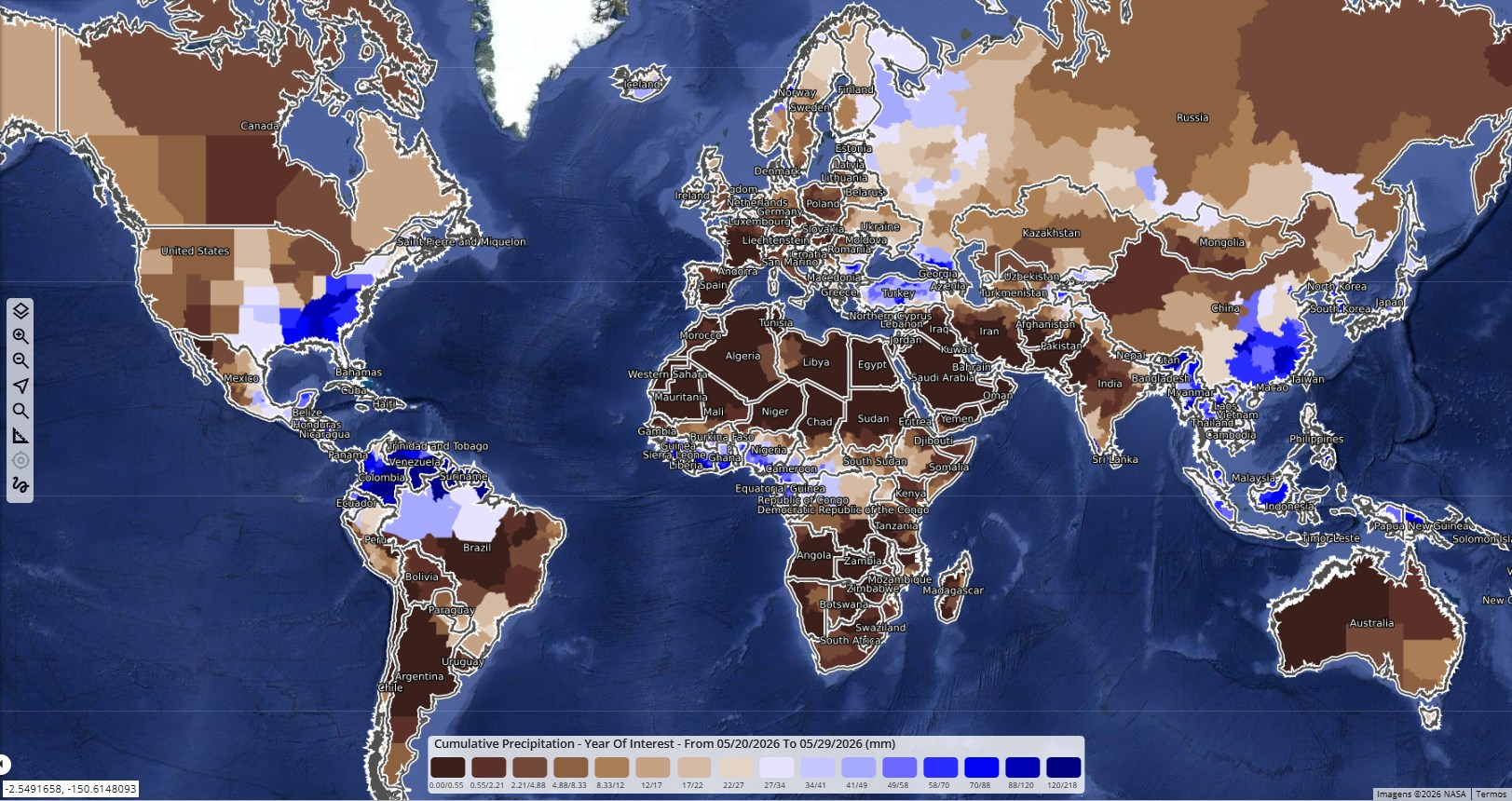
Wheat conditions remained under pressure in May, while improved rainfall in parts of Brazil, Europe, the Black Sea, and Australia created a more mixed global crop picture heading into June.
Key Takeaways
-
Canadian spring crops continue to show delayed development and planting progress.
-
Poor U.S. winter wheat production is now largely locked in, while spring wheat conditions are becoming increasingly concerning and require close monitoring.
-
Brazil's safrinha corn outlook improved during May, although regional variability remains.
-
Argentina benefited from favorable harvest weather.
-
Europe received much-needed rainfall, but Poland remains vulnerable to ongoing moisture deficits. A strong warm wave has been observed at the end of May in Western Europe.
-
Crop development accelerated in Ukraine and western Russia, easing earlier concerns.
-
Australian moisture conditions improved, but vegetation indices remain very low in parts of the east.
North America: Wheat Stress and Delayed Spring Development
Canada experienced a delayed start to the season. Sowing conditions were disrupted by cold weather and late snowfall across parts of the Canadian Prairies, slowing planting progress. By the end of the month, vegetation indices continued to highlight delayed crop development and sowing compared with normal.
In the United States, the key story was the catastrophic winter wheat situation and rising concern for spring wheat. Winter wheat conditions remained poor throughout May, particularly across the Southern Plains, where moisture deficits and below-average vegetation indices continue to raise concerns about yield potential. Meanwhile, spring wheat planting progressed slowly, with precipitation patterns showing worrying similarities to the poor 2021 season. This will remain a key monitoring point in the coming weeks. Moisture levels also became increasingly tight across parts of the western Corn Belt by month-end.
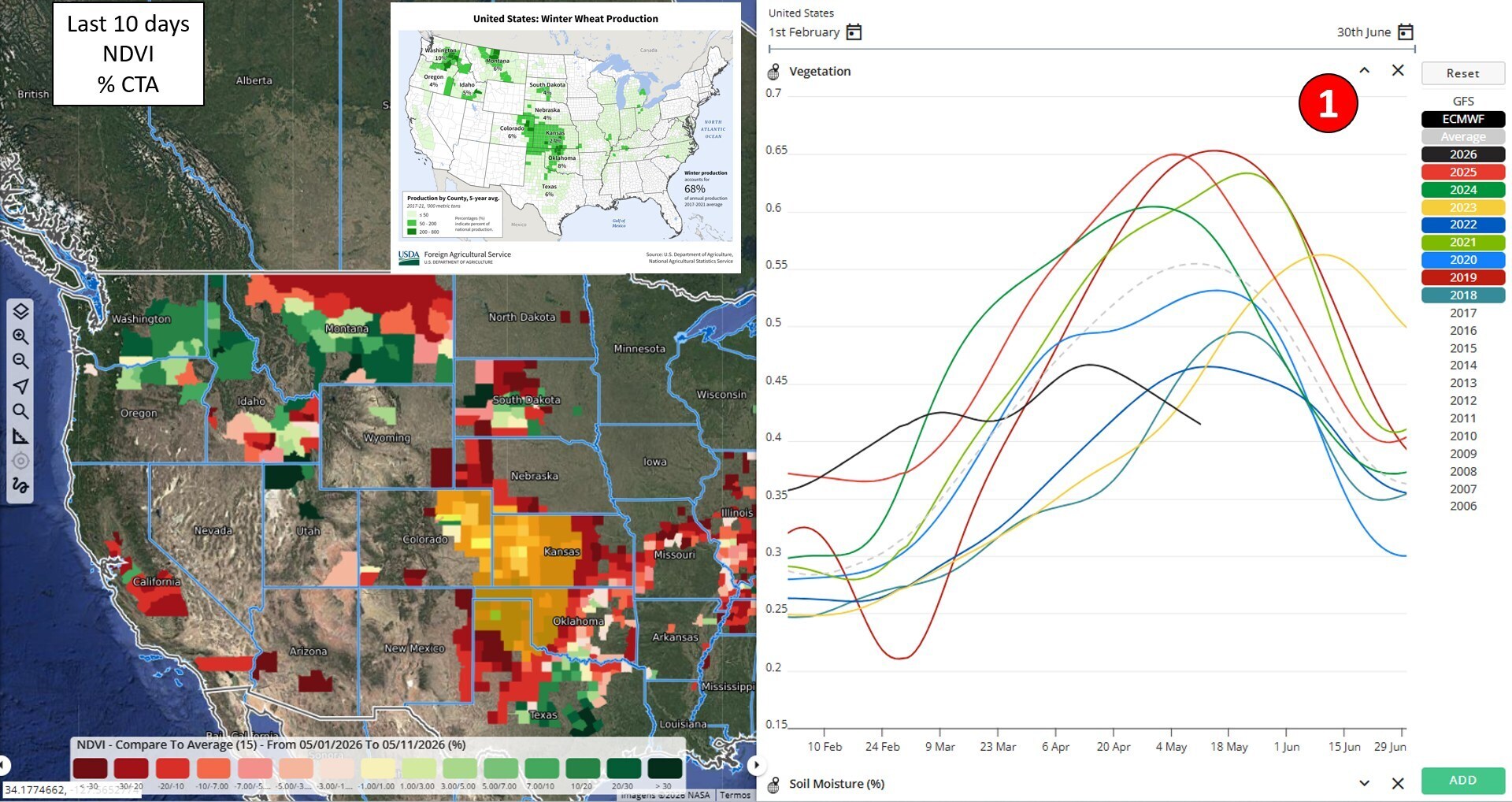 Extremely poor winter wheat vigor in the U.S. core area of production
South America: Safrinha Recovery and Favorable Harvest Conditions
Brazil's safrinha corn crop remained one of the most closely watched stories of the month. Early May concerns centered on delayed crop development and uncertainty regarding rainfall prospects. As the month progressed, conditions generally improved, with favorable vegetation indices in Mato Grosso and satisfactory moisture levels across Paraná. However, parts of southern Goiás and surrounding areas continued to warrant monitoring due to below-average crop vigor.
In Argentina, the focus shifted from crop development to maturation and harvest. Early concerns about delayed crop cycles gradually gave way to favorable drying conditions, supporting harvest progress for corn and soybeans. By late May, vegetation indices suggested crops were moving through the final stages of development at a pace comparable to previous seasons.
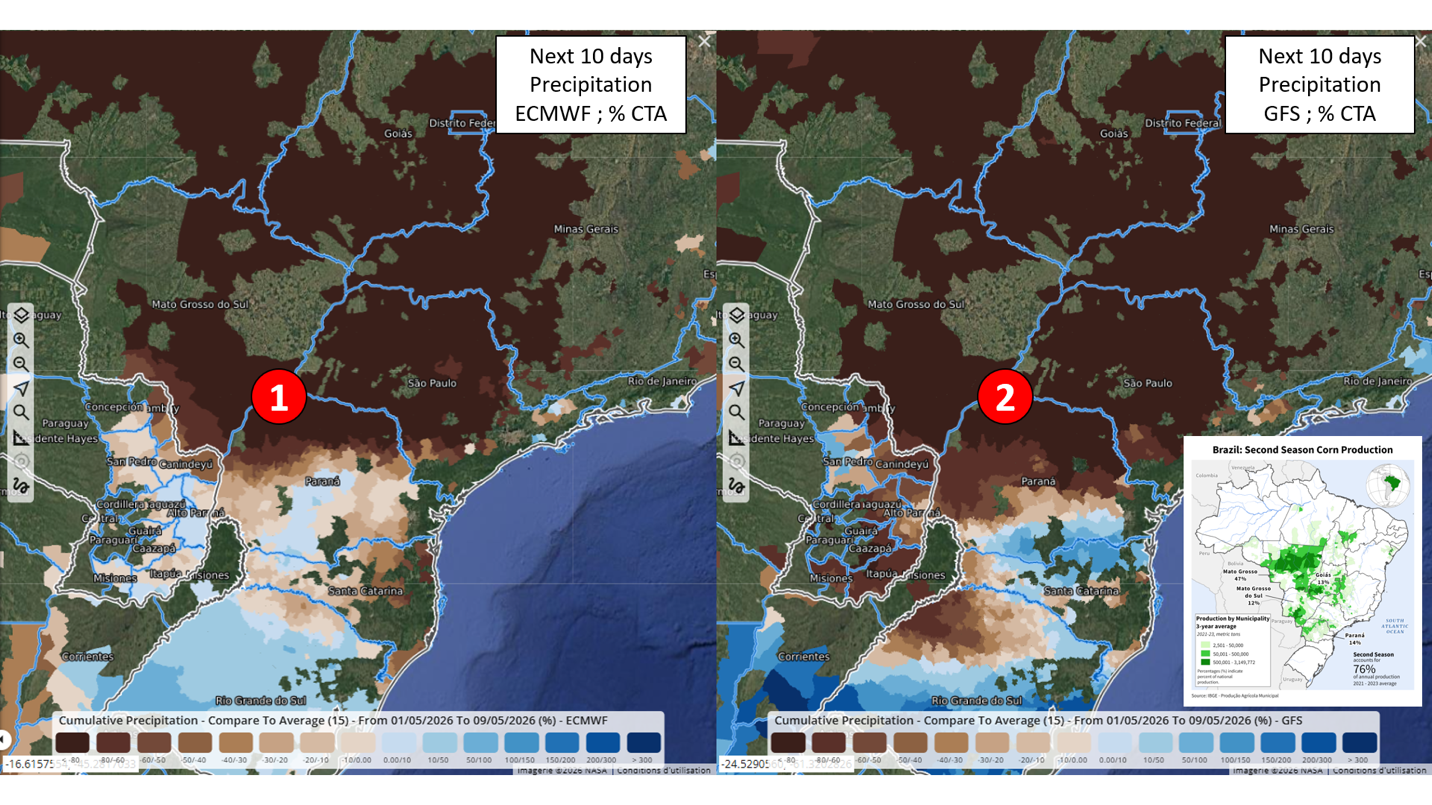 Start of the dry season in core safrinha corn area in Brazil
Europe & Black Sea: Rain Relief, Heat Risk, and Faster Crop Development
Europe began May under significant moisture stress, particularly across central and eastern regions. Rainfall during the middle of the month helped stabilize conditions across much of Western Europe, improving crop vigor in countries such as France.
However, concerns persisted in Poland and neighboring areas, where moisture deficits remained significant despite some rainfall events. By the end of May, crops were still holding up reasonably well, but the region remained vulnerable if dryness continues. A strong late-month heatwave across Western Europe also became a concern, and its impact will need to be monitored closely during the first half of June.
In the Black Sea region, Ukraine and western Russia started the month with delayed crop development and below-average vegetation indices. Encouragingly, crop growth accelerated significantly during May, helping offset earlier delays and reducing concerns about yield potential.
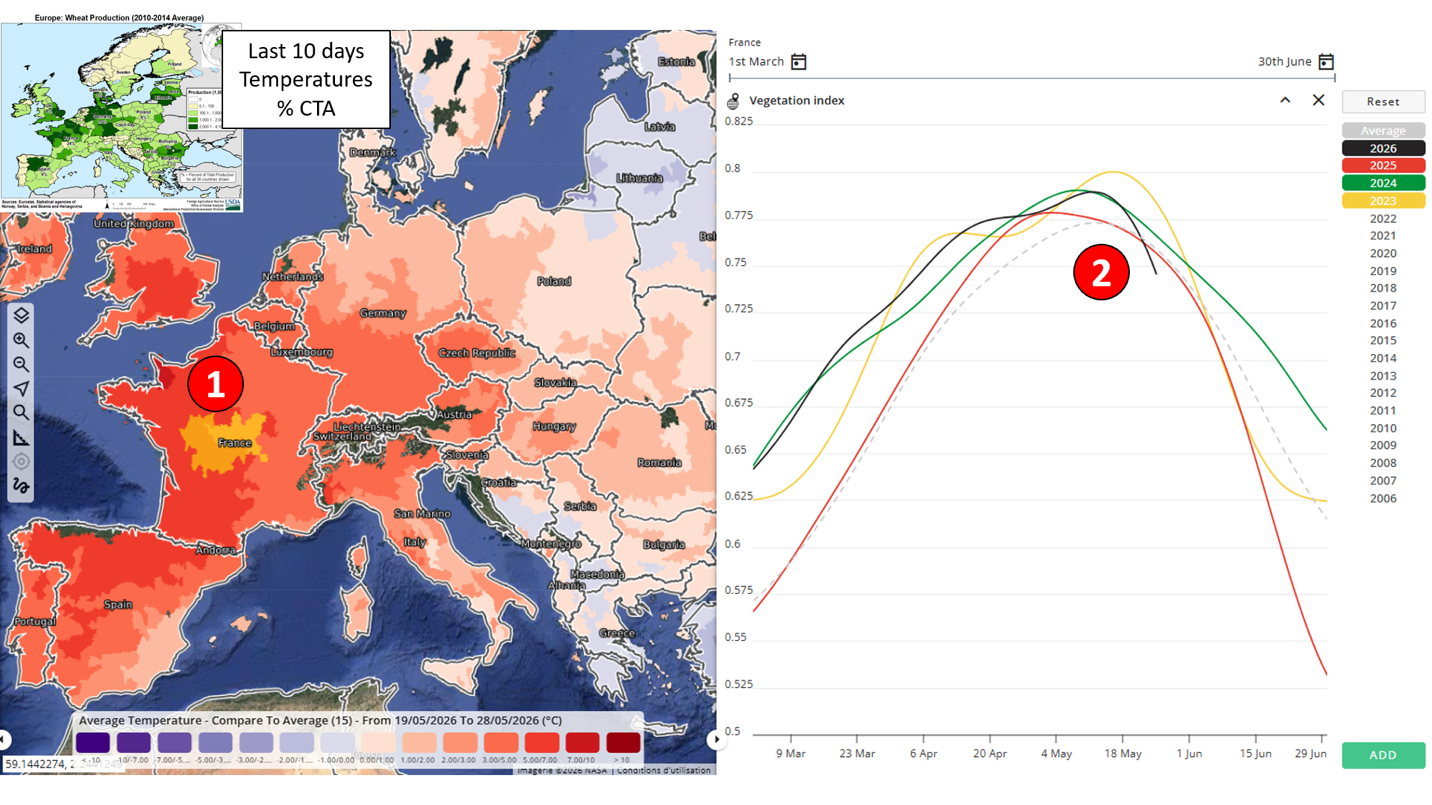 Strong warm wave at the end of May in Western Europe, potentially accelerating an early crop senescence
Australia: Moisture Improves, but Crop Vigor Still Lags
Australia experienced a notable improvement in soil moisture conditions during May thanks to widespread rainfall across eastern growing regions. This significantly improved sowing prospects for wheat, barley, and canola.
Nevertheless, by month-end, vegetation indices in parts of New South Wales and Queensland remained below average, suggesting that early-season delays have not yet been fully erased and will require continued monitoring.
The potential emergence of El Niño also increases the risk of a drier-than-average growing season in the coming months, which could become unfavorable for crop prospects.
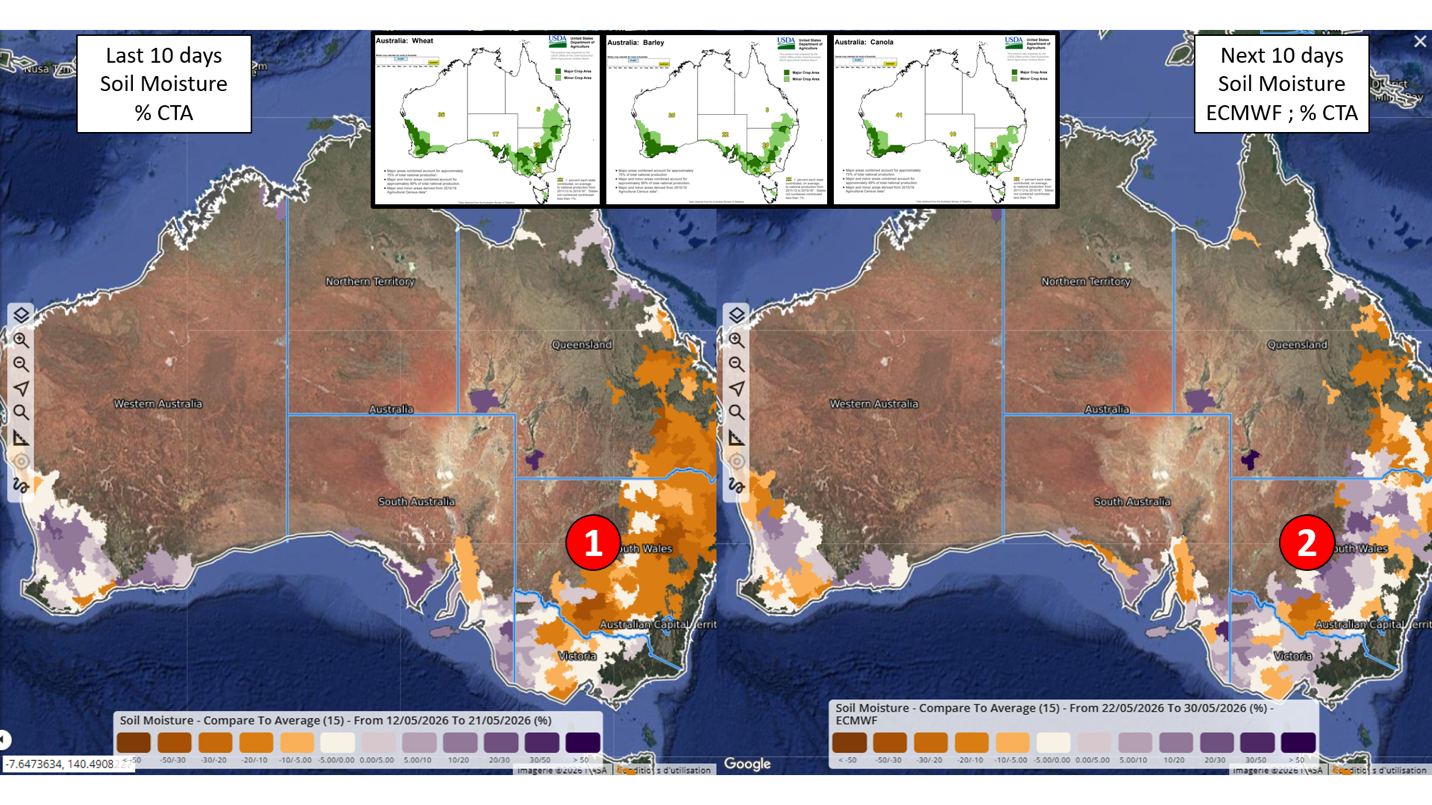 Significant soil moisture improvement in Australia
What to Watch in June
-
Canada: Will warmer temperatures allow planting progress and crop development to catch up after a delayed start to the season?
-
United States: Will spring wheat conditions continue to resemble 2021, and can rainfall alleviate growing moisture deficits in the western Corn Belt?
-
Europe: Can crops in Poland and neighboring countries withstand continued moisture stress, and what impact will the late-May heatwave have on yield potential in Western Europe?
-
Black Sea: Will the recent acceleration in crop growth across Ukraine and western Russia continue through the critical reproductive stages?
-
Australia: Can recent rainfall translate into a sustained recovery in crop vigor across eastern growing regions?
-
El Niño: The possible development of El Niño will deserve close attention, with Australia, India, and Argentina appearing among the most exposed agricultural regions in the coming months.
Explore more World in 10 updates for regular insight into the global crop conditions, weather risks, and agricultural trends shaping the season.
About the Author