


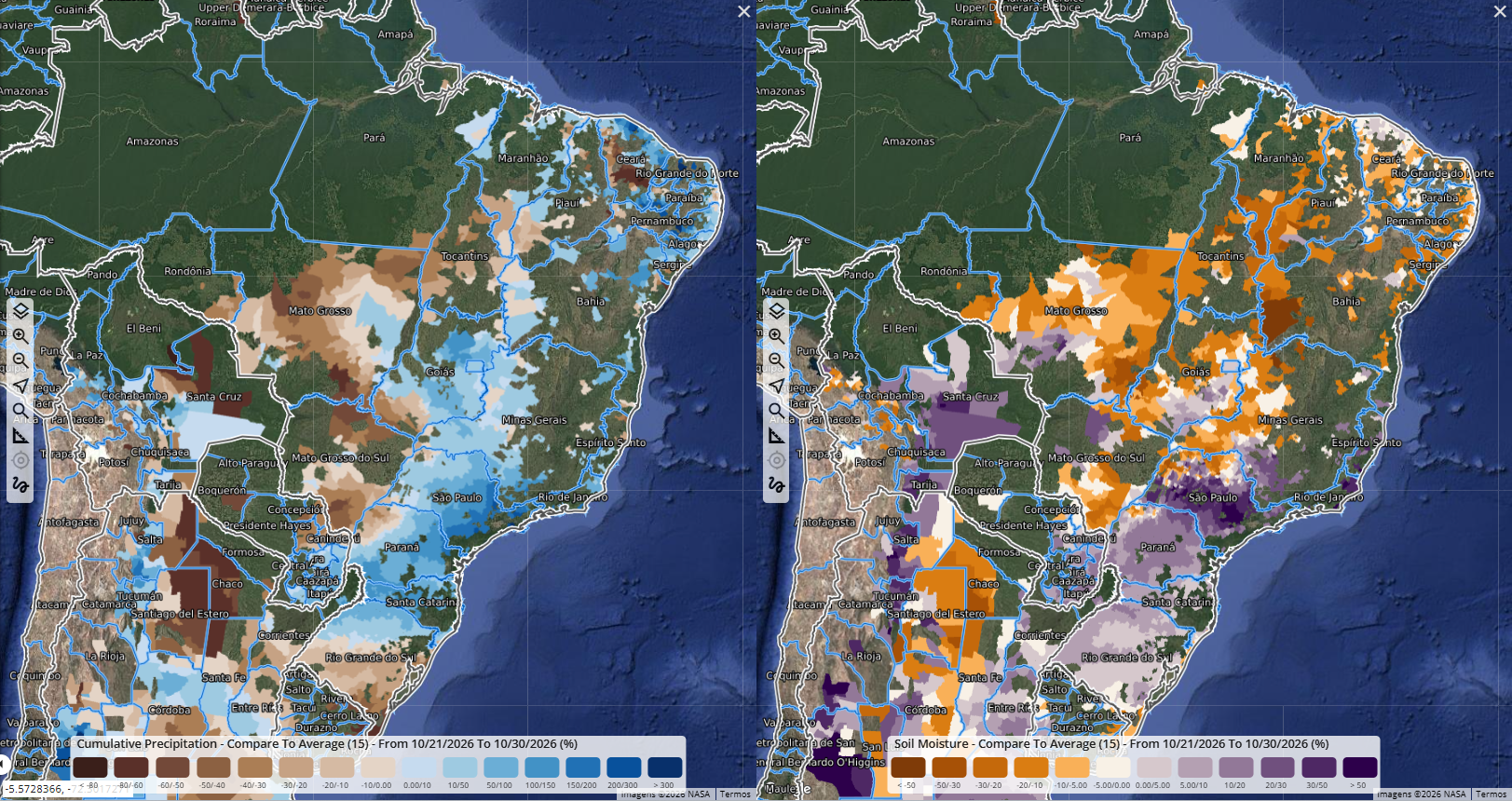
October brought contrasting weather conditions across major agricultural regions, with rainfall supporting crop establishment in some areas while creating new challenges for harvesting and field operations elsewhere.
In Brazil, the return of rainfall helped soybean planting gain momentum, although moisture deficits persisted in parts of Mato Grosso. Across the Northern Hemisphere, wet conditions threatened to slow corn harvesting in the United States, while insufficient soil moisture raised concerns for winter wheat establishment in Russia and rapeseed development in Europe.
Meanwhile, Australia's winter crops approached harvest with significant regional differences in crop conditions.
Key takeaways
- Brazil: Rainfall improved soybean planting conditions, but persistent moisture deficits and slower early development in Mato Grosso remain important risks.
- Russia: Dry soils across key winter wheat areas are threatening crop establishment as temperatures decline toward winter.
- Europe: An exceptionally dry start to the rapeseed season in northern France raised concerns, despite improving soil moisture later in October.
- Australia: Regional differences in winter crop conditions persisted, while late-season rainfall introduced additional uncertainty ahead of harvest.
- United States: A shift toward wetter conditions in the western Corn Belt threatened to interrupt corn harvesting after earlier dry windows.
Brazil
Despite improvements during October, soil moisture remains below average in parts of Mato Grosso. Will November rainfall be enough to secure favorable conditions for soybean establishment?
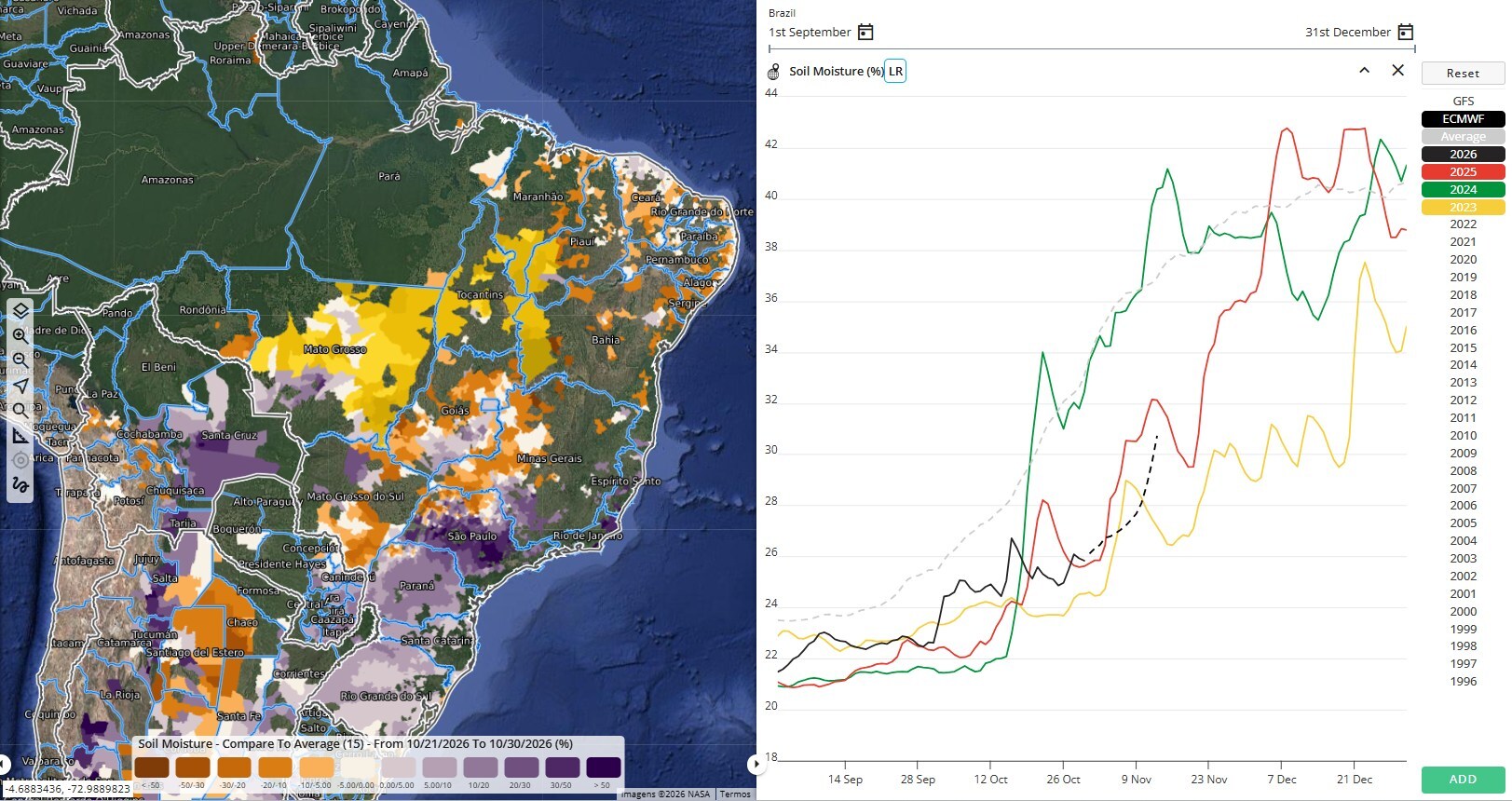
October began with significant soil moisture deficits across parts of Brazil's soybean-growing region, particularly Mato Grosso and northern areas. Rainfall improved conditions during the first half of the month, supporting planting and early establishment across several producing states.
However, the recovery remained uneven. By late October, soil moisture was still below average in parts of Mato Grosso, while NDVI indicated potentially slower and later soybean development compared with recent seasons. Although it remains too early to draw firm conclusions about crop potential, rainfall distribution during November will be critical for establishment and subsequent crop development.
Russia
Winter wheat enters a critical period with soil moisture at exceptionally low levels. With winter approaching, the window for crop establishment is rapidly narrowing.
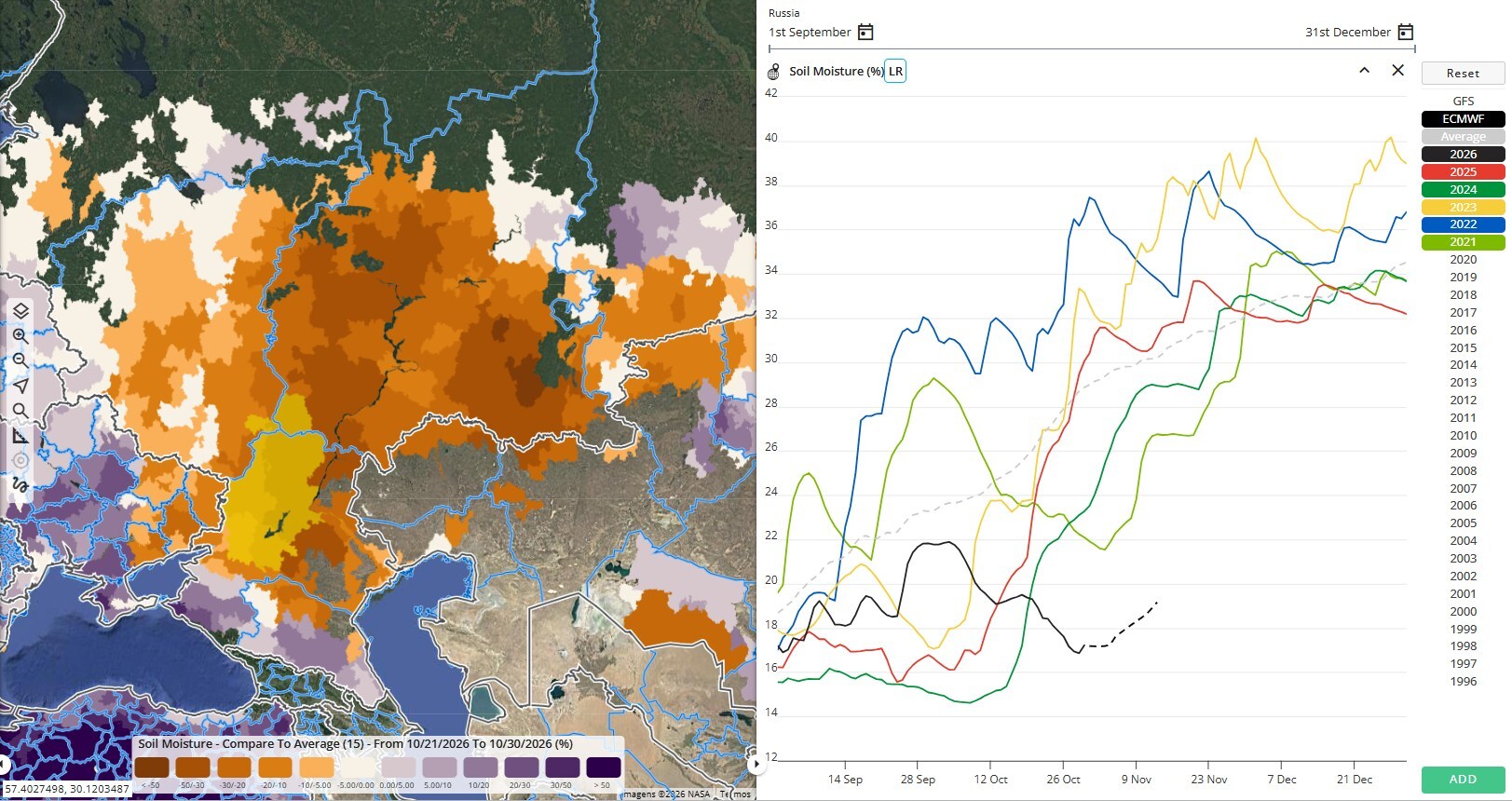
Winter wheat planting across Russia faced increasingly challenging moisture conditions during October. Despite rainfall improving soil moisture in parts of the Black Sea region early in the month, dry conditions persisted across important Russian wheat-growing areas.
By the end of October, soil moisture remained well below average, creating unfavorable conditions for germination and early growth. With temperatures declining toward winter, the opportunity for significant crop establishment improvements is narrowing, making rainfall and temperature developments particularly important in November.
Europe
Soil moisture across Europe's rapeseed belt remains significantly below average despite recent improvements. Can late-season rainfall compensate for one of the driest starts to the growing season?
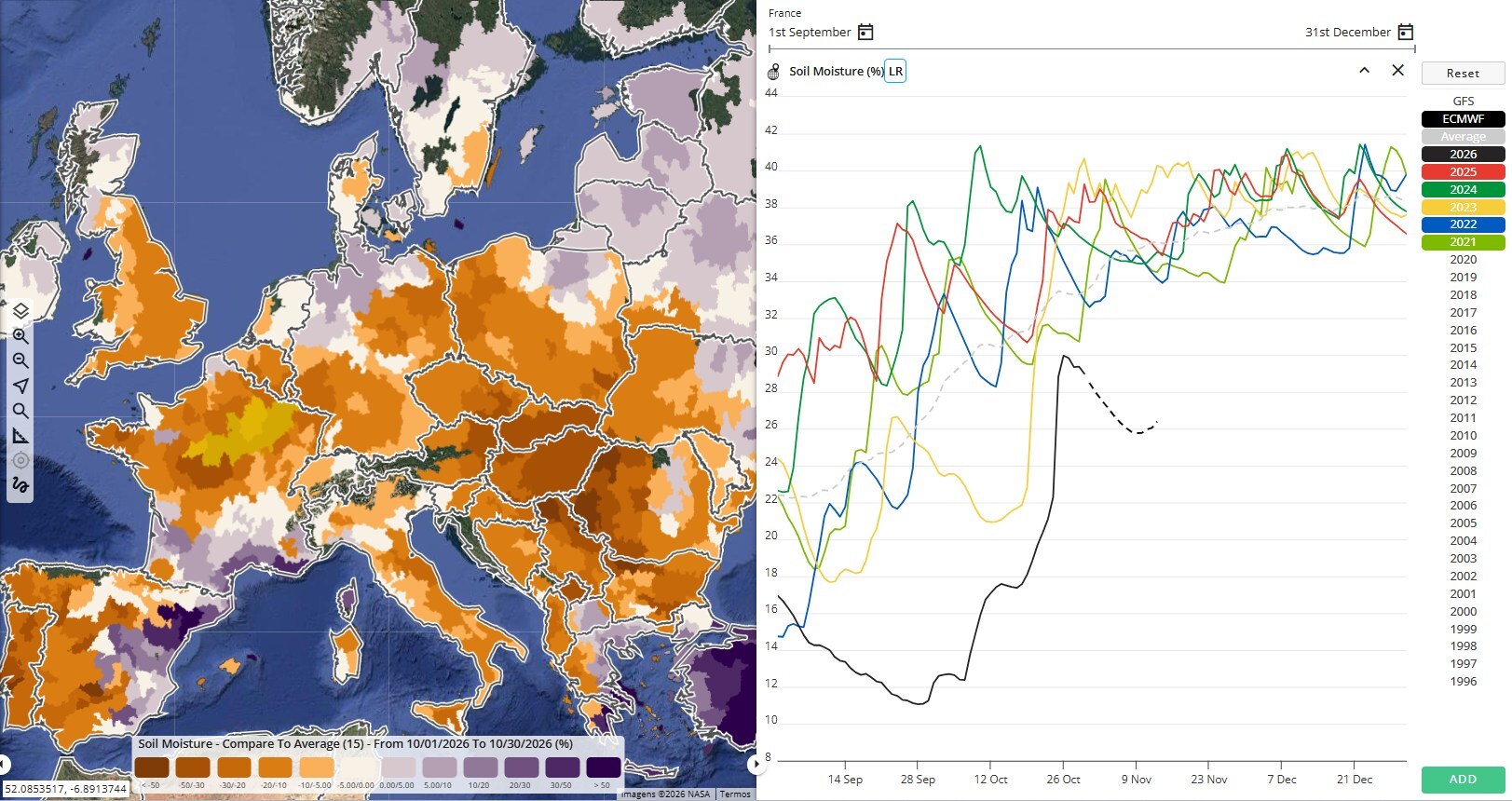
Persistent drought during August and September left much of Europe's rapeseed-growing region with unfavorable conditions at the beginning of the season.
Northern France was particularly affected, with vegetation indices reaching exceptionally low levels in October, reflecting poor crop establishment and raising concerns over potential reductions in planted area. Rainfall later in the month improved soil moisture across France, Germany and the United Kingdom, but the extent to which these improvements can compensate for the difficult start remains uncertain.
Australia
Vegetation indices remained below average in northern New South Wales and parts of Western Australia, while conditions were stronger across South Australia, Victoria and southern New South Wales.
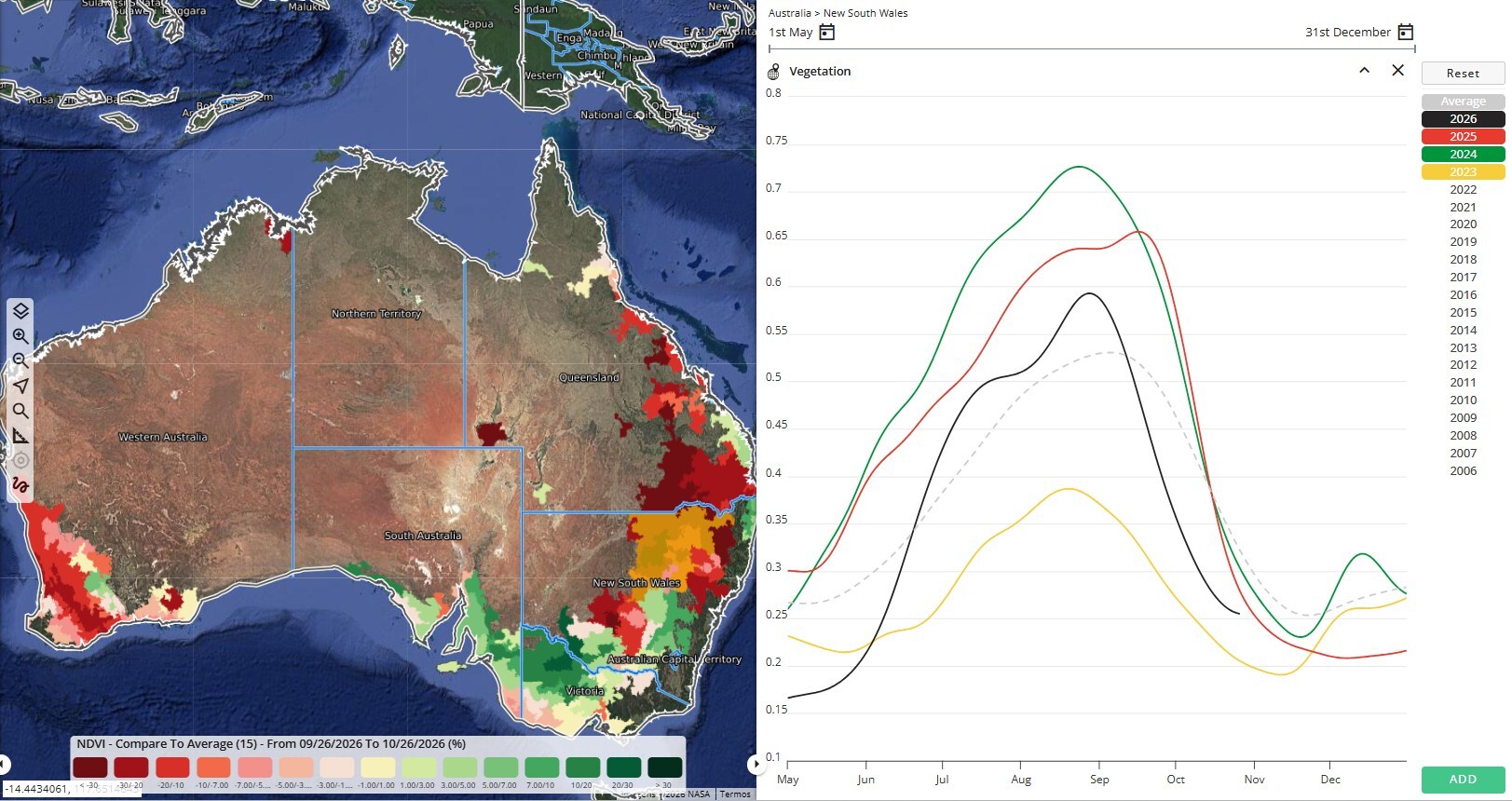
Australian winter crops showed contrasting conditions throughout October. Vegetation indices remained below average in northern New South Wales and parts of Western Australia, while stronger conditions persisted across South Australia, Victoria and southern New South Wales.
Toward the end of the month, rainfall returned to southeastern Australia, particularly South Australia and Victoria. Although moisture may still benefit crops in their final development stages, additional rainfall as maturity approaches could increasingly complicate harvesting and raise grain quality concerns if wet conditions persist.
United States
Heavy rainfall returned to the western Corn Belt in late October, with further wet conditions forecast for early November. Could this disrupt the final stages of corn harvesting?
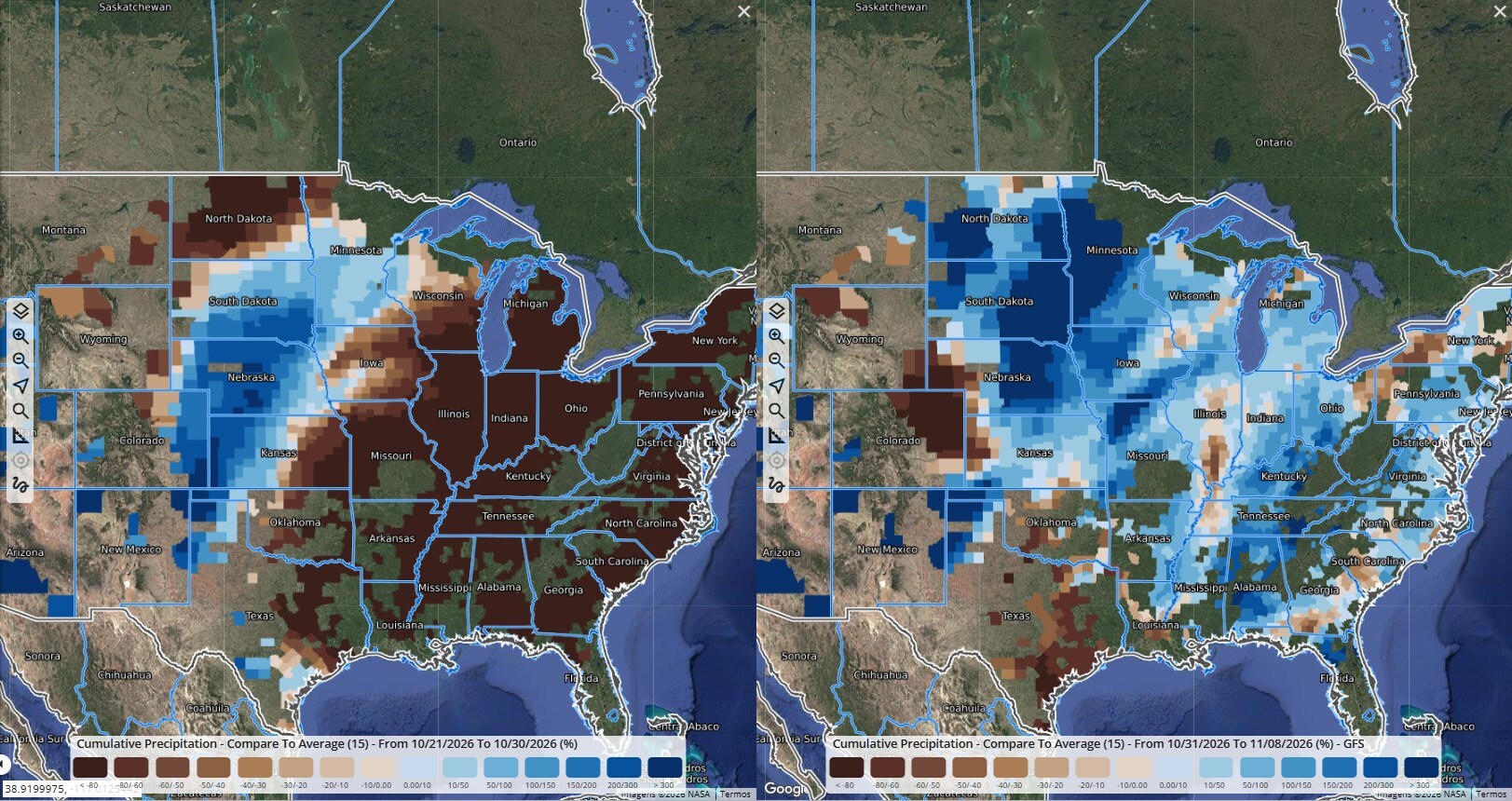
After a wet September, drier conditions in early October provided a favorable opportunity for corn and soybean harvesting across much of the Corn Belt.
However, the weather pattern became less favorable later in the month. Rainfall returned to the western Corn Belt during October 21–30. The October 31–November 9 forecast showed further rainfall across a broader area, which could interrupt corn harvesting and prolong field operations.
What to Watch in November
- Brazil: Will November rainfall be sufficient to sustain soybean planting and early crop development across Mato Grosso?
- Russia: Will winter wheat establish adequately before temperatures drop further and crops enter winter dormancy?
- Europe: Can improved soil moisture support rapeseed recovery after a difficult start to the season?
- Australia: Will late-season rainfall disrupt wheat and barley harvesting or threaten grain quality?
- United States: Will further rainfall interrupt the remaining corn harvest?
About the Author
