
.jpg?width=289&height=168&name=Data%20Use%20cases%20(1).jpg)
A Strong El Niño May Be Approaching. What Could It Mean for Global Crop Production?
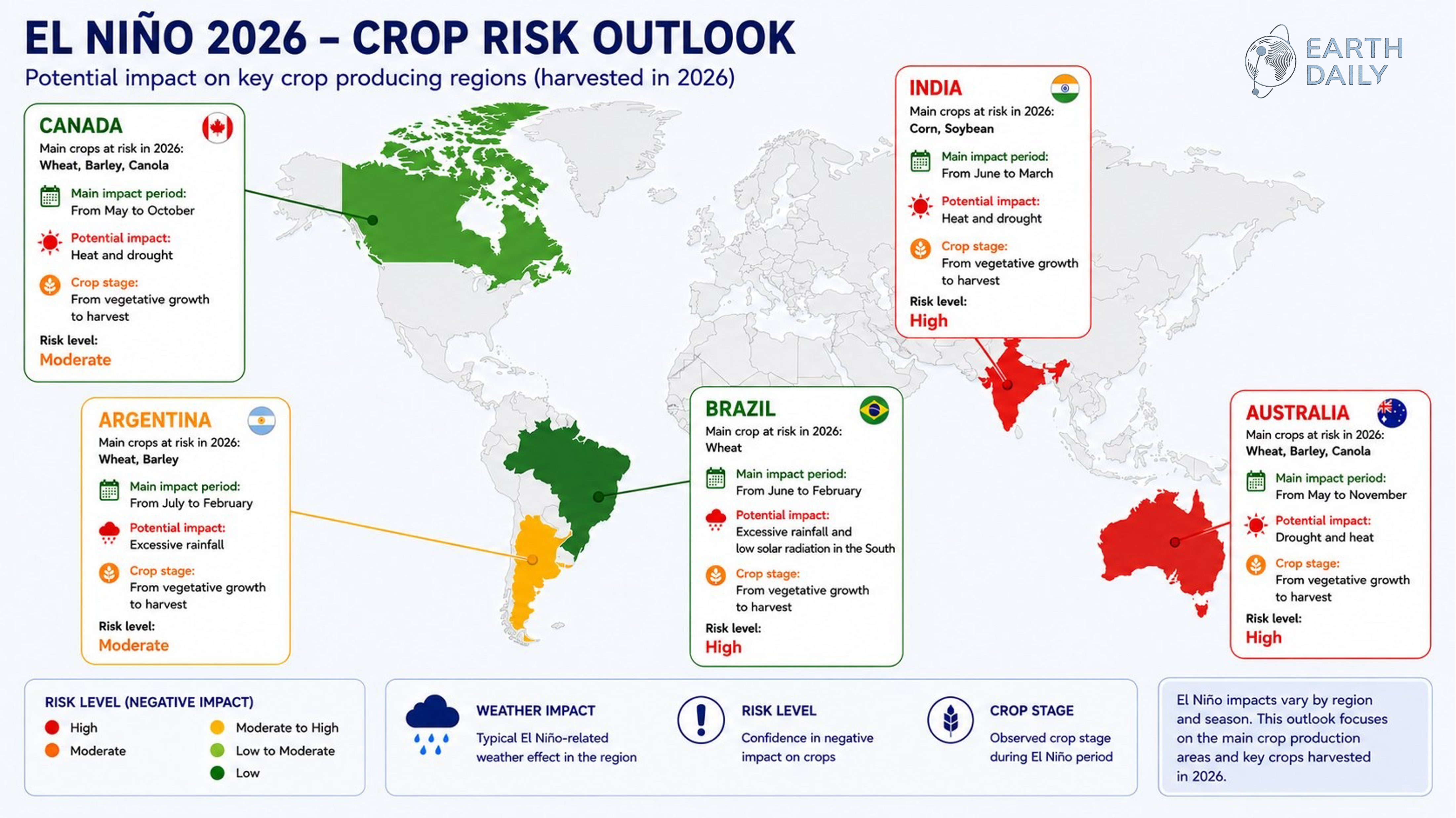
As forecasts point to a strong El Niño developing in 2026, EarthDaily’s ag team is watching where heat, rainfall, and crop timing could create the greatest production risk.
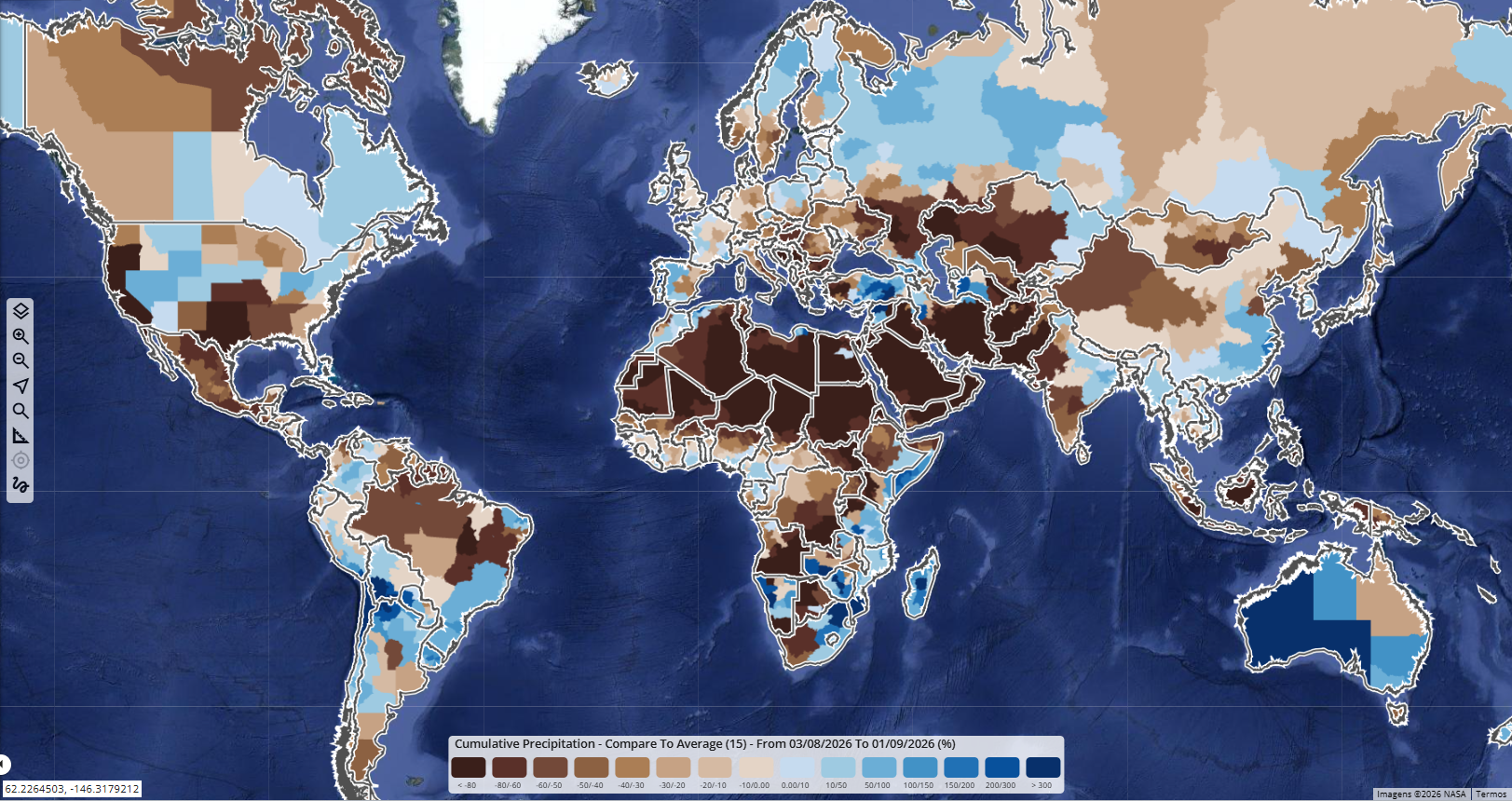
A strong El Niño may be developing, and WMO has asked countries to prepare for its possible impacts this year. EarthDaily’s ag team is also tracking model projections showing a rapid strengthening of the Niño 3.4 index in the second half of 2026, with some forecasts pointing to a strong or potentially very strong event.
For agriculture, the concern is practical: where rainfall arrives late or too heavily, where heat builds, how soil moisture changes, and which crops are entering sensitive stages.
EarthDaily’s Initial Crop Risk Outlook
EarthDaily’s initial outlook points to five regions that need close watching through 2026 and into 2027: Australia, Brazil, India, Canada, and Argentina.
The risk changes by region. Australia, Canada, and India are mainly exposed to heat and dryness. Southern Brazil and Argentina are exposed to excessive rainfall. In Brazil, low solar radiation is also part of the outlook. The crop list is broad: wheat, barley, canola/rapeseed, soybean, and corn.
Australia: Heat and Dryness Put Winter Crops on Watch
Australia is one of the more direct cases in the outlook. The concern is dry and hot conditions for wheat, barley, and canola. The past two strong El Niño years explain why this region is being watched. In 2015, barley was 7% below trend, rapeseed 5% below trend, and wheat 3% below trend. The drop was much larger in 2023: barley -14%, rapeseed -10%, wheat -18%.
So Australia is not a theoretical concern in this outlook. It has shown crop losses in recent strong El Niño years.
Brazil: Rainfall Timing and the Safrinha Window
In Brazil, the risk is different. The main concern in the EarthDaily outlook is excessive rainfall and low solar radiation, especially for wheat in southern Brazil. Too much rain and reduced sunlight can affect wheat development and quality. The analogs show that risk clearly: wheat yields were 10% below trend during the 2015 El Niño and 18% below trend during the 2023 event.
The broader Brazilian grain season will also need close monitoring. Rainfall timing can affect soybean planting and early crop establishment. If soybean planting slips, safrinha corn can also be pushed later into the season.
For Brazil, the main thing to watch will be timing. When does the rain arrive? Is it well distributed? Does soybean establishment stay on track? And does the safrinha window hold?
Argentina: Rainfall Timing Could Complicate Things
Argentina is in the moderate-risk group, with excessive rainfall as the main concern. For wheat and barley, the issue is timing. Rain at the wrong point in the season can slow fieldwork, affect crop quality, or interrupt harvest.
The analogs are not as clear-cut as Australia or Brazil. In 2015, barley was 8% below trend, while wheat finished 2% above trend. In 2023, both crops moved lower: barley -7%, wheat -10%. For Argentina, the watch point is whether rainfall supports the crop or starts getting in the way.
India: Monsoon Timing and the Next Wheat Cycle
India is marked high risk in the EarthDaily outlook, mainly because of dry and hot conditions. The exposure is tied to timing: how El Niño conditions interact with the monsoon, and how heat and dryness carry into the next wheat cycle. The analogs show why the outcome is not automatic.
In 2015, the impact was severe, especially for soybean. Corn finished 7% below trend, soybean 34% below trend, and the following wheat cycle was 10% below trend.
The 2023 event was much milder. Corn was 1% below trend, soybean 2% below trend, and wheat was close to trend. For India, the next signals to watch are the monsoon, heat, and how conditions carry into the wheat cycle.
Canada: Moderate Risk in a Short Growing Season
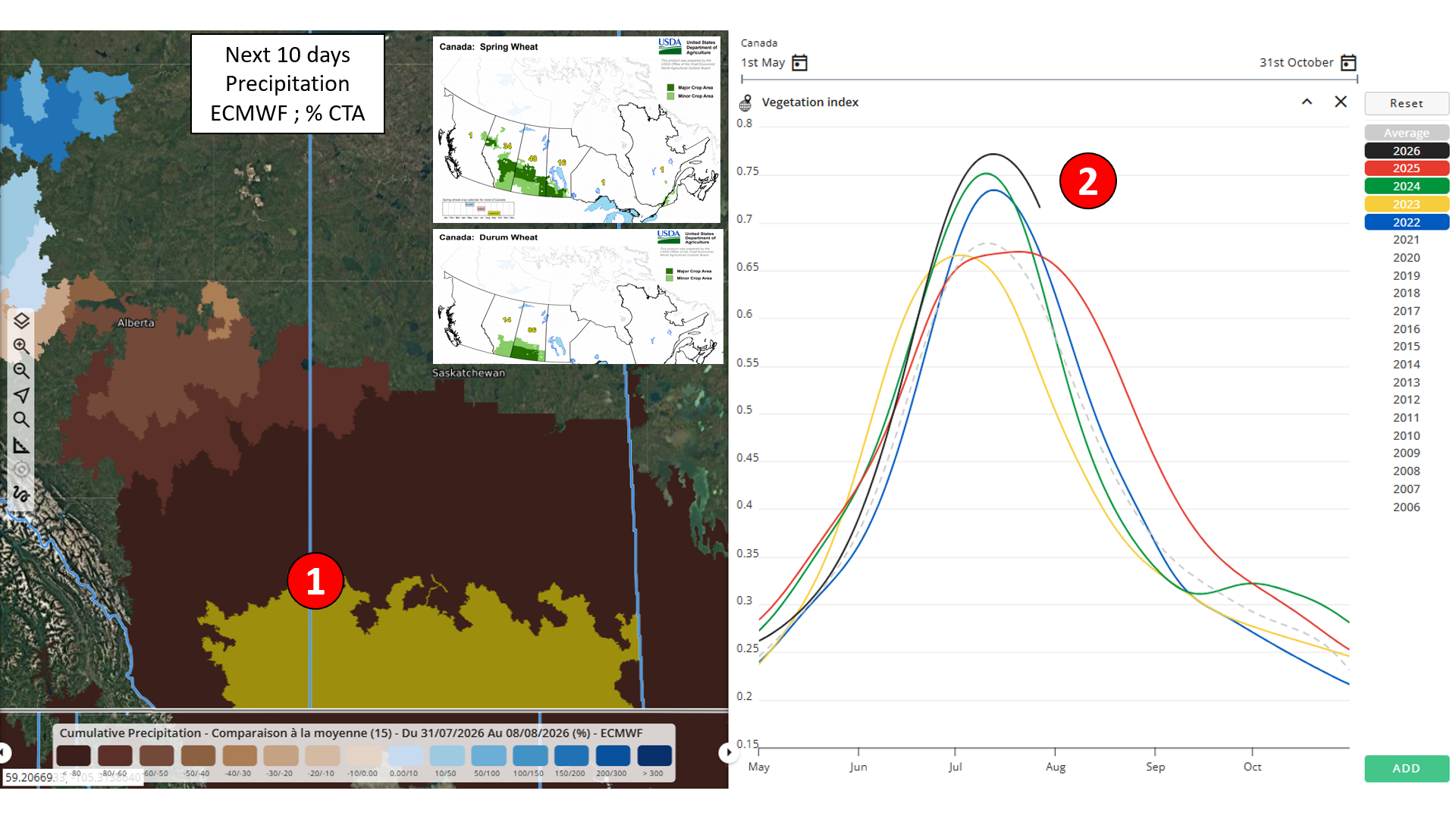
Canada is in the moderate-risk group in EarthDaily’s outlook, mainly because of potential dry and hot conditions. The crops to watch are spring wheat, barley, and canola. Canada’s season is short, so the timing of heat or dryness matters. Stress does not need to last long to become important if it arrives during sensitive crop stages.
The analog years show why the picture is not straightforward. In 2015, barley and rapeseed finished above trend, while spring wheat came in 6% below trend. In 2023, all three crops were below trend, with spring wheat hit hardest at 14% below trend.
For Canada, the issue is whether heat and dryness show up during the spring crop season, when there is less time for recovery.
What to Monitor Through the Season
The 2015 and 2023 analogs show where risk has appeared before. The next few months will show whether similar signals begin to appear in 2026.
The key indicators to watch include:
- Rainfall timing and distribution
- Soil moisture availability
- Temperature anomalies and heat stress
- Planting progress
- Vegetation indices and early crop vigor
- Delayed development or early senescence
- Recovery or deterioration after rainfall events
These indicators will show whether El Niño-related risk is beginning to appear in crop conditions.
Key Takeaways
EarthDaily’s initial outlook focuses at this stage on major crop-producing regions where El Niño-related weather patterns could become important through 2026 and into 2027. More crops and regions could come into focus in the second half of 2026 as the season develops.
For the ag sector, the questions are fairly immediate. Where is rainfall arriving late or too heavily? Where is heat building? Which crops are entering sensitive stages? And are vegetation conditions beginning to move away from normal?
Those answers will come from steady monitoring. EarthDaily will continue tracking these signals as conditions evolve across major crop regions.
For a closer look at specific crops or geographies, contact the EarthDaily agriculture team.
About the Author