
.jpg?width=289&height=168&name=Data%20Use%20cases%20(1).jpg)
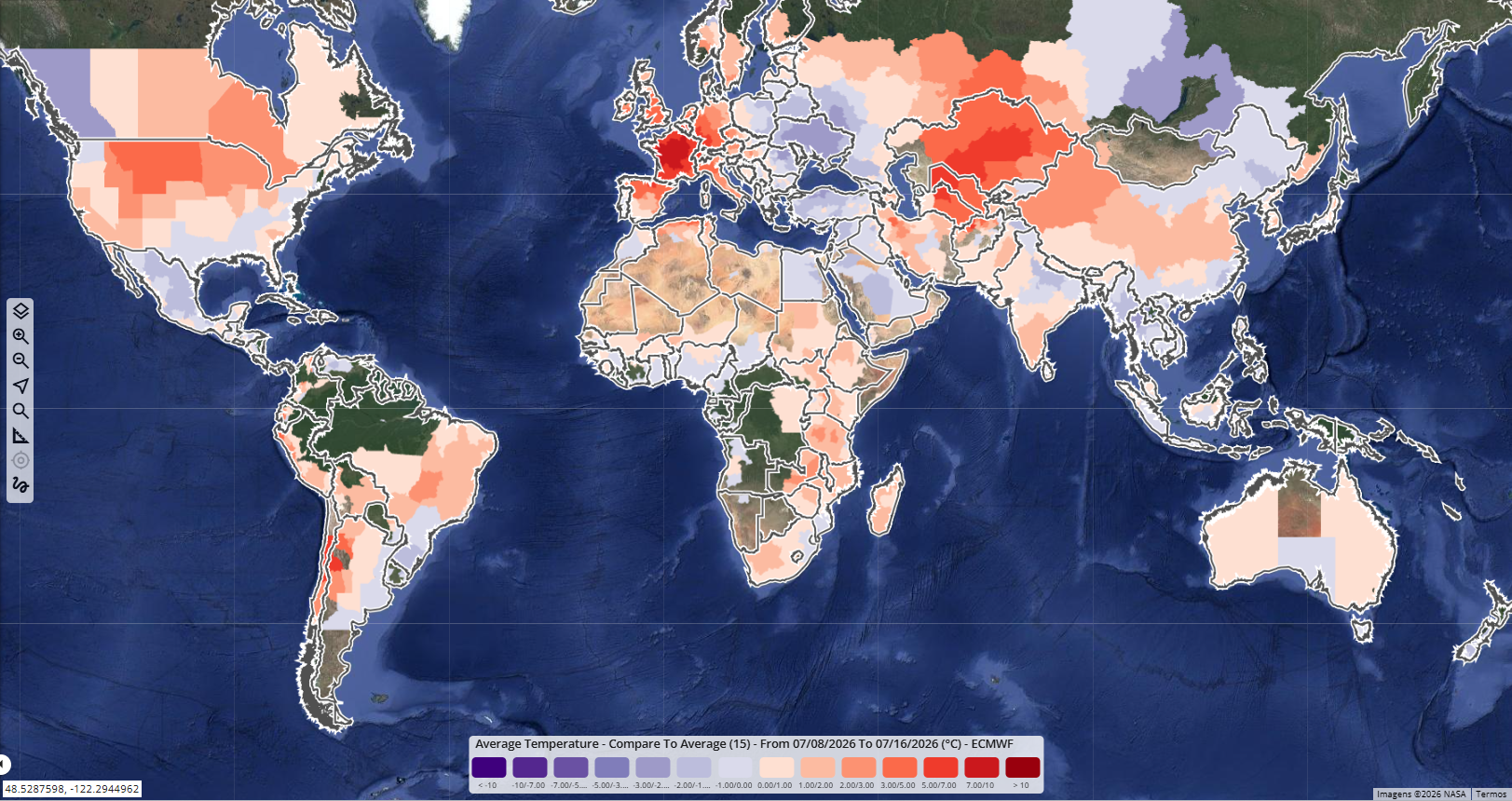
Late-June heatwave conditions across Europe. Source: EarthDaily analysis
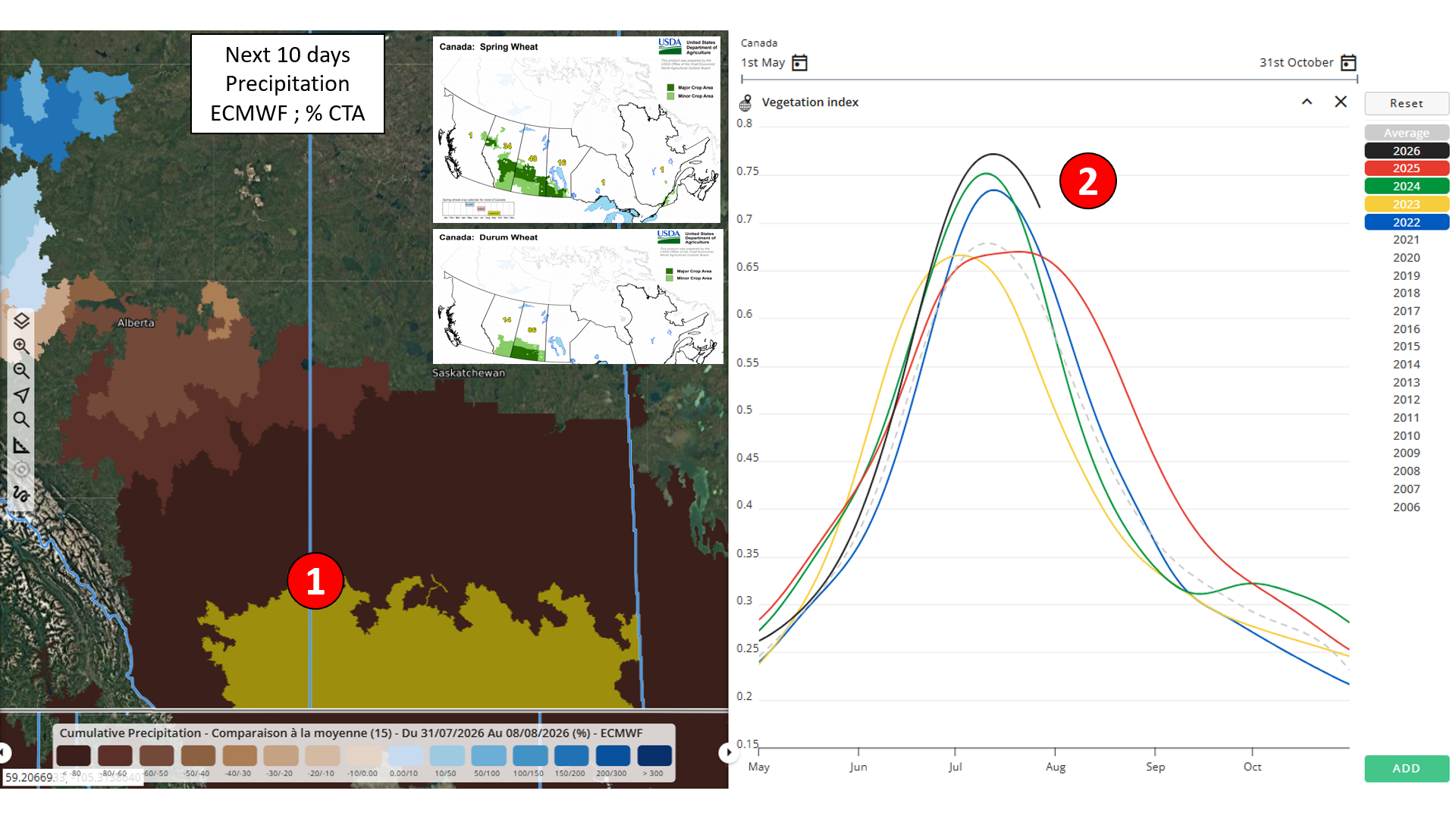
Crop conditions improved across several major producing regions in June, with Canada and Australia showing stronger vegetative development after earlier concerns. But heat, dryness, and declining NDVI across parts of Europe are shifting attention to corn and sunflower yield risks heading into July.
Key Takeaways
- Canada's spring crops got off to a slow start, but vegetation indices now tell a much more encouraging story, with NDVI pointing to healthy vegetative growth across the core production areas.
- Dryness remains a concern in parts of the western US Corn Belt, yet NDVI suggests crops are holding up well across most producing regions.
- In Australia, the only major area that had remained below average is now recovering quickly, with NDVI signaling strong vegetative development in northern New South Wales.
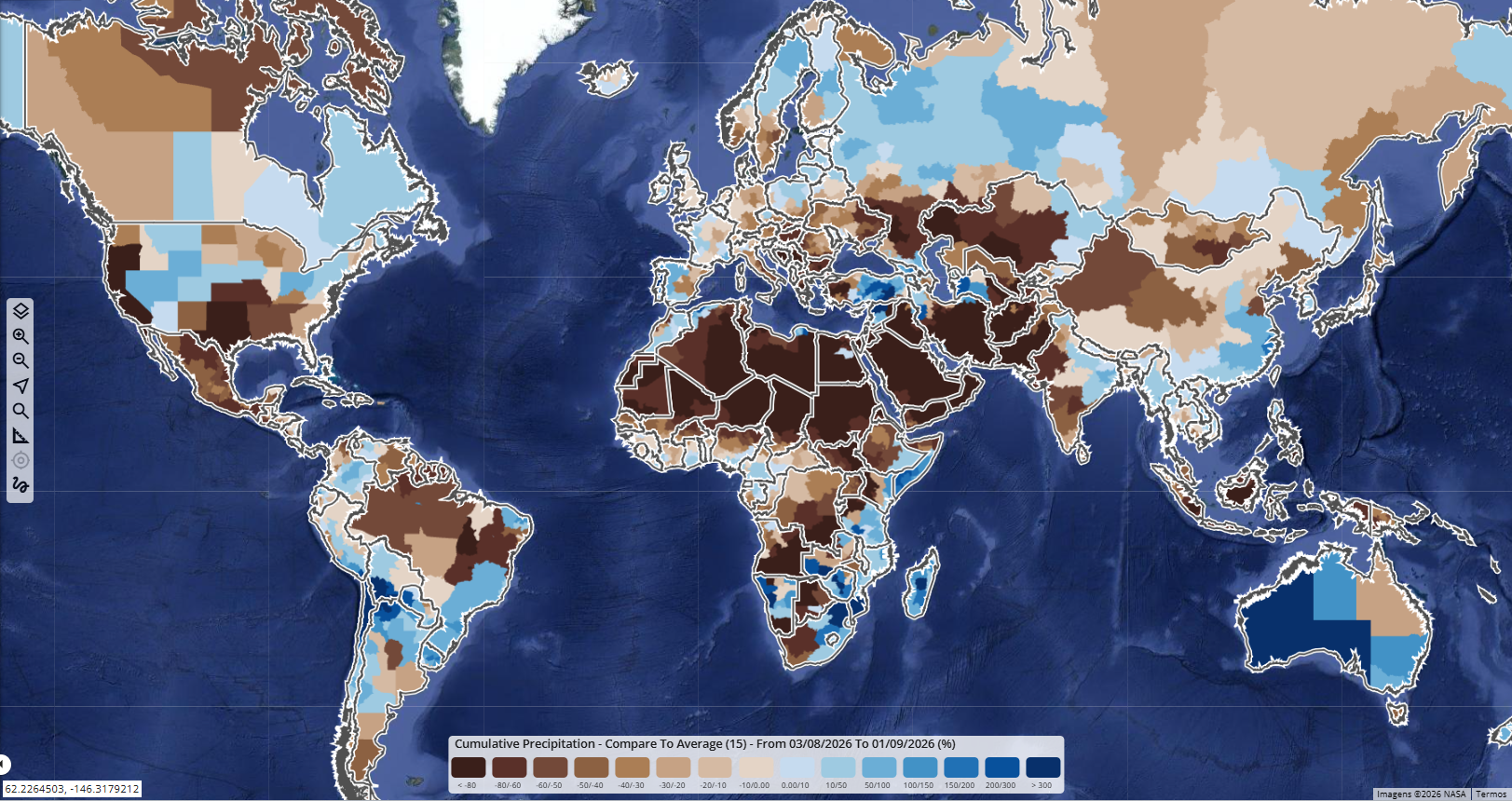
- The spotlight is now shifting to Europe’s corn crop. The strongest late-June heatwave in 30 years, below-average rainfall, and declining NDVI are increasing concerns over yield potential, particularly in France.
- Russia's spring wheat continues to perform well, with NDVI remaining well above average across key producing regions.
North America: Good NDVI Values Despite Low Soil Moisture
Crop conditions have generally improved across North America over the past month. In Canada, concerns over delayed planting have gradually faded, with vegetation indices now indicating healthy development across the main spring crop regions. In the United States, spring wheat remains in need of additional rainfall, and yield risks could increase if dry conditions persist. At this point, only a limited area, mostly in eastern North Dakota, still shows disappointing NDVI.
Attention is also shifting to the western Corn Belt, where declining soil moisture is putting corn and soybean crops under increasing pressure. Even so, vegetation indices remain satisfactory across most major producing areas, highlighting the resilience of this year's crop. The key question now is how long crops can withstand the ongoing moisture deficits.
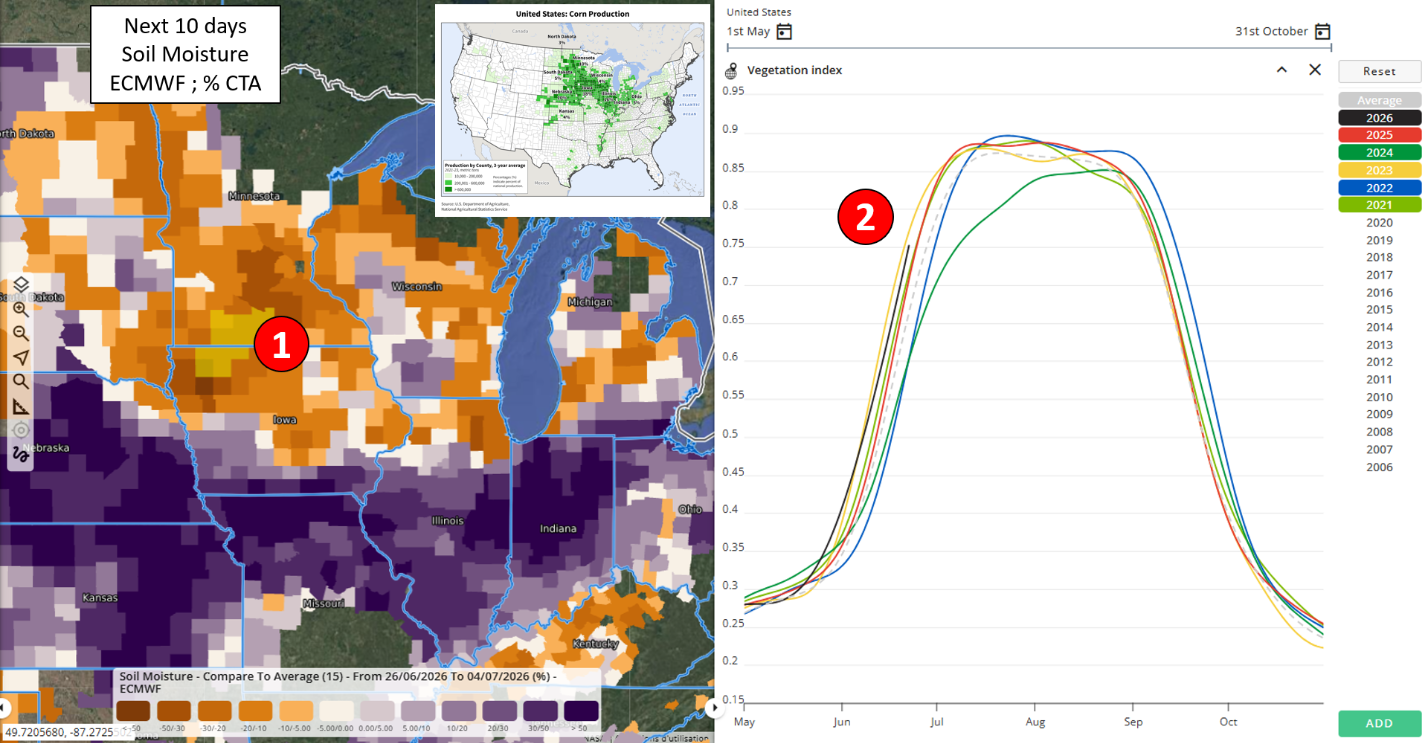 Soil moisture deficits remain visible across parts of the western Corn Belt, while NDVI continues to show broadly resilient crop development. Source: EarthDaily analysis
Australia: Sharp Rise in NDVI Signals Rapid Crop Recovery in Northern NSW
Crop conditions continue to improve across Australia's winter crop belt. Early-season planting concerns have largely been resolved, with vegetation indices indicating favorable development across most wheat, barley, and canola producing regions. The last remaining weak spot, northern New South Wales, is now showing a rapid recovery, with NDVI increasing sharply in recent weeks and pointing to vigorous vegetative growth. Overall, satellite indicators continue to support a favorable production outlook.
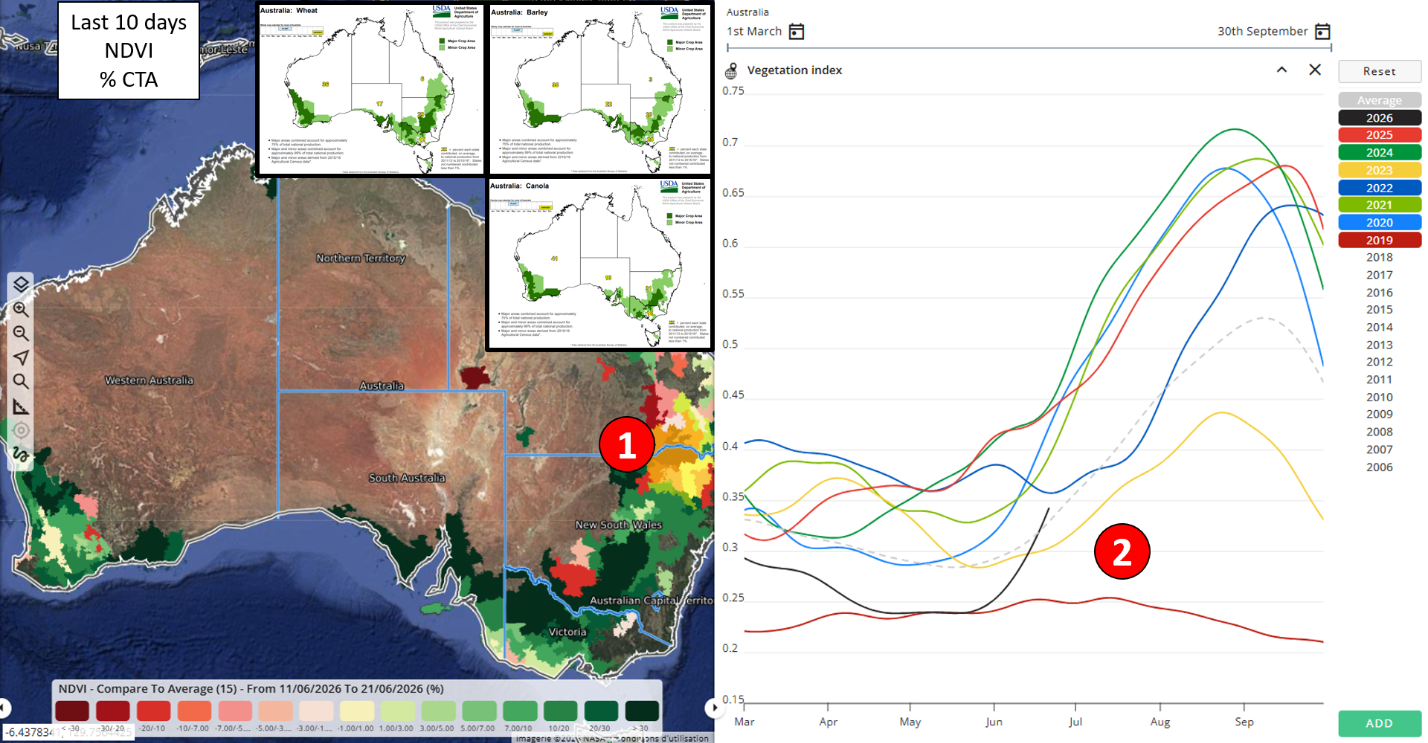 NDVI in northern New South Wales has risen sharply, signaling rapid recovery after earlier-season weakness. Source: EarthDaily analysis
Europe & Black Sea: Heat and Drought Continue to Drive NDVI Lower Across Key French Corn-Producing Areas
The focus across Europe has shifted from winter to summer crops. In Western Europe, record late-June heat, combined with persistently below-average soil moisture, has increased pressure on late-cycle wheat and barley. It is also becoming a growing threat for corn and sunflower. Declining vegetation indices support a more cautious outlook for corn production, while sunflower continues to face heat and water stress. The key question now is how much yield potential has already been lost, and whether upcoming weather can prevent further deterioration.
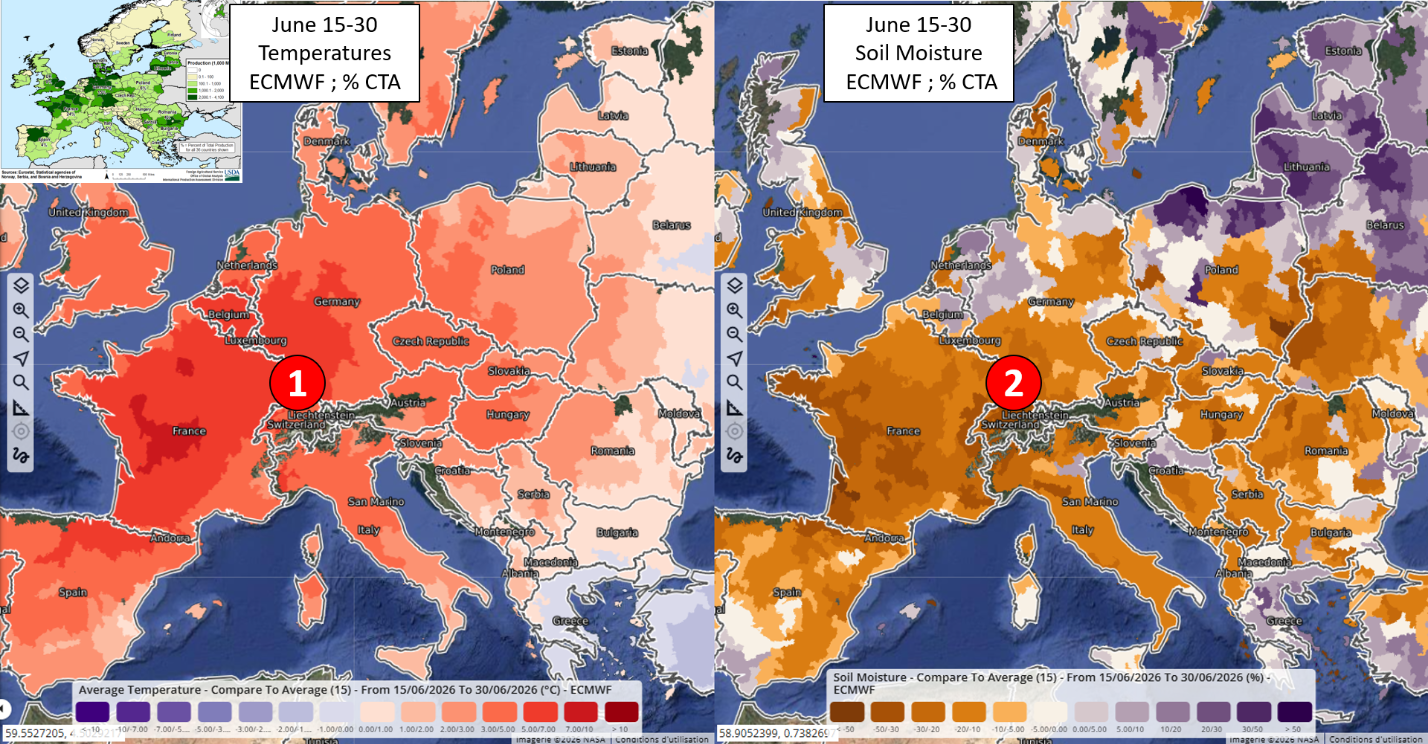 Late-June heat and below-average soil moisture across Western Europe are increasing pressure on summer crops.
What to Watch in July
- Canada: With crop conditions exceeding expectations, can spring crops maintain their strong yield potential through the remainder of the season?
- United States: How long can corn and soybean withstand the persistent moisture deficits across the western Corn Belt?
- Europe: How much additional yield potential could be lost if heat and drought persist across Europe's main corn area?
- India: Is the monsoon already losing momentum in line with El Niño-induced expectations, and what could this mean for soybean yield potential?
- Australia: With the last weak spot now recovering and crop conditions remaining favorable elsewhere, is Australia on track for an outstanding season, or will El Niño-induced dryness finally emerge?
- El Niño: The event is already underway, but major crop impacts have yet to emerge. As it strengthens, which weather patterns will materialize first, and are early signs already appearing elsewhere?
About the Author