
Agricultural decisions rarely wait for complete information, so judging how much evidence a call needs is half the job.
Every season brings the same kinds of calls. Should this field be scouted, or treated? How do you price a risk that hasn’t finished taking shape, and do you hedge it or cover it? None of these come with all the facts in hand. You make the call anyway, and then you live with how it turns out.
Agtech has spent decades going after precision, with sharper imagery, richer models, and a lot more data. It’s been worthwhile work, because precision cuts ambiguity and gives people confidence. But an answer that turns up after the moment to act has passed isn’t much use to anyone. For any decision, then, it comes down to how much confidence you really need, and whether you can get it in time.
Information has a shelf life
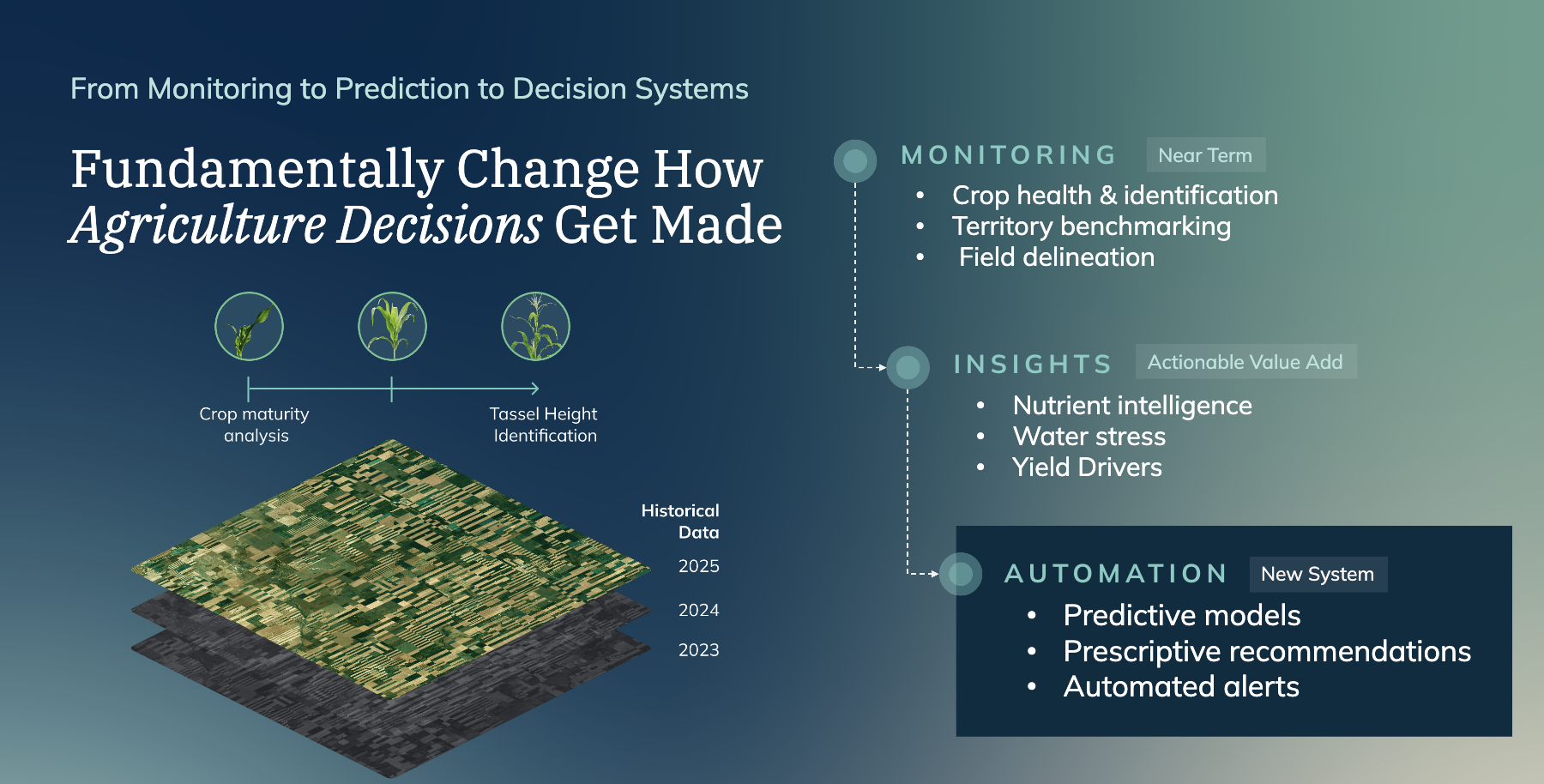
In agriculture, timing often decides whether an insight changes an outcome or simply confirms it. A stress report that arrives after the fungicide application window closes can only explain the yield you lost. Crop stress builds before anyone can see it, and weather can change a field’s condition within hours.
A scientist wants the most accurate answer the evidence can support. For a CFO allocating capital or managing risk, time is part of the question too. How long before they are sure enough to act? During a season, conditions seldom stay put while certainty catches up. A solid answer this week is usually worth more than a perfect one next week.
Waiting has costs of its own, and they are easy to miss because they don’t show up as a single line item. They turn up instead as an extra application, a bad hedge, or a claim that’s harder to settle.
Match the evidence to the decision
There’s nothing wrong with wanting more evidence before a big call, since it shows you take the responsibility seriously. The harder part is judging how much evidence a particular decision really needs, and that comes down to what it would cost you to get it wrong.
Sending a scout to one corner of a field costs a morning. If the stress signal turns out to be nothing, you’ve lost very little, so a strong indication that something unusual is happening is reason enough to go. Buying land or investing in farm infrastructure is different. A wrong call there follows you for years, and it deserves a much higher bar.
It’s no different further along the value chain. A grower working out when to apply a treatment is on a different clock from a grain trader adjusting a position, and an insurer reviewing a claim has other stakes again, since a wrong call financially affects each of them uniquely. The answer each one needs should be sized to the decision they’re actually making.
Keep your strictest standards for the choices that can’t be undone. Where a decision can be reversed, it’s usually better to move earlier, watch what happens, and adjust as you go. Fitting the evidence to the stakes is a kind of rigor in its own right.
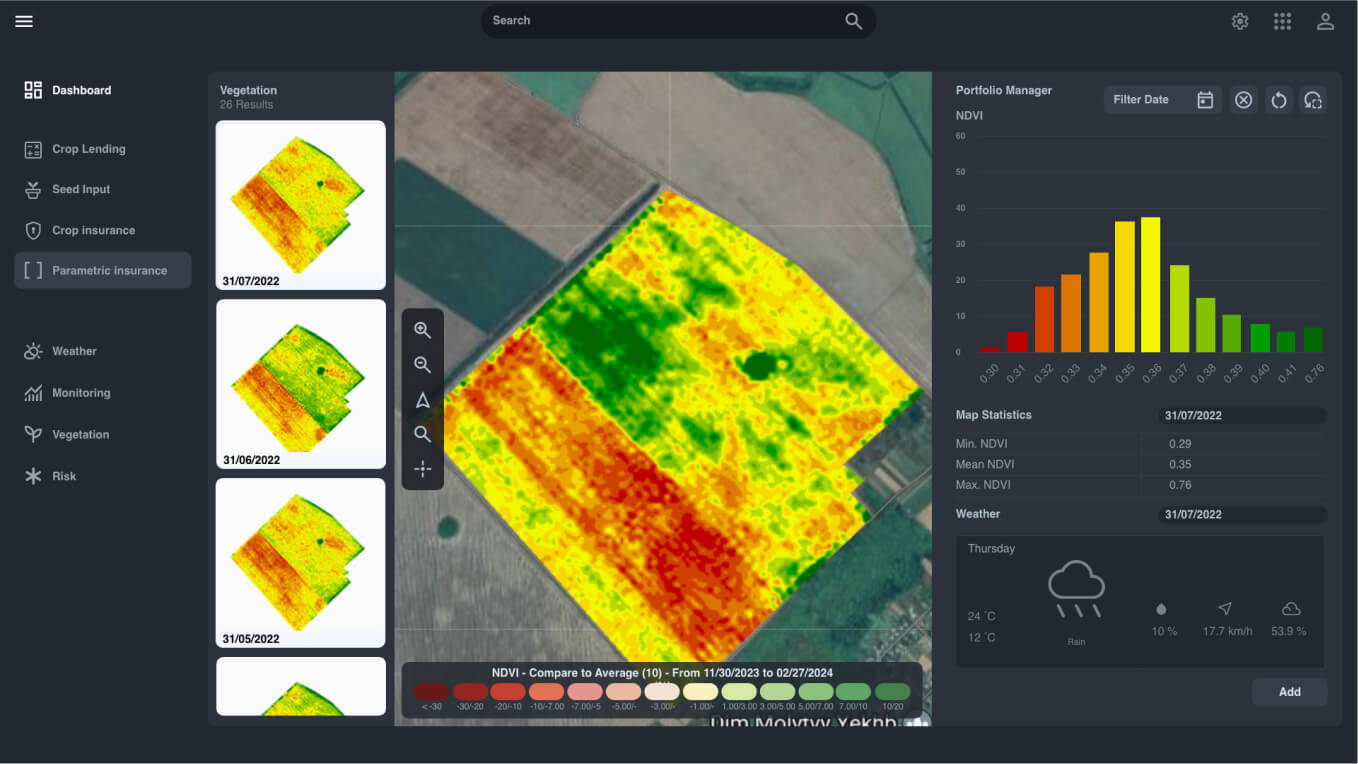 Field-level observations become more useful when they can be compared consistently over time, helping teams distinguish meaningful change from normal variation.
Observe often, and the same way every time
You can’t learn faster than you observe. The more often you look, the more chances you have to catch a problem while it’s still small enough to manage.
Frequency alone isn’t enough, though. When every new dataset has to be reconciled before anyone trusts it, decisions stall and debates multiply. What speeds a decision is comparability: knowing today’s observation lines up with yesterday’s, last season’s, and the season before that.
Once you know what a typical summer looks like for a field, an abnormal one is easier to spot. That’s the value of a consistent record, and why we hold collection conditions constant: so a change in the data reflects a change on the ground. The record becomes more useful over time, with each season of history giving you a little more lead time on the next decision.
Make uncertainty visible
Every observation has limits, every model rests on assumptions, and every forecast carries risk. Your team moves faster when those limits are stated up front, including:
- Confidence levels
- Coverage gaps
- Sources of variability
- Data quality conditions
- Model assumptions
Once people know what a signal can and can’t tell them, they stop second-guessing it and get on with acting. Being upfront about the limits tends to earn more trust, too. A system people can rely on is clear about how confident it is, enough to back a decision, without pretending to be beyond doubt.
Shorten the loop from action to outcome
Speed matters most when it helps you learn. After you act, check the result. Did the treated area recover? Did the flagged field yield what you expected? Without that follow-up, you can’t tell whether a decision improved results or just created activity. With it, each decision informs the next one.
It also helps to ask a different question of your data. Asking “What happened?” explains the results, while asking “What signals came before the result?” builds foresight.
This way of thinking has a long history. John Boyd’s OODA loop, short for observe, orient, decide, and act, describes decision-making as a cycle and stresses moving through it before conditions shift. Daniel Kahneman’s research looks at how people make judgments when information is incomplete, which describes most decisions made during a growing season.
So before the next call, ask yourself three things. How sure do you need to be? And by when? And what happens if you’re wrong? That should tell you whether to wait for more evidence or go while there’s still time.
About the Author
